 Skip to content
Define every roof area
Identify the main roof, additions, valleys, penetrations and low-slope sections. Different areas may need different details or systems. Plan low-slope sections separately.

Home / Roofing / Roof replacement
South Florida · Roof planning & careIf your roof has widespread damage or recurring problems, contact USAHI for an assessment. We explain whether replacement is appropriate, compare suitable systems and provide a written scope for removal, underlying repairs, the new assembly and finishing details.
Discuss your roofing projectExplore cost planning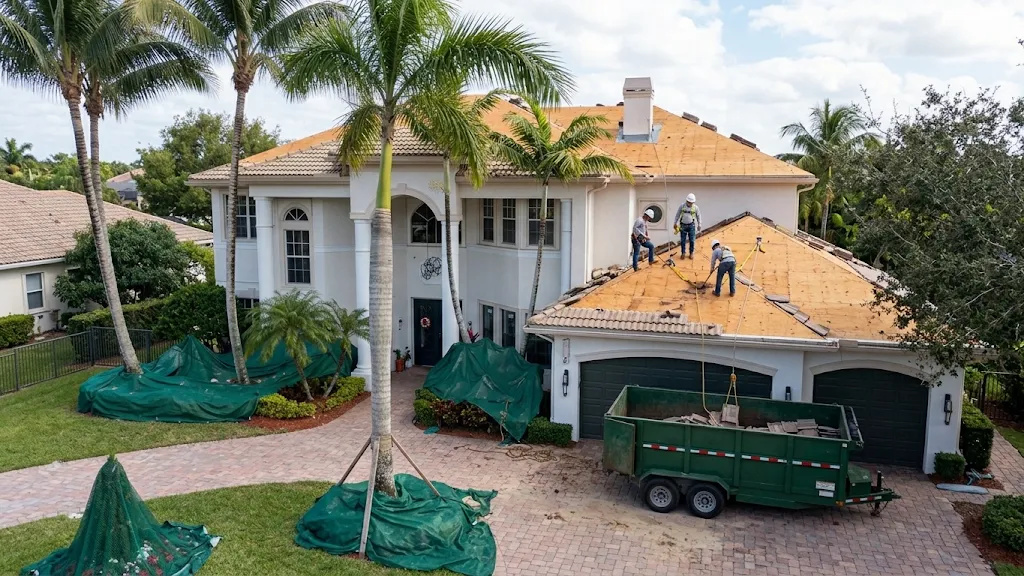
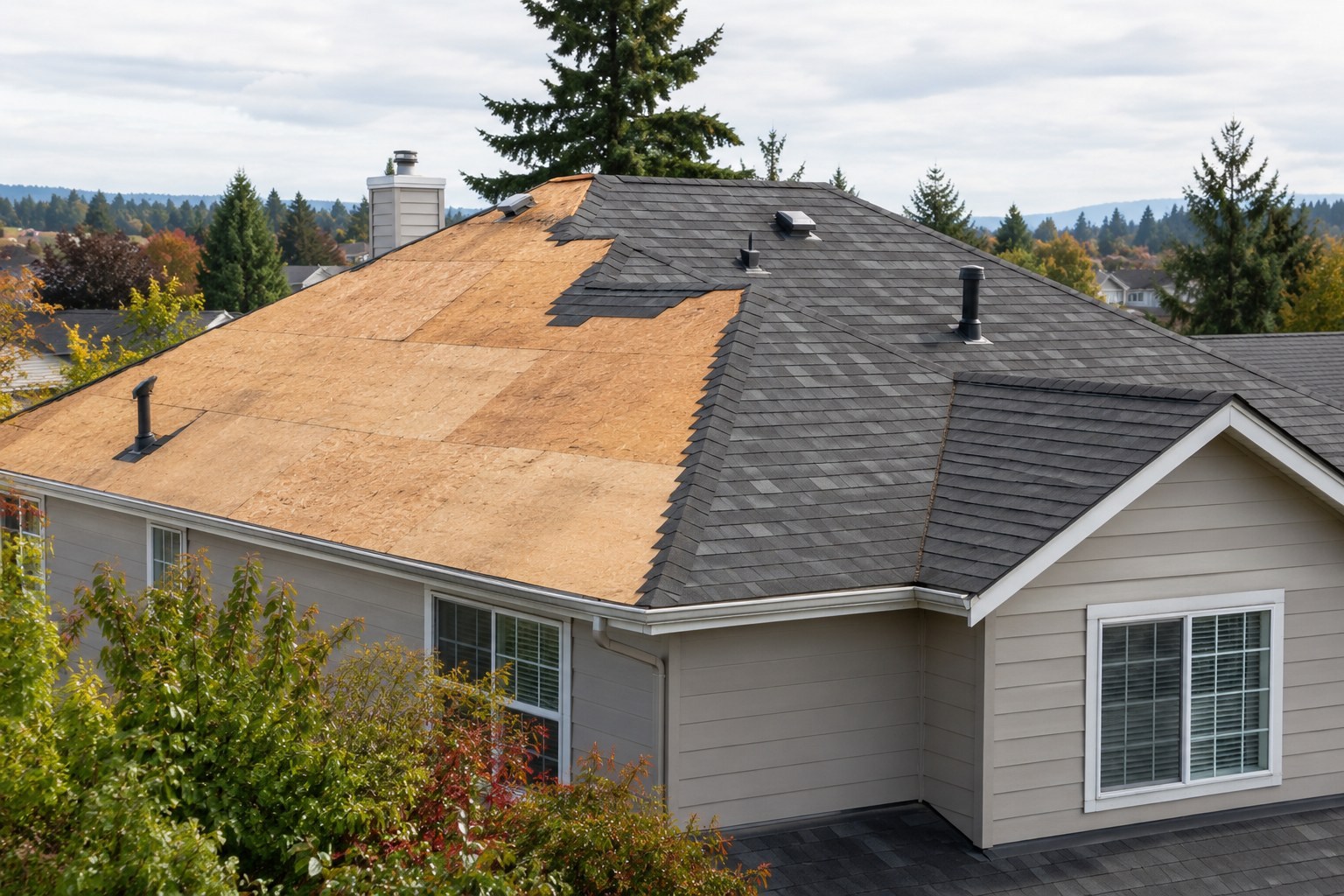
Replacement begins with a defined removal and installation scope. It can provide an opportunity to inspect exposed decking and address affected details before new roofing goes on. The proposal should explain what is included and what happens if concealed damage is uncovered. A complete comparison also distinguishes an included item from an allowance and from work excluded entirely. Similar totals can hide different assumptions about the roof.
Choose the new system against the actual roof slope, support, exposure and project requirements. Deck repairs, water-management layers, flashings and roof-to-wall transitions need to work with the covering. A like-for-like appearance does not automatically mean every existing detail can be reused. Material choices affect more than the finished color. Compare the installation approach and the details at valleys, adjoining walls and low-slope additions before settling the covering. Compare roofing-material choices.
Replacement may be appropriate when deterioration is widespread, important underlying layers are failing or repeated repairs are not addressing the system’s condition. Ask for the findings behind that recommendation rather than relying on age alone. Ask what the proposed repair would accomplish, what it would leave untouched and how that compares with the replacement recommendation. See how a targeted repair differs.
The agreed scope must identify which layers will be removed and which, if any, may be retained. Existing condition, the chosen system and applicable requirements determine what is appropriate. Do not assume a recover or a full tear-off without a written scope. Request a roof-area breakdown if additions or separate sections have different removal requirements. A single phrase such as new roof does not define removal depth.
The contractor should document the condition, explain the required work and apply the agreed change or unit-price process before proceeding as the contract allows. Set that process out before installation starts. Confirm how the quantity is measured and who can approve the change. Keep the record with the final project paperwork.
Possibly, but material changes can affect weight, structural suitability, slope, attachment and details. Compare the full conversion scope and any appearance review requirements before selecting the finish. Also compare attachment, edges and roof-to-wall details. A conversion proposal should explain which changes are necessary, not just the cost of the new surface.
It depends on the project and its condition. Discuss noise, debris, access, parking, pets, deliveries and any areas that need to remain clear. Ask how daily protection and weather exposure will be managed. Discuss work hours and household needs before mobilization. Occupied-home planning may affect how the job is staged even when the roofing material stays the same.
Resolve the decisions that are difficult to make once the old roof is open.

Define removal, assess exposed conditions and specify the replacement layers as a coordinated system.
Identify the main roof, additions, valleys, penetrations and low-slope sections. Different areas may need different details or systems. Plan low-slope sections separately.
Agree access, staging, disposal, landscape protection and daily cleanup. Keep the work route separate from normal household movement where possible.
Ask how damaged decking or unexpected details will be photographed, explained and priced. An undefined allowance can make proposals hard to compare.
Compare material choices in the context of the actual roof. Compare roofing materials for South Florida homes.
The most useful replacement proposal explains what is known, what may be uncovered and who makes each decision. Agree the process before exposed work turns an ordinary question into an urgent one.
Ask which defects are isolated and which affect the wider roof. A roof’s age can be relevant, but the recommendation should also describe condition, repair history and the scope needed to address it. Request a comparison of what a limited repair would leave in place so you understand why broader work is being recommended.
Removal may expose damaged decking that was not fully visible earlier. The contract should explain how the condition is recorded, the basis for pricing the repair and who can authorize a change. Clarify whether an allowance is included and how the final quantity will be documented; an allowance is not proof that every concealed condition is covered.
A photograph, location description and written approval help connect additional work to an actual finding. Agree how changed materials or details will be recorded too. Keep the final scope understandable to someone who was not on the roof, rather than relying on an unexplained verbal instruction passed between crews.
Ask how the contractor limits exposed work, responds to weather and leaves the site at the end of a work period. Include household access, storage, debris and any areas that must remain clear. Temporary protection is a project responsibility to define; it should not be confused with a promise that the forecast or schedule cannot change.
A well-scoped replacement lets the visible covering and the details beneath it be planned together.
Use the replacement plan to specify a compatible covering, water-management layer and detail package rather than buying each part independently. Name the materials and their roles so a proposed substitution can be evaluated against the intended assembly rather than color or brand alone.
Where removal exposes decking or affected details, assess what needs repair before those areas are covered again. Document those findings while they are visible. Ask how necessary repairs are checked before the next layer makes them inaccessible.
Review the profile, color and visible roof edges alongside the home’s exterior. Ask for representative samples rather than choosing from a small screen image alone. A heavier-looking profile is not automatically suitable for the structure. Confirm practical constraints before deciding that appearance justifies a material conversion. Review the scope behind a tile-roof choice.
Agree inspection, debris removal, closeout documents and a final walkthrough so completion means more than the last visible piece installed. Include outstanding items assigned to another trade and the contact for follow-up. A finished roof should not leave uncertainty about agreed cleanup or documents.
Compare product and installation warranty responsibilities, exclusions and care requirements for the actual proposal. Do not infer coverage from a brand name alone. Separate the manufacturer’s product terms from the contractor’s installation responsibilities, and retain the documents actually issued for the completed work.
Choose the extent of work first. A different material or a coating should not distract from the condition that needs to be addressed.
| Option | What it involves | When to consider it | Check first |
|---|---|---|---|
| Targeted repair | Works on a defined defect or affected area. | May fit an isolated issue in an otherwise serviceable roof. | Whether the cause and affected layers can be reliably addressed. |
| Roof replacement | Replaces the specified roofing scope as a coordinated system. | May fit wider deterioration or underlying conditions needing broader access. | Removal limits, decking, all new layers, edges and penetrations. |
| Coating assessment | Considers a coating over a suitable existing surface. | Only an option where the existing system can support the coating approach. | Sound substrate, moisture, adhesion, repairs and drainage. |
Use visible changes to prepare questions for a professional assessment. Understand signs a roof may need replacement.
A replacement recommendation should connect observable concerns to the condition of the roof system.
Recurring leaks may signal that the cause or affected layers extend beyond previous patches. Review the history and current findings.
Widespread damaged covering or failing details can change the economics of repeated repairs. Ask which areas remain serviceable and why. Explore signs that call for an assessment.
Known moisture or deck damage, including findings reported by a professional, needs appropriate assessment. Do not walk the roof to test for soft areas. New covering cannot correct a structural or deck problem below it.
Recurring leaks and damaged details deserve a defined repair plan. Read about roof damage before storm season.
The cost depends on the actual roof, its condition and the work included. Ask for a measured, itemized proposal so you can compare equivalent scopes.
Review material, preparation, repairs, access, disposal and any required approval or inspection responsibilities. Confirm how additional work will be documented and agreed.
Request a scoped estimateMeasured roof area, slope, height, shape, material and access determine the starting scope. Floor area is not the same as roof area.
Deck repairs, water-management layers, flashings, drainage and related details can change the project cost.
Include removal, disposal, property protection, necessary approvals, finish work and written warranty terms when comparing proposals.
Identify the system, concern, condition and access.
Confirm materials, details, responsibilities and changes.
Coordinate weather, site protection and required approvals.
Confirm the completed scope, care and written records.

Review the proposed work, then explore current payment options.
Explore financing optionsFinancing may be available for qualified homeowners through independent third-party providers. Terms, eligibility and availability depend on the program and location. Review the written offer, total repayment and any fees before committing.
Compare the complete project scope first. Keep the work specification separate from the payment offer so a monthly amount does not hide different materials or excluded repairs.
Retain the final material specification, project records, inspections and written warranty terms in one place.
Ask which checks and care the new system requires, including drainage and rooftop equipment coordination.
Arrange assessment of new stains, damaged covering or altered drainage. Avoid walking the roof or attempting unapproved fixes.
Specify removal depth, measured roof area, system and finish, deck-repair rates or allowances, required attachments and water-management layers, flashings, penetrations, disposal, property protection, approvals, inspections and handoff records. Ask how weather delays and changes are communicated.
Discuss the roofing scopeBring the condition of your roof, your priorities and your questions. Ask for the recommended work and the reasons behind it in writing.
Discuss your roof with USAHIBrowse our existing service-area pages, then discuss availability and the requirements for your roofing project. These are general area guides, not dedicated pages for every roof type.
Use these answers to prepare for an assessment of your actual roof. The proposal should explain the recommended work and why it fits the condition found.
Not necessarily. Compare roof area, removal, layers, repairs, flashing scope, access, disposal, written terms and exclusions. A lower total can describe less work. Check that allowances, excluded work and payment stages are equally clear. An attractive headline price is not a substitute for comparable written descriptions.
Do not assume so. Have existing flashing and transitions assessed against the replacement system and condition. The written scope should say what is replaced, retained or repaired. Request reasons for retaining any detail that remains, especially where the new covering meets an older wall or adjoining roof area.
Discuss future equipment before roofing selection where possible. Its supports, penetrations, access and maintenance need coordination with the new roof system and applicable warranty requirements. Do not assume equipment installed later can be attached anywhere. Keep the roofing details available to the future equipment contractor.
Ask for the contractor’s weather and temporary-protection plan before work begins. Timing and daily exposure should be managed for the project; no schedule can guarantee uninterrupted weather. Agree the communication process and who makes the decision to pause. Ask how any resulting date changes will be documented.
Review the completed scope, cleanup, any agreed changes, operation of relevant drainage details and the closeout records. Ask for the contact and process for later service concerns. Keep a written list of unfinished or disputed items and the agreed next steps instead of relying on a final conversation alone.