 Skip to content
Identify the existing layers
Ask what roof system is present, what will be removed and how concealed damage or wet material will be assessed and priced.

Home / Roofing / Flat & low-slope roofing
South Florida · Roof planning & careContact USAHI about drainage concerns, leaks or an aging low-slope roof. We assess the existing layers, outlets and details, then explain suitable repair or replacement options and the work included in the proposal.
Discuss your roofing projectExplore cost planning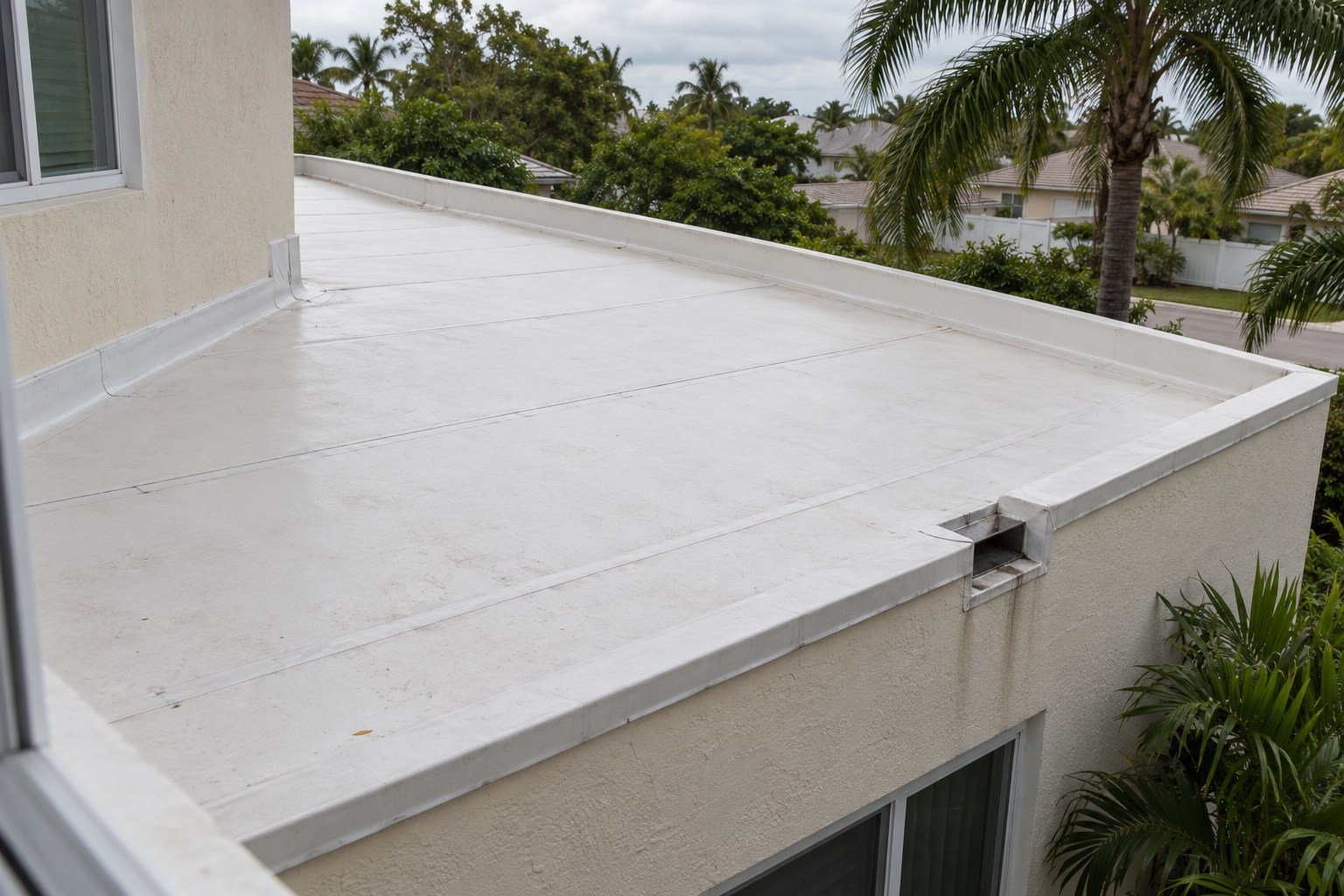
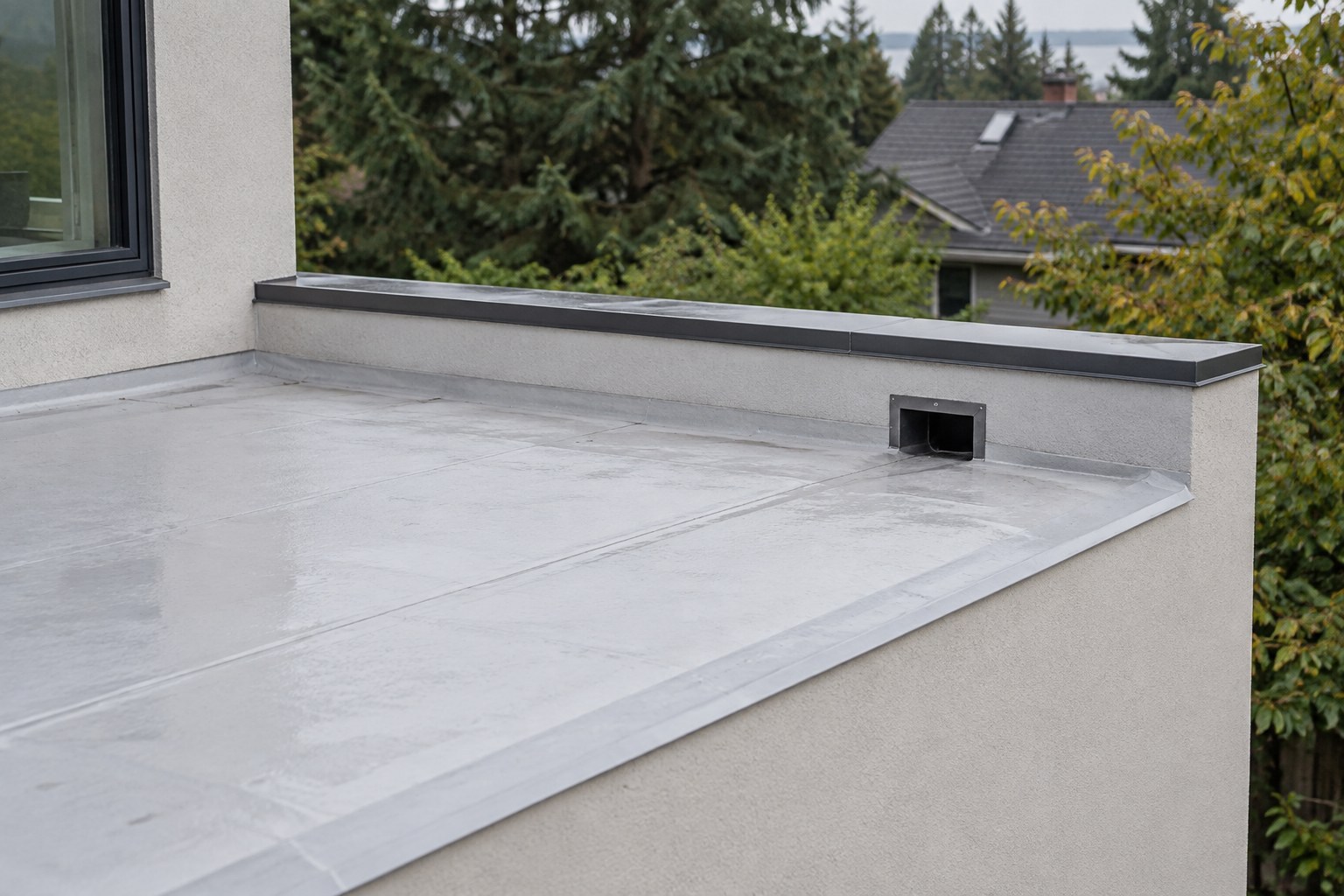
A low-slope roof relies on a suitable waterproofing assembly and a planned drainage route. The visible membrane works with the layers below it, the roof edges and details around penetrations. A surface that looks level still needs its water-management design assessed. The design question is how those parts work together when rain reaches the roof, not whether the finish looks smooth on installation day.
The replacement decision starts with the existing roof’s condition. Review the deck, insulation, moisture concerns, attachment and flashing details alongside drainage. Modified-bitumen and single-ply systems are examples to discuss; the actual system offered must be suitable for the building and proposed scope. Ask which existing conditions favor the recommendation and what tradeoff you are accepting, including future repair access and coordination with adjoining roof areas. Modified-bitumen membranes are asphalt-based sheets; single-ply systems use synthetic sheets with product-specific joining methods. Neither category name tells you the complete attachment, insulation or flashing specification. Compare the full roof-replacement scope.
Yes. Water needs a planned route to the roof’s outlets. Persistent accumulation deserves assessment of the drains, slope and surrounding details rather than an assumption that a new surface alone will resolve it. Describe when the water appears and whether it is new; observations help establish the problem, but they do not replace a roof-level assessment.
There is no single best material for every roof. Compare the assembly, existing conditions, installation details and maintenance needs before choosing the system. For example, two proposals may name different membrane families but also include different insulation and flashing work. Compare the complete assemblies before judging the material.
Possibly, but condition, moisture, existing layers, attachment and applicable requirements need review. Do not assume every roof is suitable for a recover instead of removal. Retaining unsuitable layers can hide a problem; removal adds work but can expose conditions that could not be judged from the top surface.
Not in the same way as a new roof assembly. A coating may be considered for a suitable existing roof, but it does not replace damaged decking or resolve every underlying defect. Request a reason for retaining the existing assembly and an explanation of any condition that would change the recommendation to replacement. Check when coating may be appropriate.
No. TPO is one type of low-slope membrane, alongside other systems. Selection depends on the existing assembly, deck, slope, drainage and project requirements. Ask which system is proposed and why it suits the roof. Single-ply describes a category, not one interchangeable product. Joining, attachment and repair details need to follow the specified system.
Resolve the hidden conditions and water routes before comparing surface materials.

Low-slope does not mean no drainage. Follow the planned water route to the outlet and surrounding details.
Ask what roof system is present, what will be removed and how concealed damage or wet material will be assessed and priced.
Have the drainage arrangement assessed, including drains, scuppers and any persistent low areas. Keep required corrections in the written scope.
Include wall junctions, perimeter edges, curbs and equipment connections. Decide who coordinates work around rooftop equipment.
Compare material choices in the context of the actual roof. Compare roofing materials for South Florida homes.
A low-slope roof can look like one simple surface while several different details control its performance. Use the assessment to understand these connections, especially where an addition meets an older roof.
An open outlet does not prove that all water can reach it. Low areas, transitions and equipment supports may interrupt the route. Have the contractor explain whether the concern is a blockage, the roof geometry or a condition below the surface. These call for different work, and adding membrane thickness alone should not be presented as a drainage design.
At a parapet, curb or wall, the waterproofing changes direction and meets another material. Compare what the proposal does at these junctions, not just the roof field. Request detail photographs supplied by the contractor and a clear statement of what will be replaced, repaired or retained.
An air-conditioning unit may need access long after the roof is finished. Consider service routes, supports and how later maintenance could disturb the roofing. If equipment needs moving, include the responsible trade and reinstatement work rather than leaving a gap between the roofing and mechanical proposals.
Membrane joints and repairs must suit the selected material. The same patching product or joining method will not suit every system. Ask how existing repairs will be evaluated and how the finished joints will be checked; the answer should describe the proposed roof rather than a generic sealant.
A well-planned low-slope project connects the surface, underlying layers and details. A material name alone does not describe that work.
The proposal can identify where drainage is working and which conditions need correction, rather than leaving low areas as an afterthought. That makes it easier to distinguish an outlet repair from a broader slope or support issue, instead of paying for the wrong solution.
Compare the proposed assembly with the building and existing conditions. Ask why the selected membrane and attachment approach fit the scope. A proposal should name the system and explain its fit, rather than relying on labels such as commercial grade or premium membrane. Explore roofing-system choices.
Flashings, edges and penetrations belong in the main scope. They should not be assumed covered by a line item naming only the membrane. Photographs and a marked plan can help you understand which junctions are being addressed and which adjoining areas remain outside the job. Understand targeted roof repairs.
Agree how unexpected deck or insulation repairs will be documented and approved before work begins. Compare stated allowances or agreed rates and the approval process, rather than treating an unexplained contingency as a fixed final price.
Request the finished-system instructions, inspection records and a plan for professional follow-up. Keep rooftop equipment service coordinated with roof care. Include whom to contact if an equipment contractor later damages a detail, so responsibility does not become unclear after the original crew leaves.
Compare the right scope first. A local repair, coating and new assembly address different conditions.
| Option | What it involves | When to consider it | Check first |
|---|---|---|---|
| Targeted repair | Addresses an identified defect in an otherwise suitable roof. | Consider it when the assessment supports a limited repair. | Cause of the problem and compatibility of the proposed repair. |
| Coating assessment | Evaluates a protective layer over a suitable existing roof. | Consider it when the existing assembly can support the specified coating work. | Substrate, moisture, adhesion, preparation and drainage. |
| Roof replacement | Installs a new specified roof assembly, with removal as required. | Consider it when the condition or project scope calls for a new system. | Existing layers, deck, insulation, flashings and attachment scope. |
Use visible changes to prepare questions for a professional assessment. Understand signs a roof may need replacement.
Describe what you can observe safely from the ground or inside the building. Arrange a professional roof assessment rather than climbing up to investigate.
Record when and where the marks appear. The visible stain may not sit directly below the point where water enters. Read about roof-damage patterns.
If safely observable, report persistent water or overflow. Have the drainage and roof condition checked rather than attempting to alter an outlet.
Report loose visible material, new wall staining or issues after equipment work. Ask for an assessment of the relevant connections and flashings.
Recurring leaks and damaged details deserve a defined repair plan. Read about roof damage before storm season.
The cost depends on the actual roof, its condition and the work included. Ask for a measured, itemized proposal so you can compare equivalent scopes.
Review material, preparation, repairs, access, disposal and any required approval or inspection responsibilities. Confirm how additional work will be documented and agreed.
Request a scoped estimateRemoval, wet materials and concealed deck repairs can change the work required.
Membrane, insulation, attachment and drainage corrections need to be priced as an assembly.
Edges, walls, penetrations and equipment can affect detailing, access and coordination.
Identify the system, concern, condition and access.
Confirm materials, details, responsibilities and changes.
Coordinate weather, site protection and required approvals.
Confirm the completed scope, care and written records.
Review the proposed work, then explore current payment options.
Explore financing optionsFinancing may be available for qualified homeowners through independent third-party providers. Terms, eligibility and availability depend on the program and location. Review the written offer, total repayment and any fees before committing.
Compare the complete project scope first. Keep the work specification separate from the payment offer so a monthly amount does not hide different materials or excluded repairs.
Use professional inspections appropriate to the installed roof and after relevant damage or equipment work.
Tell equipment-service providers which roofing system is present. Confirm how roof details will be protected and any disturbed work checked.
Retain the system details, photographs supplied by the contractor, repairs and maintenance instructions. Use them to explain later changes.
Request the roof area and system, removal or recover scope, deck and moisture assessment, insulation, drainage changes, attachment, flashings and equipment coordination. Include disposal, approvals, inspections and written change-order terms.
Discuss the roofing scopeBring the condition of your roof, your priorities and your questions. Ask for the recommended work and the reasons behind it in writing.
Discuss your roof with USAHIBrowse our existing service-area pages, then discuss availability and the requirements for your roofing project. These are general area guides, not dedicated pages for every roof type.
Use these answers to prepare for an assessment of your actual roof. The proposal should explain the recommended work and why it fits the condition found.
Area is only a starting point. The existing assembly, drainage, roof features, access and hidden conditions affect the scope and price. A simple rectangle and a roof with several walls, curbs and drains can have similar area but very different detail and access requirements.
Not by itself. Reflectance is one factor; insulation, air leakage and the rest of the building also matter. Review the selected assembly without assuming a particular temperature or bill saving. Keep surface reflectance separate from insulation performance when comparing products; neither description alone establishes the comfort of the occupied rooms.
No. A structural or deck problem needs separate assessment and appropriate repair. Do not treat the surface membrane as a substitute for that work. Ask whether the issue affects only roof materials or also requires another professional to evaluate the supporting structure before the roofing scope is settled.
Yes. Supports, curbs and service access affect the roof details. Confirm which trade disconnects, moves or reinstates equipment where the scope requires it. Also identify how future servicing will take place without unplanned cuts or attachments through the finished waterproofing.
Ask for the installed-system information, completed inspection records, care instructions and the written terms that apply to the actual work. Keep unresolved items documented. Compare those records with the agreed roof areas and changes, including any items deferred to another trade or excluded from the contract.