Skip to content

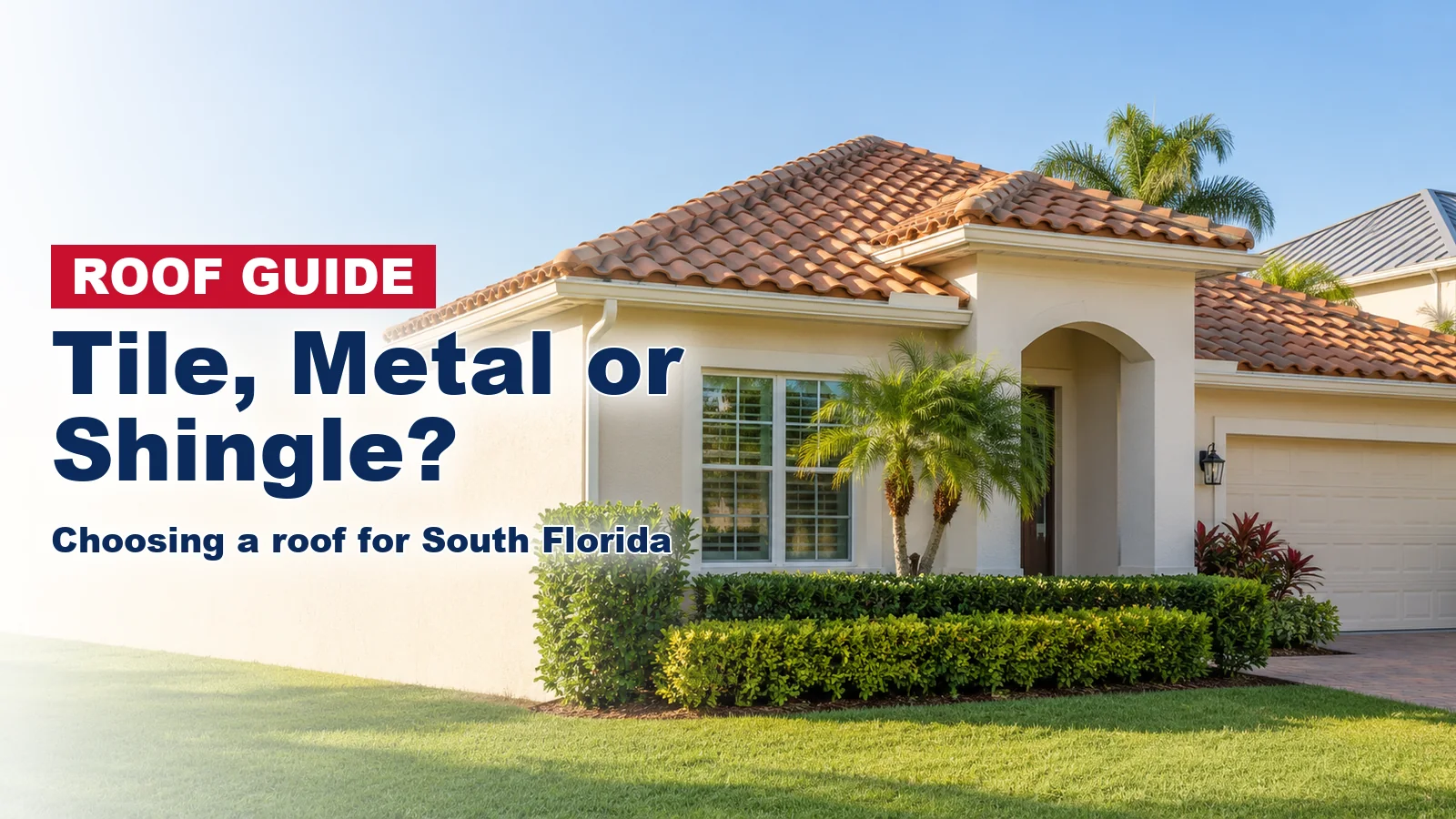
The three best types of roof for South Florida homes are concrete or clay tile, metal, and asphalt shingles, each installed to the Florida Building Code. In one Florida hurricane study, metal had the best record, tile held up well unless it was old, and shingles took the most damage.
The right pick for your house depends on your roof framing, how close you live to salt water, your budget and your insurance. This guide compares the three, explains what Florida requires of each one, and shows what every new roof must include.
Tile vs Metal vs Shingle: How the Three Roofs Compare in South Florida
Metal roofs performed best, tile roofs came second, and asphalt shingles saw the most damage when the Insurance Institute for Business & Home Safety (IBHS) studied roofs after Hurricane Ian. The IBHS team assessed 3,646 single-family homes in Southwest Florida, plus light commercial and multifamily buildings.
Hurricane winds do not just push on a roof. They create suction that pulls upward, which can tear off sections of covering or, in the worst case, the whole roof. That is why the code rules below focus on how each material is attached.
| Roof type | What IBHS found after Hurricane Ian | What to check in Florida |
|---|---|---|
| Metal | Damage rates around 12%; most issues came from failures of nearby structures | Corrosion-resistant metal for salt air; G-90 minimum for steel in the HVHZ |
| Concrete and clay tile | About 40% had some damage; significant damage was rare except on roofs more than 20 years old | Solid sheathing and the FRSA/TRI high-wind installation manual; framing sized for the weight |
| Asphalt shingle | About half had issues; roofs 10 or more years old were especially vulnerable | Wind classification on the wrapper that matches your area’s wind speed |
The study covered Southwest Florida, outside the High-Velocity Hurricane Zone (HVHZ) of Broward and Miami-Dade, so read the figures as a guide, not a promise for your street. If you already know which material you want, see the tile, metal, shingle and flat roofing services we offer.
Concrete and Clay Tile Roofs: Strong When Installed to Florida’s High-Wind Rules
Concrete or clay tile is a strong South Florida roof when installed to the state’s high-wind rules. IBHS found tile roofs “showed strong improvement” compared with what it saw after Hurricane Charley, and significant damage was rare except on tile roofs over 20 years old.

Section 1507.3 of the Florida Building Code, chapter 15, requires clay and concrete tile over solid sheathing, with limited exceptions, and points installers to the FRSA/TRI Florida High Wind tile installation manual. In the HVHZ, Section 1518.8.1 puts all tile systems over solid sheathed decks.
Tile is heavy, which is the main trade-off. If your house has a shingle or metal roof now, ask whether its framing was designed to carry tile. Tiles come in flat and curved profiles, so the look can suit a Mediterranean or a modern home.

Metal Roofs: The Best Record in the Hurricane Study, if the Metal Suits Salt Air
Metal had the best record of the three in the IBHS Hurricane Ian study. Metal roofs had damage rates around 12%, and most issues “resulted from failures of nearby structures,” not the metal roofs themselves.
IBHS noted metal systems held up well in winds below 130 mph. Design wind speeds in Broward and Miami-Dade are higher, so the product approval for your zone matters most.
Salt air is the catch for coastal homes. Aluminum and Galvalume (coated steel) are common choices in South Florida, and living near the ocean can speed up corrosion. Florida Building Code Section 1507.4.3 says metal-sheet roofing must be naturally corrosion resistant or meet the code’s corrosion table.
In the HVHZ, Section 1518.9 adds that steel panels or shingles must be at least G-90 corrosion resistant. If your home is near the water, ask which metal and which fasteners the quote includes and how they handle salt exposure.
Metal is also lightweight. That makes it a good option for homes whose framing was not designed for the weight of tile, and for owners who want a step up from shingles without a structural upgrade.
Asphalt Shingle Roofs: Cost-Effective, but Check the Wind Class and Age
Asphalt shingles are the cost-effective choice of the three, and an asphalt shingle roof installed correctly is a sturdy system. The trade-off shows up in storms: IBHS found that about half of all shingle roofs had issues after Hurricane Ian, and roofs 10 or more years old were especially vulnerable.

The wind rating is the detail to check. Florida Building Code Section 1507.2.7.1 says asphalt shingles must be tested and classified under ASTM D3161, ASTM D7158 or TAS 107, with a wrapper classification that matches your area’s basic wind speed. Ask to see it.
Shingles also come in more than one look. Premium dimensional shingles can mimic wood shakes or slate, which gives a shingle roof more character than a flat three-tab look.
What Every New Roof in Florida Must Include, Whatever the Material
Every new roof covering in Florida needs an approved product and a reroof that follows the state’s mitigation rules, whichever material you pick. In Broward and Miami-Dade, Section 1515.1 of the Florida Building Code says “All roof assemblies, roof coverings and roof systems shall have product approval.”

Section 553.844 of the Florida Statutes says that for site-built, single-family homes, a roof replacement must include two techniques: a secondary water barrier, and strengthening or correcting the roof deck attachment during reroofing. The secondary water barrier helps keep rain out if the roof covering is torn off.
In the wind-borne debris region, the same law adds roof-to-wall connection work on roof replacements for homes with an insured or assessed value of $300,000 or more. That work is required only when it can be done for 15 percent of the cost of the roof replacement.
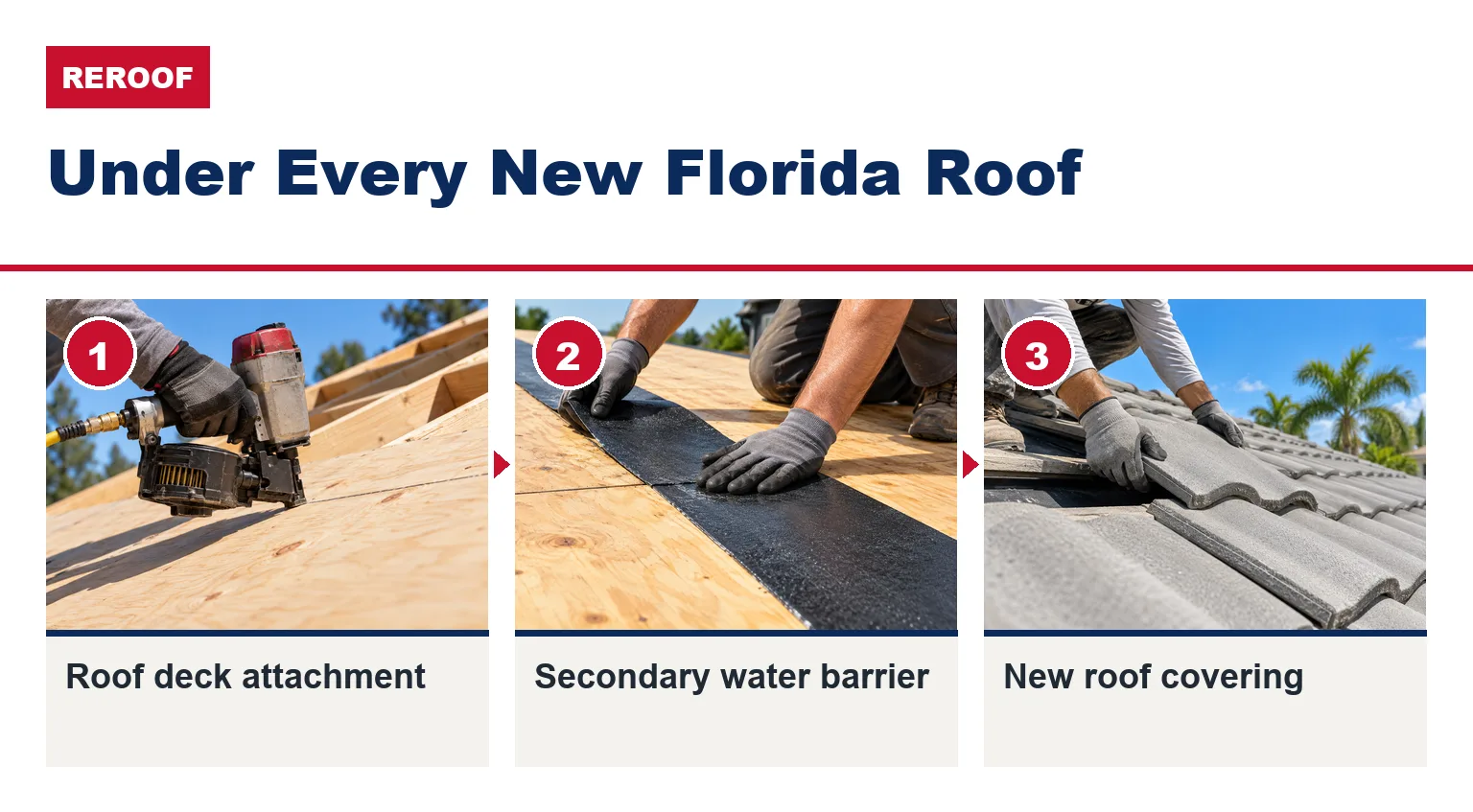
These steps sit under any roof covering, so they matter as much as the tile, metal or shingle on top. For more ways to protect the rest of the house, see other upgrades that make a home hurricane resilient.
How Your Roof Choice Shows Up on Insurance and the Wind Mitigation Form
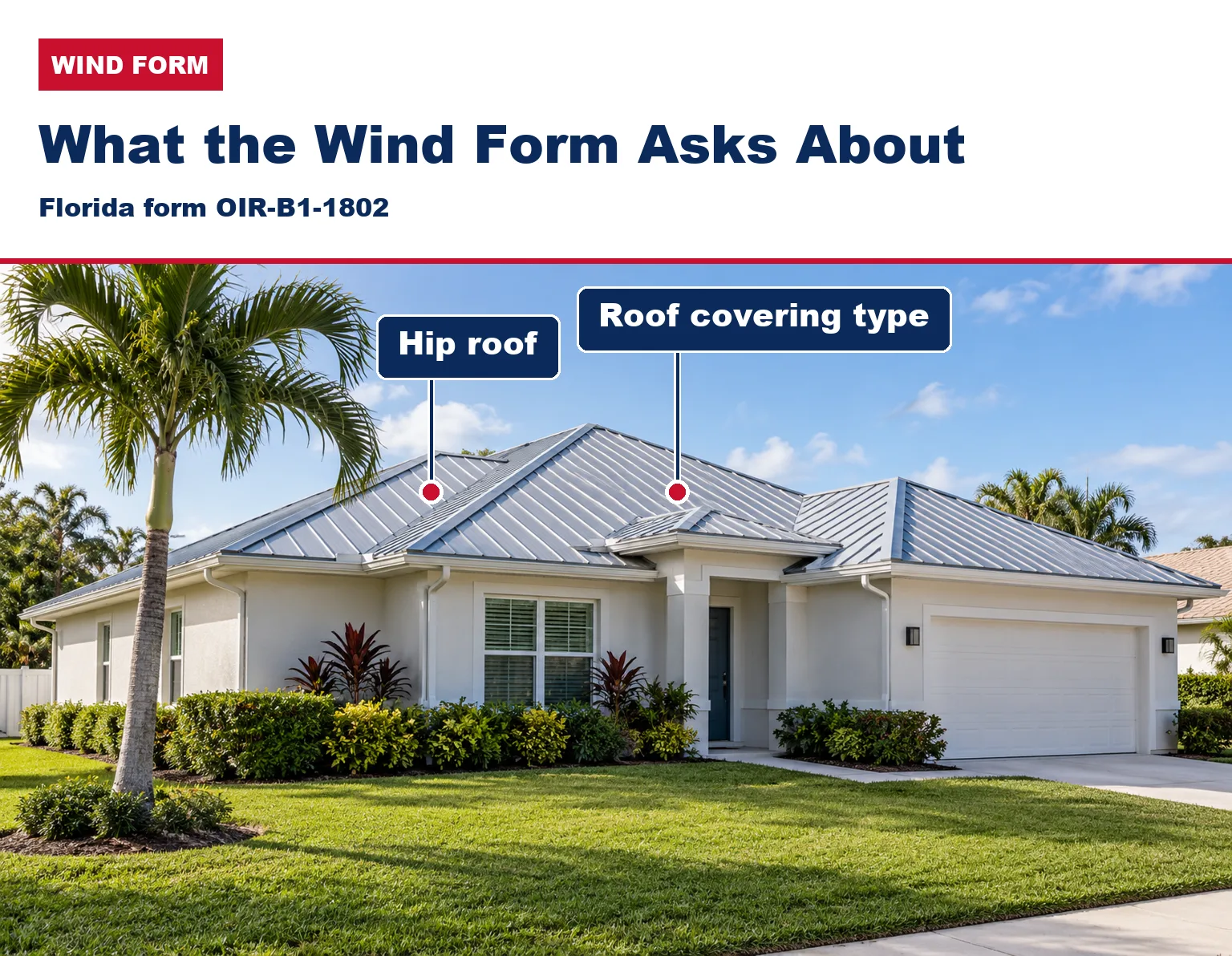
Your roof choice is recorded on Florida’s wind mitigation form, OIR-B1-1802, which insurers use to review a home’s wind features. The revised form, as announced by Citizens Property Insurance, asks for the roof covering type, a permit date or product approval number, and the install year.
The form also asks about roof deck attachment, roof-to-wall attachment, a hip roof, and a sealed roof deck (secondary water resistance). Standard underlayment or hot-mopped felt does not count as a sealed roof deck; taped deck seams or a fully adhered ASTM D1970 membrane can.
Once a roof reaches 15 years, Florida law gives you the right to an inspection before an insurer can require a new roof, as covered in the signs that your roof needs replacing.
Each insurer sets its own credits, so read about home upgrades that can lower your insurance rates and ask your agent.
Opening protection is on the same form, so a roof replacement is a good time to price ES Windows impact windows and impact doors for the entries and patio. If you plan to sell later, see the questions buyers ask during a home inspection.
How to Choose the Right Roof for Your South Florida Home
Choose the roof that fits your house first and your taste second. Use these questions to narrow the three down before you ask for quotes:
- Choose tile if your framing is designed for its weight, you like the look, and you will keep up with it as it ages.
- Choose metal if you want the best storm record in the IBHS findings, a lighter roof, or your framing is not built for tile. Near the coast, ask how the metal and fasteners handle salt air.
- Choose shingles if a cost-effective roof matters most. Check the wind classification on the wrapper, and plan for closer checks as the roof passes 10 years.
If your current roof is sound but storm season is close, check for the roof damage to fix before hurricane season.
Roof Material FAQs
Can I switch from a shingle roof to a tile roof?
Often, but it depends on the framing. Tile is heavier than shingles or metal, so ask your contractor to confirm the roof framing can carry it. If it cannot, metal gives an upgrade without the extra weight.
What about flat roofs?
Flat or low-slope roofs follow their own code rules and use different coverings than tile, metal or shingle. In the HVHZ, the Florida Building Code has a separate section for roof coverings with slopes less than 2:12. If your flat roof is not draining properly, ask at your estimate.
Do I need a permit to replace my roof?
Yes. Every USA Home Improvement project is permitted, and the permit application date is one of the items the wind mitigation form asks for. Keep the permit and the product approval number for your insurer and for any future buyer of your home.
Plan Your New Roof With USA Home Improvement
If you want the best record in the IBHS study, start with metal; if your framing supports it and you love the look, tile; if budget leads, a properly rated shingle roof.
Whichever you choose, get the product approval, the wind classification and the secondary water barrier in writing. Ask whether that barrier counts as a sealed roof deck on the wind mitigation form.
Financing options for a roof replacement may be available for qualified homeowners through independent third-party providers. Terms, eligibility and availability depend on the program and location.
USA Home Improvement is licensed (CGC1526707) and insured and has served Florida homeowners for more than 15 years.
Get a free roofing estimate or call (877) 554-6373.