
Impact Windows in South Florida

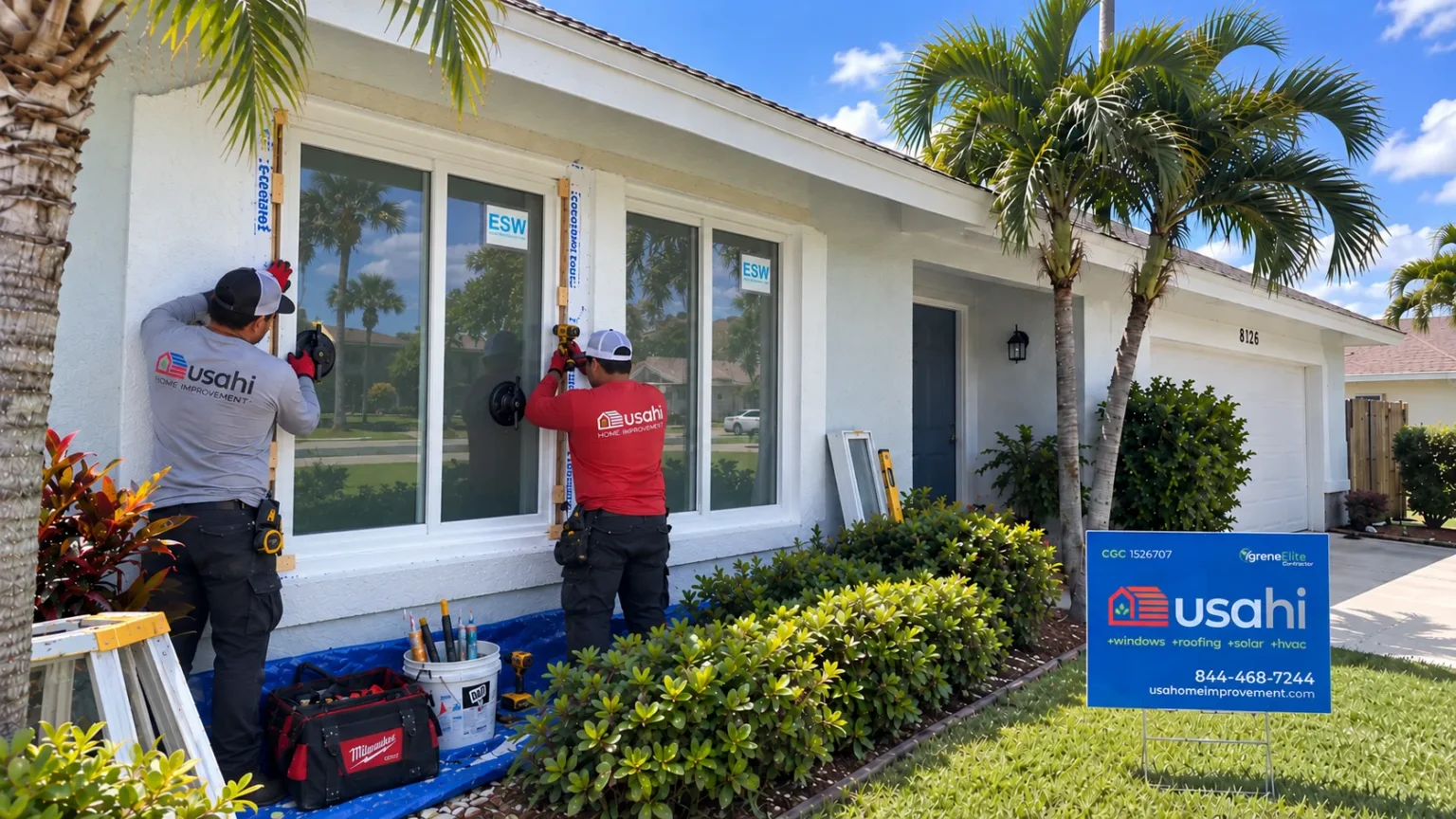
USA Home Improvement installs ES impact windows across South Florida and Southwest Florida. We help you choose windows for each room, coordinate the permit process and plan the removal, installation and finishing work.

Your window project

How we help you replace impact windows in your South Florida home

From choosing the windows to understanding your warranty, here is the work we help you plan.

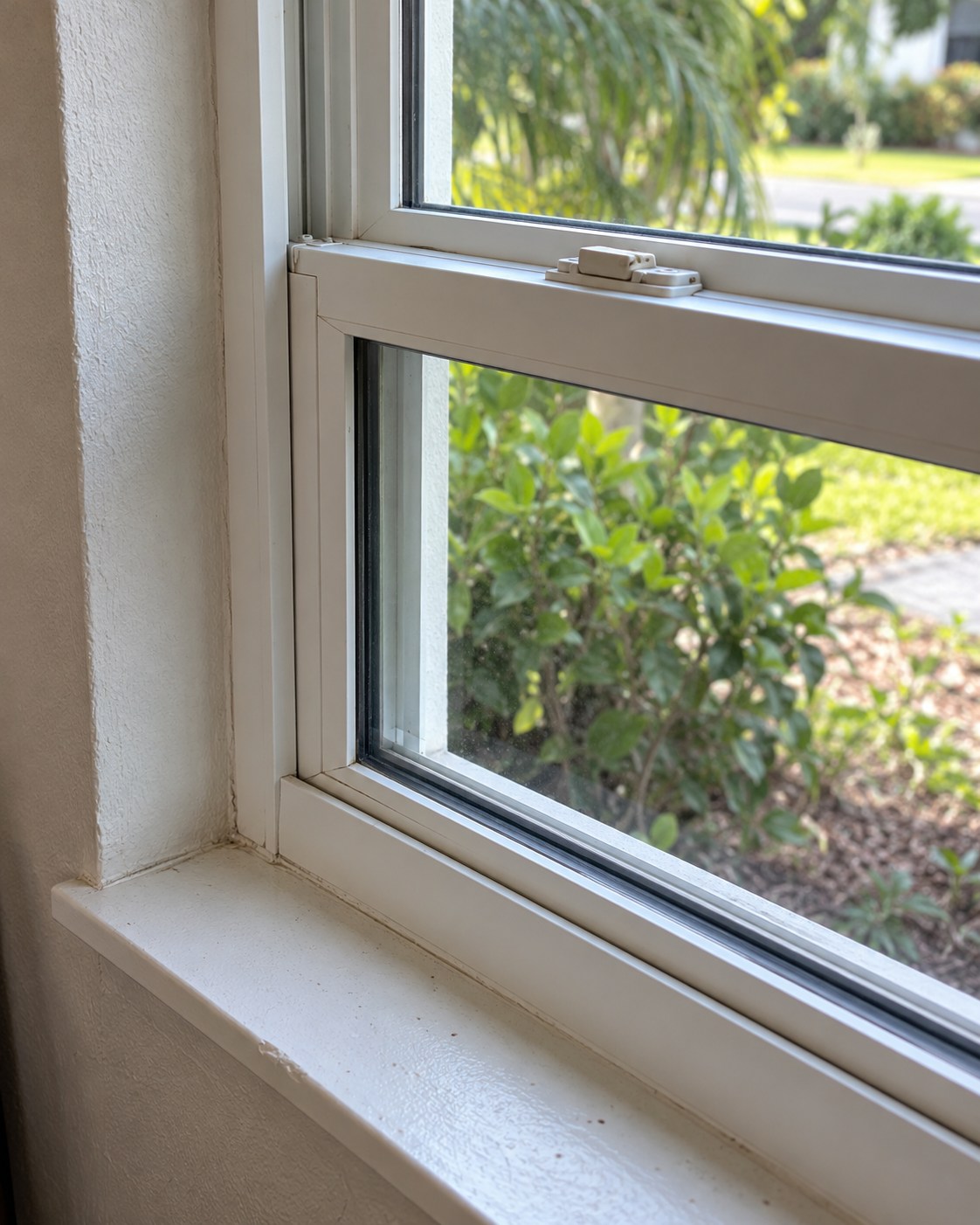
Window frame and latch beside an interior sill
01

We help you choose windows for each room

Tell us which rooms feel hot, noisy or difficult to ventilate. We review the existing windows, measure the openings and help you compare ES styles, glass and finishes for those needs.

02

We coordinate the permit and installation documents

We identify the permit authority for your address and coordinate the product documents and inspection steps for the agreed work. If your association controls exterior changes, confirm its separate approval before the order is released.

03

We install the windows and complete the agreed finish work

Your written scope should say which windows we remove, how the new units will be installed and sealed, and who restores trim, drywall and paint. Agree how any concealed damage will be priced before installation begins.

04

We explain the handover records and warranty contacts

Review the required inspection records, care instructions and written warranty terms. Make sure you know who handles a product claim and who handles an installation concern; these may be different service contacts.

Planning a replacement in a specific city? Read our Miami impact-window guide or Fort Lauderdale impact-window guide. Your address determines which permit office reviews the work.

Discuss your window replacement

Compare window styles

Which impact-window style suits each room?

Start with how the window opens, then check the space around it. Use the filters to narrow the six styles below. A style describes how a window works; the exact model still needs to suit the measured opening. Replacing doors too? Explore impact doors for patios and entrances.

Showing all 6 window styles. Use a filter to compare the opening movement you need.

Single-hung window: schematic showing its opening movement

Single-hung

The lower panel slides up; the upper panel stays fixed.

Good fit: Bedrooms or living spaces where you want fresh air without a window swinging outside.

Before choosing: Try the lifting effort and reach to the lock. For a bedroom escape opening, have the usable clear opening checked; the frame size alone does not answer that question.

Horizontal roller window: schematic showing its opening movement

Horizontal roller

One or more panels slide sideways along a track.

Good fit: Wide openings beside a walkway or patio, where an outward-opening panel could get in the way.

Before choosing: Ask which panels move and how you will reach the tracks and exterior glass for cleaning.

Fixed picture window: schematic showing fixed glass that does not open

Fixed picture

The glass stays in place; this window does not open.

Good fit: A view or daylight where you do not need this particular window for fresh air.

Before choosing: Decide where the room will get ventilation. If an escape opening is required, a fixed window cannot provide it.

Casement window: schematic showing its opening movement

Casement

A panel is hinged at the side and swings outward.

Good fit: Rooms where you want an opening panel and can leave clear space outside it.

Before choosing: Check the panel’s path beside screens, plants and walkways. Try the handle at the height where it will be installed.

Architectural window: schematic showing fixed glass that does not open

Architectural

A fixed shape, such as an arch or angled top, stays closed.

Good fit: Keeping a shaped opening or adding daylight above or beside an operating window.

Before choosing: Compare a drawing of the proposed shape and frame lines with the existing opening. Plan access for cleaning high glass.

Awning window: schematic showing its opening movement

Awning

The panel is hinged at the top and opens outward at the bottom.

Good fit: An opening where a top-hinged panel suits the wall layout and the handle is within reach.

Before choosing: Check the space outside and try the operator. Close and lock the window for storms; its shape is not permission to leave it open.

ES Windows
The manufacturer and your installer

ES Windows products, installed by USAHI

Compare the frame finish and glass appearance as well as the opening style. Ask to see the proposed finish and glass sample in ordinary daylight; colors on a screen may look different from the materials at your home.

Reasons to replace older windows

How impact windows can improve storm protection and everyday comfort

Compare the improvement you want with the question that helps you evaluate it. Our team explains the window options; your insurer confirms any insurance eligibility.

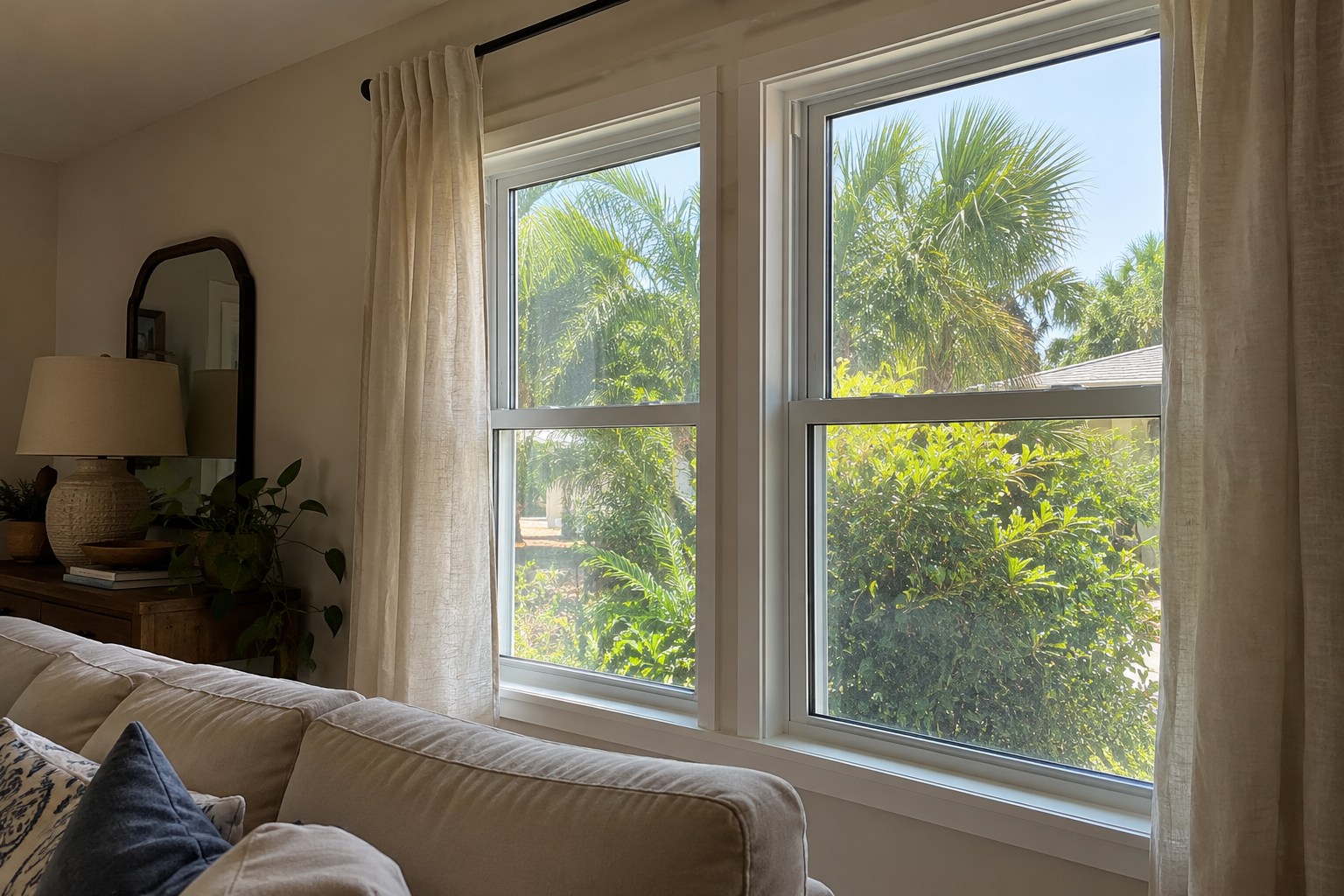
A lived-in room with white-framed windows and natural daylight
What could improvePossible benefitAsk before choosing
Storm protection at the window openingAn approved, correctly installed impact window helps protect the window opening from windborne debris.Which approval covers my window, and who checks it against my home’s requirements?
Less outdoor noise indoorsReplacing a poorly sealed or unsuitable window may reduce the outside noise you hear in the room.Can your team show sound-test information for the exact window and glass in my quote?
Less heat entering through the glassGlass with a suitable solar-heat rating can reduce unwanted heat from the sun while letting in daylight.Can your team compare the solar-heat and daylight ratings of the glass options?
A possible insurance creditDocumented opening protection may qualify for a wind-mitigation credit under your insurer’s rules.Ask your insurer which records it needs and how remaining windows or doors affect eligibility.
Smooth opening, closing and lockingReplacement can restore normal operation where an existing window is worn or damaged.Can I try every moving panel and lock at handover, and who do I contact for service?
Check the window in your quote

How do you know an impact window is suitable for your home?

Ask your installer to connect three things: where the window will go, which product is proposed and which records support that choice. You should not need to calculate wind loads or interpret an approval drawing yourself.

Ask for a window-by-window list, not just a total quantity.

Too vague: “Replace 12 impact windows.”
More useful: “W01 — front bedroom, left window: ES model, measured size, selected glass and frame finish, approval reference, and the agreed trim and paint work.”
This is an example of how to describe the work, not a specification for a particular product.

Three checks before the order

What information should your installer be able to show you?

01
A named window for an identified room

Match each entry in the quote to a room and window location. Record the ES model, size, opening style, glass and finish. If two windows share one opening, ask how the join between them is included.

02
An approval and installation detail that fit the property

Ask the project team to confirm that the approval covers the selected size and glass, the required wind pressures and the supporting wall. In Miami-Dade and Broward, also confirm suitability for the High-Velocity Hurricane Zone. The project team handles the technical comparison.

03
Evidence for the comfort improvement you want

For a hot room, compare the quoted glass options’ energy ratings. For a noisy room, ask whether sound-test information is available for that exact window. An impact approval answers neither question on its own.

Ask your installer to identify the applicable record in the Florida Product Approval search or the project’s accepted Miami-Dade approval. Miami-Dade’s window-documentation guidance shows why the window locations, sizes and product records need to agree. Other permit authorities may require different submissions.

Solar heat: ask for the SHGC

Solar Heat Gain Coefficient describes how much solar heat passes through the window. A lower number means less solar heat gets through. Use it when comparing glass for a sun-exposed room.

Daylight: compare visible transmittance

Visible transmittance describes how much visible light gets through. A higher number lets in more daylight. Compare it alongside solar heat so you understand the trade-off for the room.

Insulation: compare the whole-window U-Factor

U-Factor describes heat transfer through the window. A lower number means better insulation. Ask for the full window’s rating, rather than a glass-only claim.

The NFRC explanation of window energy labels defines these energy ratings. They do not establish impact resistance or predict an exact utility-bill saving. For the available choices, read our South Florida impact-window glass guide.

Help with your existing windows

Does your existing window need repair or replacement?

Tell us what you have noticed. We review the window and explain whether a repair assessment, different glass or replacement is worth considering. Choose a symptom below to see what our team checks.

Illustration of water or stains at a window

Stains or water near the window sill

Tell us what you notice
Tell us where moisture appears and whether it follows rain. A photo taken from inside can help explain the symptom.
What our team checks
We review the visible window, sill and nearby wall and explain whether further leak investigation is needed.
What the advice should explain
The recommendation should identify the likely water-entry route and which window, sealing or wall work belongs in the scope.
Illustration of heat or drafts at a window

A hot room or air moving around the frame

Tell us what you notice
Tell us which room feels uncomfortable, when it happens and which window gets direct sun.
What our team checks
We review the glass, visible gaps, seals and sun exposure. We explain if the concern needs attention beyond the window.
What the advice should explain
The recommendation should explain why a glass change, seal repair, replacement or further room assessment addresses the concern.
Illustration of a sticking panel or lock at a window

A panel or lock that sticks

Tell us what you notice
Tell us which panel or lock causes trouble and whether the problem is occasional or happens every time.
What our team checks
We review the hardware, alignment and frame condition, then explain whether a repair assessment or replacement makes sense.
What the advice should explain
The recommendation should identify the fault, the work being proposed and how proper opening, closing and locking will be checked.

Start with a conversation about the symptom and the rooms affected.

Arrange a window assessment
Estimated pricing · USD

How much do impact windows cost in South Florida?

For a starting budget, My Safe Florida Home publishes an estimated $900–$1,750 per impact window. This is a published Florida reference, not a USAHI quote or a guaranteed minimum or maximum.

The source bases its estimate on a 1,750-square-foot Florida home and does not itemize removal, permits, repairs or finishing. Ask which of those costs your quote includes. Large, difficult-to-access or custom openings can cost more than the published range.

Published reference range / per window
Lower end$900
Upper end$1,750

Planning guidance, not a USAHI quote or a guaranteed price limit.

Get a price for your actual openings →

Source: My Safe Florida Home window cost sheet, dated July 2025; verified 1 November 2026. For the factors behind a complete installed quote, read our Florida impact-window cost guide.

Financing Options

How should you plan the impact-window schedule and payments?

Which dates should you confirm before replacing impact windows? Confirm when the permit application will be submitted, when the product order can be released, the expected delivery date and the planned installation dates. Also ask how many days the crew expects to work in your home. Manufacturing, approvals and site repairs can change these milestones, so ask how schedule changes will be communicated.

Can you stay in the home during window installation? Discuss the sequence of rooms, furniture clearance, dust protection and how the home will be secured at the end of each workday. Ask the installer about your actual job before planning around normal room use.

Can you finance your impact-window replacement? Financing may be available through independent third-party providers for qualified homeowners. Compare the written fees, repayment schedule and total amount repaid with the project price. Review USAHI’s financing information and confirm the provider’s current terms.

PAY OVER TIME

Explore financing for your impact-window project

Before you sign the proposal

What should your impact-window installation quote include?

Compare the written work as well as the window price. These four checks help reveal why two quotes for the same number of windows can differ.

01

An installed total with clear inclusions

Use the window list above as the product specification. Ask each contractor to identify the installed total, permit or inspection charges and exclusions. Keep optional upgrades separate so you can compare the same work.

02

How concealed damage will be handled

Ask what happens if removal exposes damaged wood, concrete or another unsuitable surface. The quote should explain how the finding is documented, who approves extra work and how its price is agreed.

03

Protection, cleanup and the finished appearance

Identify who moves or protects furniture, removes debris and restores drywall, trim and paint. Ask whether “finish work” includes paint matching or only a surface ready for painting.

04

Inspection records and a remaining-work list

Ask who arranges required inspections and corrects any findings. At the walkthrough, list unfinished trim, paint touch-ups, missing screens or locks that need adjustment, with a service contact and agreed next step.

Your city and permit route

Find impact-window planning guidance for your South Florida city

Open your city’s impact-window page for local property and permit-planning information. These links lead to window-specific guides, rather than the general home-improvement service-area pages.

Impact-window questions

Questions homeowners ask before replacing impact windows

These answers address choices that can change the scope of your replacement. Bring your address and window list to the estimate so the advice can be specific to your home.

Read the window buying checklist →
Do impact windows need hurricane shutters too?

A separate shutter is normally unnecessary for that window when the selected impact window provides the required opening protection and is installed as specified. Ask your installer to confirm this for your property and quoted product. Other windows and doors still need their own protection plan. Compare the practical differences in our impact windows versus shutters guide.

Can I replace only some windows?

Yes, a project can be planned around selected windows, subject to the property and permit requirements. Ask for a list of the windows being replaced and those staying. If you want a whole-home protection or insurance outcome, ask how the remaining windows and doors affect it before choosing a partial project.

Are all impact windows also energy-efficient?

No. Impact approval concerns storm-related performance; an energy label describes heat and daylight performance. If energy comfort is a priority, ask for the quoted window’s whole-unit ratings and compare glass options for the rooms you want to improve.

Will new windows solve a leak or a hot room?

Only if the window is causing the problem and the replacement addresses that cause. A leak may start in the surrounding wall, and a hot room may also involve shading or air conditioning. Have the cause assessed, then ask how the proposed work addresses it.

How do I compare warranties?

Request the manufacturer’s product warranty and the installer’s workmanship warranty separately. For each, identify the covered parts or work, duration, exclusions, service contact and transfer rules. Ask who pays for a service visit or removal and reinstallation if the product needs attention; do not assume those costs are covered.

What should I have ready for an estimate?

Bring your address, approximate window count, photos if available and the rooms you most want to improve. Mention association restrictions, upper-floor access and any planned changes to opening sizes. The site measurement establishes the final scope.