 Skip to content
Identify the panel system
Compare the actual seam and fastener arrangement, panel dimensions and approved installation details.

Home / Roofing / Metal roofing
South Florida · Roof planning & careChoose the panel system as carefully as the color. USAHI helps you compare seams, fasteners, finish, drainage and installation details for your roof and its exposure.
Discuss your roofing projectExplore cost planning
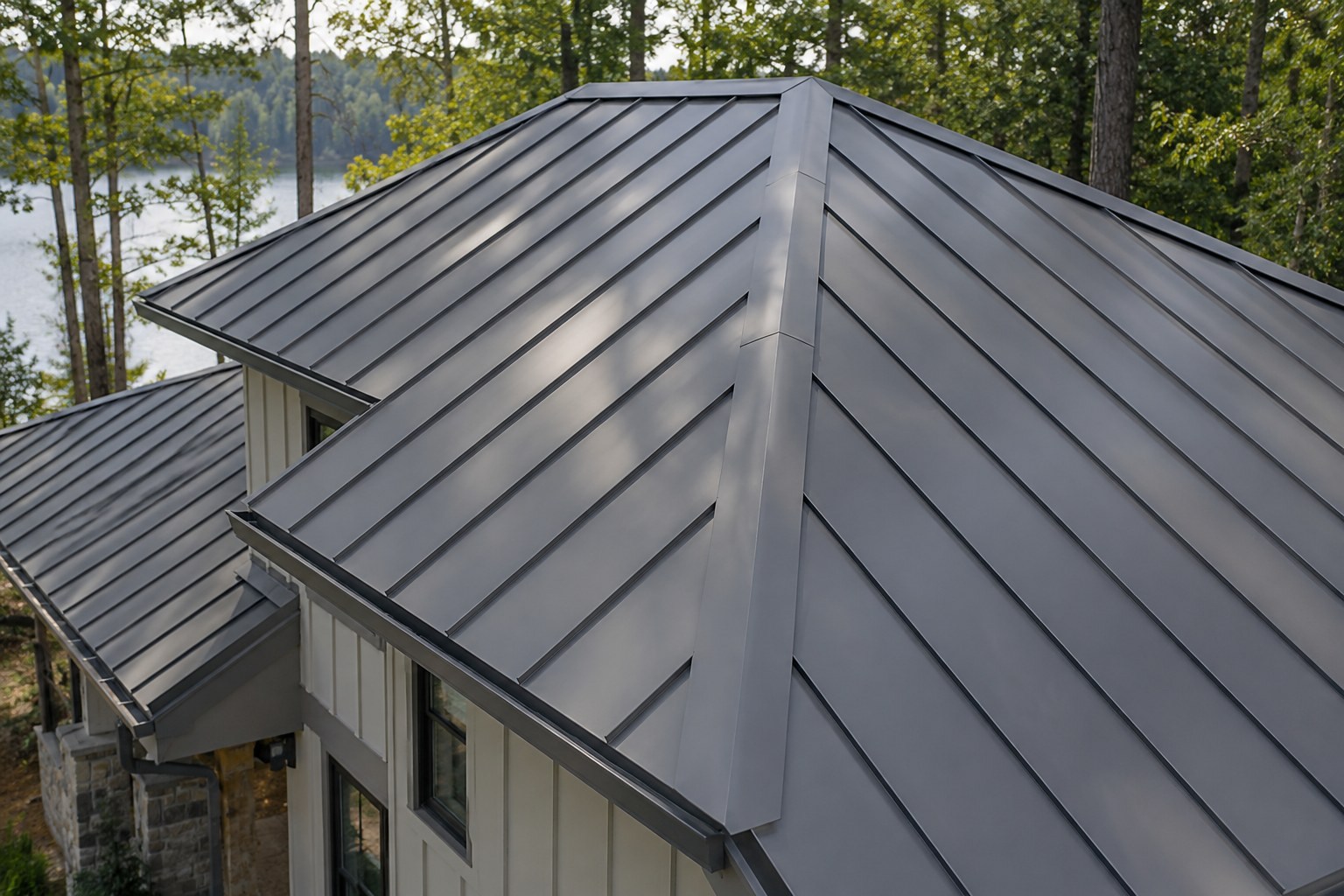
Metal roofing is a category, not one uniform product. Standing-seam and exposed-fastener systems connect panels differently and have different detailing and service considerations. Ask for the exact panel profile and attachment method in every proposal. Compare roofing material choices.
Material, finish, roof slope, seams, clips or screws, flashings and penetrations all belong in the selection. Ask the estimator to name the panel and metal being proposed and to show how it meets the roof's geometry. A standing-seam label does not describe every edge and penetration, and an exposed-fastener label does not identify the fastener or washer. Compare the complete systems rather than two color samples. Compare the full roof replacement scope.
No. Standing-seam panels meet at raised seams and commonly use concealed attachment. Exposed-fastener panels have visible fasteners passing through the panel face. Those differences affect appearance, detailing and maintenance; confirm the exact system proposed rather than assuming one description covers every metal roof.
No. Coastal suitability depends on the actual metal, finish, compatible components and location-specific limitations. A panel’s color name does not identify its substrate or coating. Ask for the written specification, care requirements and warranty restrictions that apply to your property’s exposure.
Not necessarily. Rain sound depends on the full assembly, including the deck, insulation and interior construction. Discuss the room’s comfort needs before selecting the system. Neither a promise of silence nor a claim that every metal roof must be noisy describes all installations.
No. Arrange inspection and care according to the selected system, especially at fasteners, seams, penetrations and drainage areas.
No. Suitability depends on the exact panel and seam system, installation instructions and project conditions. A low-slope porch and the main roof may need different solutions. Have each roof area identified in the scope instead of assuming one panel specification fits them all.
Use these three checks to compare proposals for the actual property.

Panel profile, seams, attachment, underlayment and transitions belong to the selected metal roof system.
Compare the actual seam and fastener arrangement, panel dimensions and approved installation details.
Ask about coastal suitability, compatible metals, finish limitations and the exact warranty conditions.
Include flashings, transitions and provisions required by the selected system for panel movement and attachment.
Compare material choices in the context of the actual roof. Compare roofing materials for South Florida homes.
The most useful comparison goes beyond the color and rib pattern. These decisions affect the roof's details, appearance and future service.
Ask for the panel's metal, coating and finish specification, then read the exposure restrictions and warranty terms for that selection. The roof also includes cut edges, trims, screws and other accessories. Confirm their compatibility and who checks coastal suitability. A generic statement that metal does not rust is not an adequate material description.
Exposed-fastener systems have visible fasteners in the panel field; standing-seam systems commonly conceal field attachment beneath the seams. Ask which details remain exposed and how they are inspected or serviced. The maintenance discussion should fit the actual assembly rather than treating concealed attachment as a promise that no component ever needs attention.
Metal panels respond to temperature changes, and the selected system must accommodate the movement it is designed for. Ask how the roof handles connections at walls, changes in slope and equipment penetrations. Coordinate solar or other rooftop work before installation so later attachments do not become improvised modifications to completed panels. Review repair scope at roof penetrations and adjoining details.
Review panel width, seam lines, trim and the appearance expected in changing daylight. Ask whether a sample installation or detailed drawing can clarify the look. Minor visual differences should be discussed before fabrication; a sleek rendering does not establish what a large installed roof plane will look like.
Choose the material for the roof and the home, with the complete installation specified.
Compare rib spacing, seams, finish and how roof planes meet rather than selecting from color alone. Review the layout from the street and the treatment of valleys, ridges and hips. A consistent panel pattern can support the intended appearance, but complex roof geometry needs deliberate detailing.
A clear system description makes the differences between exposed and concealed attachment easier to evaluate. Ask the contractor to explain why the proposed system fits the slope and roof layout. Compare the future inspection points as well as the initial appearance of the screws or seams.
Specify valleys, wall junctions, edges and penetrations as part of the complete assembly. That makes it easier to see whether two estimates address the same weather-sensitive details. Ask which existing equipment or curbs must be removed, adapted or replaced. See how a roof repair scope is assessed.
Material and coating choices can be considered against coastal conditions and written limitations. Read the conditions that apply near salt water and the required care. A finish warranty and a watertightness or workmanship warranty describe different obligations.
Request inspection and maintenance guidance for the actual system, with compatible repair materials. Know who will inspect concerns, which replacement components are compatible and what records to retain. Concealed fasteners reduce visible field attachment; they do not eliminate the need to maintain the roof.
Compare material options against the existing structure, roof geometry, exposure and complete installed scope.
| Option | What it involves | When to consider it | Check first |
|---|---|---|---|
| Shingle roofing | Overlapping asphalt-shingle covering. | Consider it when an overlapping shingle profile suits the home and roof assembly. | Deck, underlayment, flashings and attic design. |
| Tile roofing | Individual concrete or clay tiles over a specified roof assembly. | Consider it when the tile profile suits the house and the supporting structure is suitable. | Structure, tile compatibility, underlayment and attachment. |
| Metal roofing | Panel covering with system-specific seams and attachment. | Consider it when the panel appearance and selected seam and attachment approach suit the roof. | Panel type, material, finish, seams and penetrations. |
Use visible changes to prepare questions for a professional assessment. Understand signs a roof may need replacement.
A visible symptom is a reason to investigate, not a diagnosis by itself. Arrange a professional assessment without accessing the roof.
Arrange professional assessment. Do not climb onto the roof or tighten fasteners yourself.
Have the cause and extent reviewed before applying a coating. Material compatibility and warranty terms matter.
Flashing, seals, movement or nearby details may be involved. Trace the entry point rather than covering it indiscriminately with sealant.
Recurring leaks and damaged details deserve a defined repair plan. Read about roof damage before storm season.
The cost depends on the actual roof, its condition and the work included. Ask for a measured, itemized proposal so you can compare equivalent scopes.
Review material, preparation, repairs, access, disposal and any required approval or inspection responsibilities. Confirm how additional work will be documented and agreed.
Request a scoped estimateArea, slope, roof planes, valleys, penetrations and access affect the work. Long runs, intersecting planes, access and the amount of trim or penetration work can change handling and detailing.
Exact covering, underlayment, attachment, flashing and finish choices affect the proposal. Compare panel metal, profile, finish, clips or fasteners and the full set of flashings. Similar-looking roofs can have different components and obligations.
Define tear-off, disposal and how newly exposed deck or surrounding damage is measured and authorized. Request the procedure for approving concealed deck repairs and separate any equipment relocation, gutter changes or interior restoration.
Identify the system, concern, condition and access.
Confirm materials, details, responsibilities and changes.
Coordinate weather, site protection and required approvals.
Confirm the completed scope, care and written records.

Review the proposed work, then explore current payment options.
Explore financing optionsFinancing may be available for qualified homeowners through independent third-party providers. Terms, eligibility and availability depend on the program and location. Review the written offer, total repayment and any fees before committing.
Compare the complete project scope first. Keep the work specification separate from the payment offer so a monthly amount does not hide different materials or excluded repairs.
Follow the manufacturer's guidance for inspection and cleaning, including finishes and fasteners.
Arrange safe professional care where debris accumulates at valleys or gutters.
Use qualified service for attachments, sealants or coatings; mismatched materials can create new problems.
Request the measured roof area and exact metal system, removal scope, deck repair terms, underlayment, attachment, flashings, penetrations and edge details. Include access, protection, disposal, permits, inspections and written product and workmanship warranty terms.
Discuss the roofing scopeBring the condition of your roof, your priorities and your questions. Ask for the recommended work and the reasons behind it in writing.
Discuss your roof with USAHIBrowse our existing service-area pages, then discuss availability and the requirements for your roofing project. These are general area guides, not dedicated pages for every roof type.
Use these answers to prepare for an assessment of your actual roof. The proposal should explain the recommended work and why it fits the condition found.
No. Concealed attachment in the panel field does not mean every trim or accessory has no exposed fastening. Review the actual details. Ask the contractor to identify exposed attachment at ridges, edges, flashings and equipment as well as the main panel field. The actual drawing is more informative than a broad description.
That requires assessment of panel condition, corrosion, leaks and compatibility. A coating cannot be assumed to correct every underlying defect. A coating proposal should identify preparation, existing panel and fastener repairs, compatibility and the work it excludes. Compare it with replacement only after the condition of the underlying roof is understood. Check the assessment needed before coating an existing roof.
No. Any insurance outcome depends on the home, documentation and insurer. Do not rely on a promised discount when comparing proposals. Keep the roof's product and installation records for any review, but ask the insurer directly which evidence it needs. Select the roof on its documented scope rather than an assumed premium change.
Potentially, with compatible attachment and a plan that addresses loads, movement, penetrations and warranties. Coordinate it with the selected roof system. Ask who approves the attachment and who is responsible if later equipment work affects the roof. A convenient mounting point is not by itself proof of compatibility or structural suitability.
Panel and metal specifications, finish, attachment, underlayment, flashing, penetrations, removal, deck repair terms, access and written warranties. Also clarify delivery and handling, equipment access, disposal, inspection closeout and responsibility for damage discovered during removal. Read the actual product, finish and workmanship warranty documents.