 Skip to content

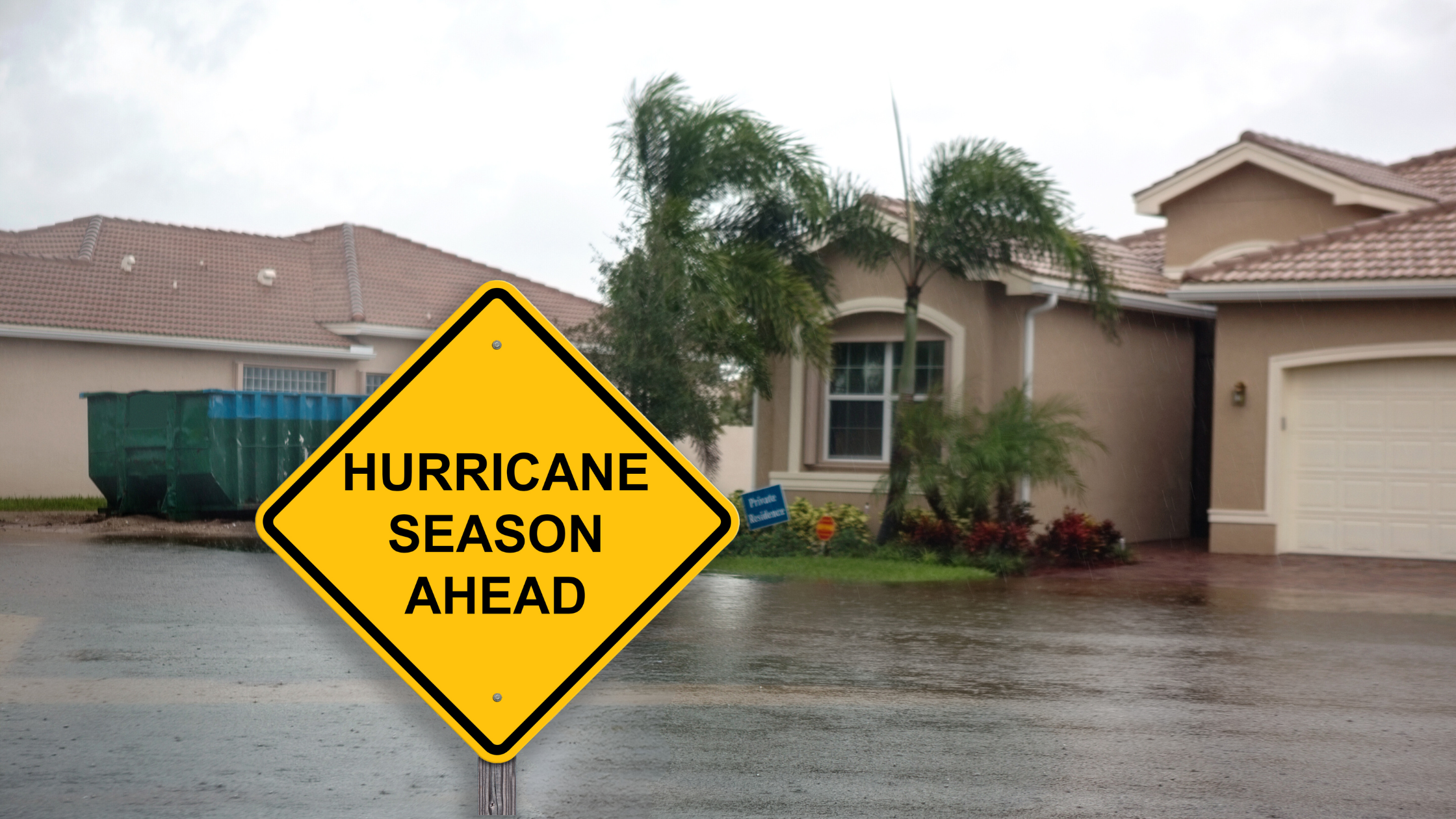
Impact windows are windows with laminated glass and reinforced frames that are tested to stay in the opening when wind-borne debris hits them. In South Florida they are the always-on way to meet the building code’s opening protection rules, with no shutters to put up before a storm.
Before you buy, three things matter most: the approval your county accepts, the design pressure each opening needs, and the window style that suits each room.
This guide explains each of those in plain language, then covers benefits and honest limits, what sets the price, how installation works and how to choose an installer. Each section links to a deeper article when you want the detail.
What Are Impact Windows?
Impact windows, also called hurricane windows or hurricane impact windows, are complete window units built to resist flying debris and hurricane wind pressure. The glass, the frame, the hardware and the way the unit is anchored to the wall are tested together as one product.
The key part is laminated glass: two layers of glass bonded to a tough, clear plastic interlayer. If a branch or roof tile hits hard enough to crack the glass, the interlayer is designed to hold the broken pieces in the frame, so the opening stays closed and wind and rain stay outside.
Ordinary windows, including tempered safety glass, break out of the frame. Once one opening fails, wind can push into the house and add pressure on the roof and walls from inside.
That is why the Florida Building Code requires glass openings in the wind-borne debris region to be protected, either by impact windows or by approved shutters.
USA Home Improvement installs impact windows for South Florida homes in every common style, from single-hung bedroom windows to large fixed picture units. We exclusively sell ES Windows, in both aluminum and vinyl frames.
How Are Impact Windows Made?
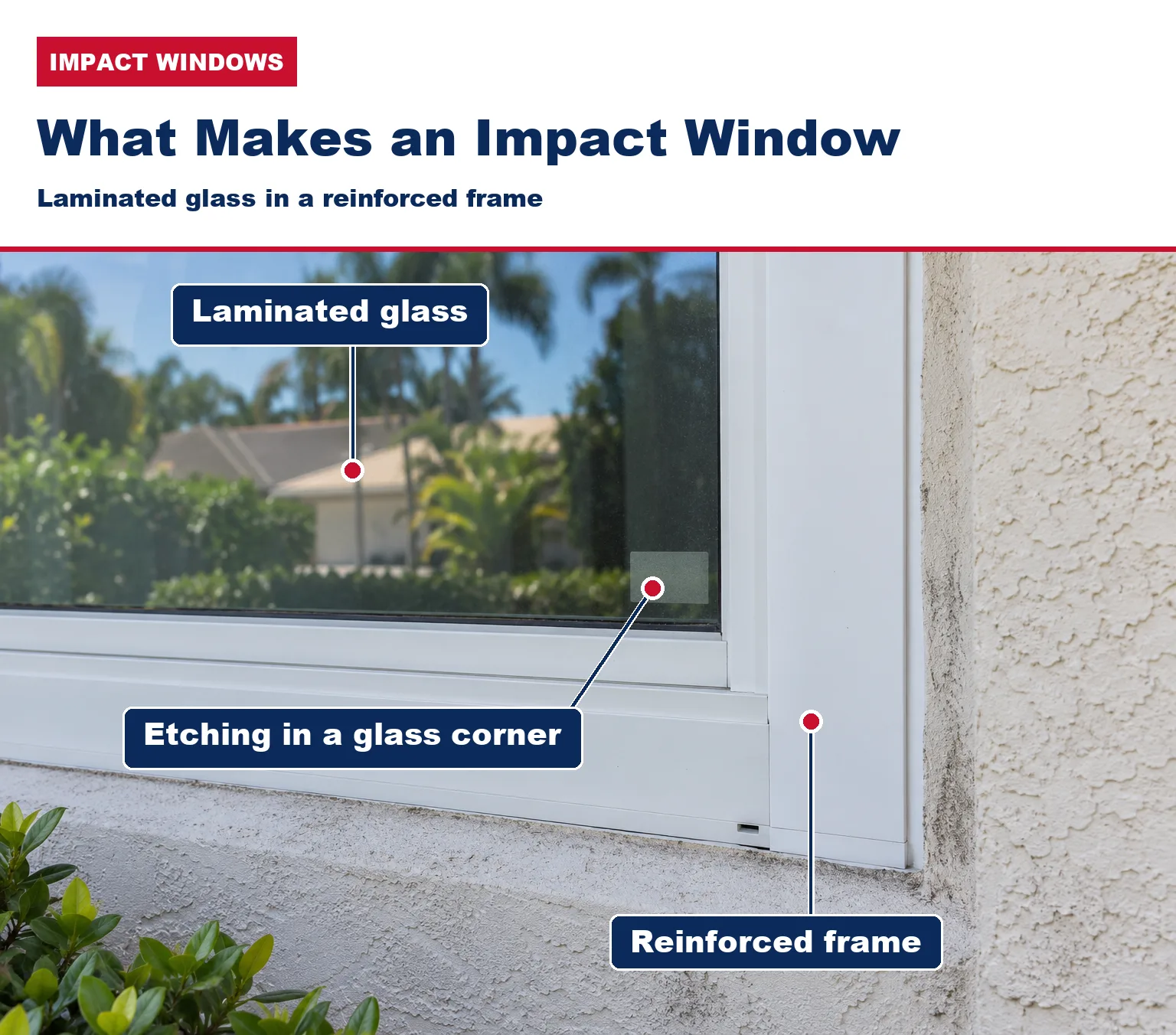
An impact window is made of three parts that work together: laminated glass, a reinforced frame, and hardware and anchors strong enough to hold the glass in place under load. The approval covers the whole assembly, so a strong glass in a weak frame does not pass.
Laminated Glass and Interlayers
Impact glass is made by bonding glass layers to an interlayer under heat and pressure. The two interlayers you will hear about most are:
- PVB (polyvinyl butyral): the most common interlayer. It holds broken glass in place and also helps reduce outside noise.
- SGP (an ionoplast interlayer): a stiffer interlayer often chosen for larger openings and higher design pressures, because the glass flexes less.
Many units also use insulated laminated glass, which adds a sealed air space and a second pane for better energy performance. A Low-E coating reflects heat and cuts fading from the sun. Tinted or reflective glass adds privacy and shade.
Frame Materials and Finishes
Most impact windows sold in South Florida have aluminum or vinyl frames.
- Aluminum: strong and slim, which makes it a common choice for large openings and modern homes. Ask for a powder-coated or anodized finish, because salt air near the coast is hard on bare metal.
- Vinyl: insulates well and does not corrode. Vinyl units can have more size limits than aluminum, so check the approval covers your largest openings.
Fewer makers offer fiberglass or composite impact frames. The brand and series matter as much as the material, and our guide on how to choose an impact window brand compares the main options.
Hardware, Seals and Anchors
The locks, rollers and hinges on an impact window are part of the tested product. Corrosion-resistant hardware matters near the ocean, and multi-point locks on larger units help hold the sash tight under pressure.
The anchors that fasten the frame to your wall are just as important. The product approval sets the anchor type, size and spacing, and the installer has to follow it. For a short buyer’s list that covers glass, frame, approval and installation, use our checklist for choosing hurricane impact windows.
How Impact Windows Are Tested and Rated
An impact window earns its rating by passing laboratory tests for debris impact, wind pressure and repeated pressure cycles, and then receiving a product approval. The table shows what each test proves.
| Test or rating | What it checks | What it means for you |
|---|---|---|
| TAS 201 (or ASTM E1886 and E1996) | Missile impact: the large missile is a 9-pound two-by-four fired at 50 feet per second | Proves the glass holds after a debris hit |
| TAS 202 | Static air pressure and water resistance | Sets the design pressure; not an impact rating on its own |
| TAS 203 | Cyclic pressure after impact, pushing and pulling the unit thousands of times | Proves the damaged unit stays in the frame through gusts |
| Design pressure (DP) | The wind load the unit is rated to hold, in pounds per square foot | Must meet or beat what each opening needs |
The TAS figures come from the Florida Building Code’s High-Velocity Hurricane Zone test protocols, as summarised in Intertek’s TAS 201 test overview.
Large Missile and Small Missile Tests
Most homes need large missile impact windows. The Florida Building Code requires large missile protection for glass openings within 30 feet of the ground, which covers the first and second floor of almost every house.
The large missile test fires a 9-pound two-by-four at 50 feet per second, about 34 miles per hour. Small missile tests use small steel balls and apply to glass higher up the building. A small missile product is not the right choice for a ground-floor window.
For what happens when a window is hit, how impact glass cracks and where its limits are, read how strong hurricane impact windows really are.
What Design Pressure Means for Each Opening
Design pressure is the wind load a window is rated to resist, and it is set per opening, not per house. It is shown as two numbers in pounds per square foot: positive pressure pushing in and negative pressure pulling out.
A label reading +40/-50, for example, means 40 psf inward and 50 psf of suction.
The DP an opening needs depends on the wind speed for your location, how exposed the house is, how high the window sits and whether it is near a corner of the wall, where suction is strongest. Engineers and installers work it out with ASCE 7 and the Florida Building Code.
Size matters too. The same product can carry a lower DP at a larger size, so a quote should list the approved DP for each window at its actual size. A DP number is also not a hurricane category, and a high DP does not make a window impact rated without the impact tests.
Impact Window Rules in Miami-Dade, Broward, Palm Beach and Southwest Florida
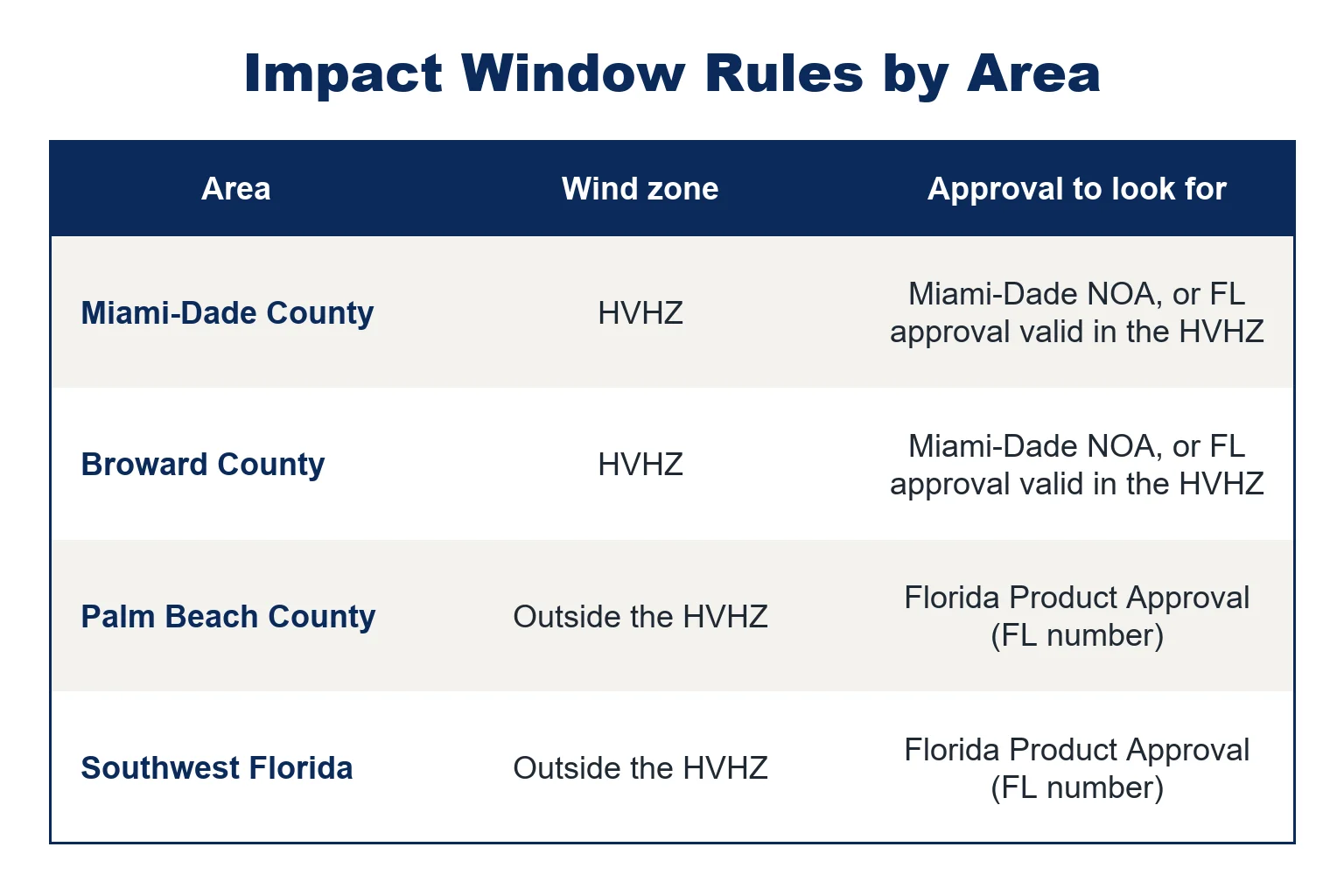
Every South Florida county requires protected glass openings in the wind-borne debris region, but the approval you need depends on where you live. Miami-Dade and Broward have the strictest rules in the state.
| Area | Wind zone | Approval to look for |
|---|---|---|
| Miami-Dade County | High-Velocity Hurricane Zone (HVHZ) | Miami-Dade NOA, or a Florida Product Approval approved for HVHZ use |
| Broward County | High-Velocity Hurricane Zone (HVHZ) | Miami-Dade NOA, or a Florida Product Approval approved for HVHZ use |
| Palm Beach County | Outside the HVHZ | Florida Product Approval; a Miami-Dade NOA is commonly accepted |
| Southwest Florida (Naples, Fort Myers, Cape Coral) | Outside the HVHZ; most areas in the wind-borne debris region | Florida Product Approval; confirm your zone with the building department |
A Miami-Dade Notice of Acceptance (NOA) is issued by Miami-Dade Product Control for a specific product and series, with approved sizes, pressures and an expiration date. A Florida Product Approval is the state’s listing, searchable on floridabuilding.org as an “FL” number.
The code does not force you to replace windows that were legal when installed. When you do replace them, the new windows must meet the current code for your address, and the permit inspector checks that the installed product matches its approval.
If you live in the HVHZ, see how we handle impact window projects in Miami and impact window installation in Fort Lauderdale.
Do You Already Have Impact Windows?
You may already have impact windows if your home was built or had windows replaced under the Florida Building Code, but only paperwork proves it. Builders could meet the code with shutters instead, so the age of the house is not enough.
Start with quick checks: a small etching in a corner of the glass, a label on the frame and the way the glass sounds when you tap it lightly. Our list of five signs you have impact-resistant windows walks through them.
For insurance, a sale or a permit you need more than a quick look. Learn how to verify your hurricane window rating with the NOA or FL number, the test codes and the permit record.
Different Types of Impact Windows
Impact windows come in the same styles as regular windows, and each style is tested and approved on its own. Choose by how the room is used and how much the window needs to open.
| Style | How it opens | Where it fits best |
|---|---|---|
| Single-hung | Bottom sash slides up, top stays fixed | Bedrooms and classic elevations |
| Horizontal roller | Panels slide sideways | Wide, short openings and ranch homes |
| Casement | Hinged on the side, cranks outward | Kitchens and spots where you want full airflow |
| Fixed picture | Does not open | Large views and living rooms |
| Awning | Hinged at the top, opens outward | Bathrooms and above sinks |
| Architectural | Usually fixed, custom shapes | Arches, transoms and feature walls |
Single-hung impact windows are the familiar choice for bedrooms, and horizontal roller impact windows suit wide openings with less height. For airflow, casement impact windows that crank open open the whole sash.
When the view is the point, fixed picture impact windows give the most glass. Awning impact windows for bathrooms can stay open in light rain, and custom architectural impact window shapes fit arches and transoms. Many homes mix styles, with fixed units paired beside operable ones.
What Impact Windows Do Well, and What They Do Not
Impact windows protect every glass opening every day, with nothing to put up before a storm. That is the main reason South Florida homeowners choose them, and the other benefits come with the same glass.
- Always-on storm protection: the house is protected when you are away, asleep or unable to climb a ladder.
- Insurance credits: Section 627.0629 of the Florida Statutes requires insurers to offer discounts for opening protection, based on a wind mitigation inspection (form OIR-B1-1802). See which home upgrades qualify for insurance discounts.
- Quieter rooms: laminated glass dampens traffic and aircraft noise. Read whether impact windows make your home quieter before you pay for a noise upgrade.
- Security: laminated glass is hard to break through, which slows a break-in.
- Sun and energy: the interlayer filters much of the UV that fades floors, and Low-E or insulated glass cuts heat gain. Check the NFRC label for the U-factor and solar heat gain figures.
For the full list, including doors, read about the benefits of impact windows and doors for South Florida.
Impact windows also have limits you should know before you buy:
- They do not protect against flooding or storm surge. Water rising from outside is a different risk.
- A cracked impact window may still be holding, but it has done its job and needs to be replaced.
- They protect only the openings they replace. An old front door, sliding door or garage door is still a weak point, which our complete guide to impact doors covers.
- Protection depends on correct installation to the approval drawings.
How Do You Know If You Need Impact Windows?
You likely need impact windows if your glass openings have no approved protection, or if putting up shutters before every storm is not realistic for your household.
The Atlantic hurricane season runs from June 1 to November 30, and the National Hurricane Center’s climatology averages 14 named storms, 7 hurricanes and 3 major hurricanes a season.
Impact windows make the most sense when:
- Your windows are old, leaking or damaged and need replacing anyway.
- You travel, live part of the year elsewhere or cannot install shutters yourself.
- Your wind mitigation report shows unprotected openings and you want the insurance credit.
- Street, highway or airport noise bothers you.
- You plan to stay in the home or sell it to buyers who expect protected openings.
You may be able to wait if your windows are in good shape and you already have approved shutters that someone closes before each storm. Weigh the two in impact windows versus hurricane shutters compared, and use our guide on deciding whether to install impact windows to plan a full or phased replacement.
Average Cost of Impact Windows and Cost Considerations
The cost of impact windows depends on your openings, not on a flat price per window. Two homes with the same number of windows can get very different quotes. These are the factors that move the price most:
- Number and size of openings: larger units need more glass and often a higher-rated product.
- Window style: operable styles usually cost more than fixed units of the same size.
- Design pressure needed: corners, upper floors and exposed coastal homes can need higher-rated units.
- Glass package: SGP interlayer, insulated laminated glass, Low-E coatings and tints add cost.
- Frame material and finish: aluminum, vinyl and coastal finishes are priced differently.
- Wall type and finish work: concrete block and wood frame walls install differently, and stucco or trim repair adds labor.
- Permit and paperwork: fees vary by city and county.
Our impact window cost and permit FAQ answers the money questions, from what a quote should include to how insurance credits offset the price.
You do not have to pay the whole amount up front. Many homeowners replace the most exposed or largest openings first and finish the rest later.
Financing for impact window projects, if available, comes through independent third-party providers: qualified homeowners may get $0 down, 0% interest plans and loans up to $100,000, with fast approval and a soft credit check.
PACE is another route for eligible projects, offering long-term, fixed-rate financing whose rates and terms vary by program.
Installing Impact Windows
Impact windows only perform as tested when they are installed exactly as their approval drawings require. The anchors, spacing, shims and seals are part of the rating, so installation is never a do-it-yourself job.
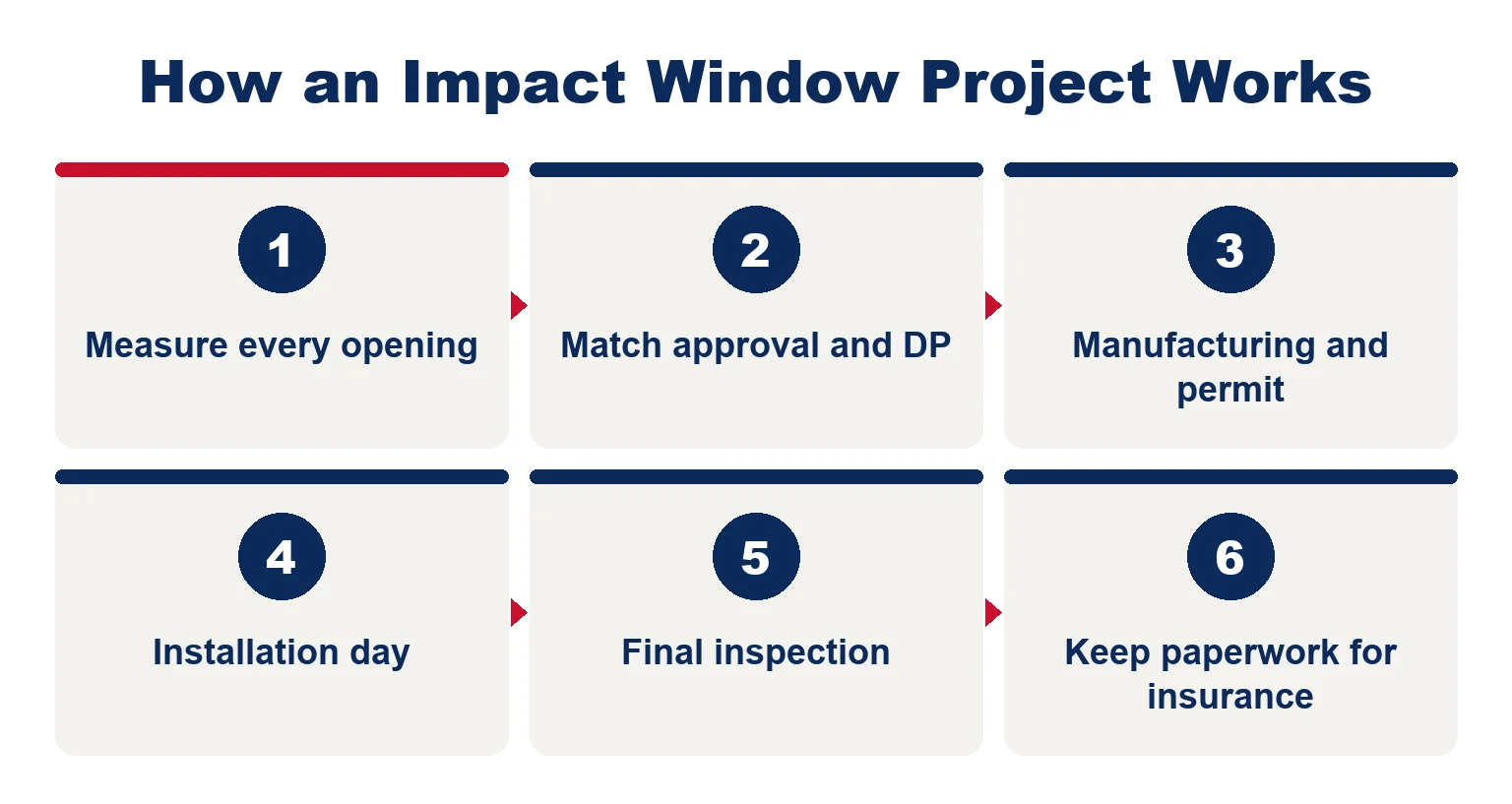
A typical project follows the same path:
- An in-home consultation to measure every opening and agree on styles, glass and frame.
- Product selection with the approval number and DP matched to each opening.
- Custom manufacturing to your measurements, while the installer pulls the permit.
- Installation day: old windows out, new units anchored, sealed and finished.
- Final inspection by the building department.
- Paperwork handed over: approvals, permit and warranty, kept for insurance.
Because every unit is made to size, plan the project in the off-season if you can, well before the storm months. For what each step looks like at your home, read the impact window installation process explained. To understand what separates a good install from a bad one, see why proper impact window installation matters.
How to Vet an Impact Window Installer
The right installer is licensed, insured, pulls the permit and gives you a written quote that names the product approval and DP for every opening. Check these points before you sign:
- License: look up the contractor on the Florida DBPR license search and confirm it is active.
- Insurance: ask for proof of liability and workers’ compensation coverage.
- Approvals in the quote: the NOA or FL number, the DP and the size for each window, not just a brand name.
- Permit: the installer should pull it and schedule the inspection.
- Crew: ask who does the work and who supervises it.
- Warranty: get both the manufacturer’s warranty and the installer’s workmanship warranty in writing.
- Reviews: read recent reviews and ask for local references.
Get two or three quotes, and be careful with any quote far below the rest, because missing permits, stucco repair or disposal often explain the gap.
Use our guide to choosing an impact window company in South Florida for the full set of checks, then compare impact window quotes line by line. You can also read reviews from USA Home Improvement customers.
Impact Window FAQs
Do I need a permit to replace windows with impact windows?
Yes, window replacement in South Florida normally needs a building permit, even for a few windows. The permit lets the inspector confirm the installed product matches its approval and your required design pressure. A professional installer should pull the permit and schedule the final inspection for you.
How long do impact windows last?
Impact windows are built for many years of service, but lifespan depends on the frame material, the finish, how close you live to salt water and how well the seals and hardware are maintained. The written manufacturer and workmanship warranties are the most reliable guide to what is covered and for how long.
Do condos and businesses follow the same rules?
The same code and approval rules apply, but condos and commercial buildings add steps such as association approval, engineering and larger storefront systems. Our guide to impact windows for businesses and condos covers those projects.
Where can I find quick answers about impact windows?
Short answers on noise, energy, care, lifespan and shutters are in our impact window product questions answered page. Each answer links to the article that covers it in depth, so you can go straight to the detail you need.
Time for Impact Windows? Time for USA Home Improvement
If your windows are unprotected, old or a hassle to shutter before every storm, the next step is a measured quote that lists the approval and design pressure for each opening. That gives you a real number to compare and a plan you can phase if needed.
Call USA Home Improvement at (877) 554-6373 or request a free in-home consultation. We install impact windows across Miami-Dade, Broward, Palm Beach and Southwest Florida.
USA Home Improvement is licensed (CGC1526707) and insured and has served Florida homeowners for more than 15 years.