 Skip to content
Keep ventilation elsewhere
Identify which nearby windows or other arrangements provide the room’s needed ventilation. Do not remove an important operating opening just to reduce visible divisions.

Home / Impact windows / Fixed Picture
ES Windows · South FloridaFrame the view without an opening sash. USAHI helps you plan fixed ES impact windows around the daylight you want, the glass performance you need and the way the rest of the room gets fresh air.
Discuss your window projectExplore estimated pricing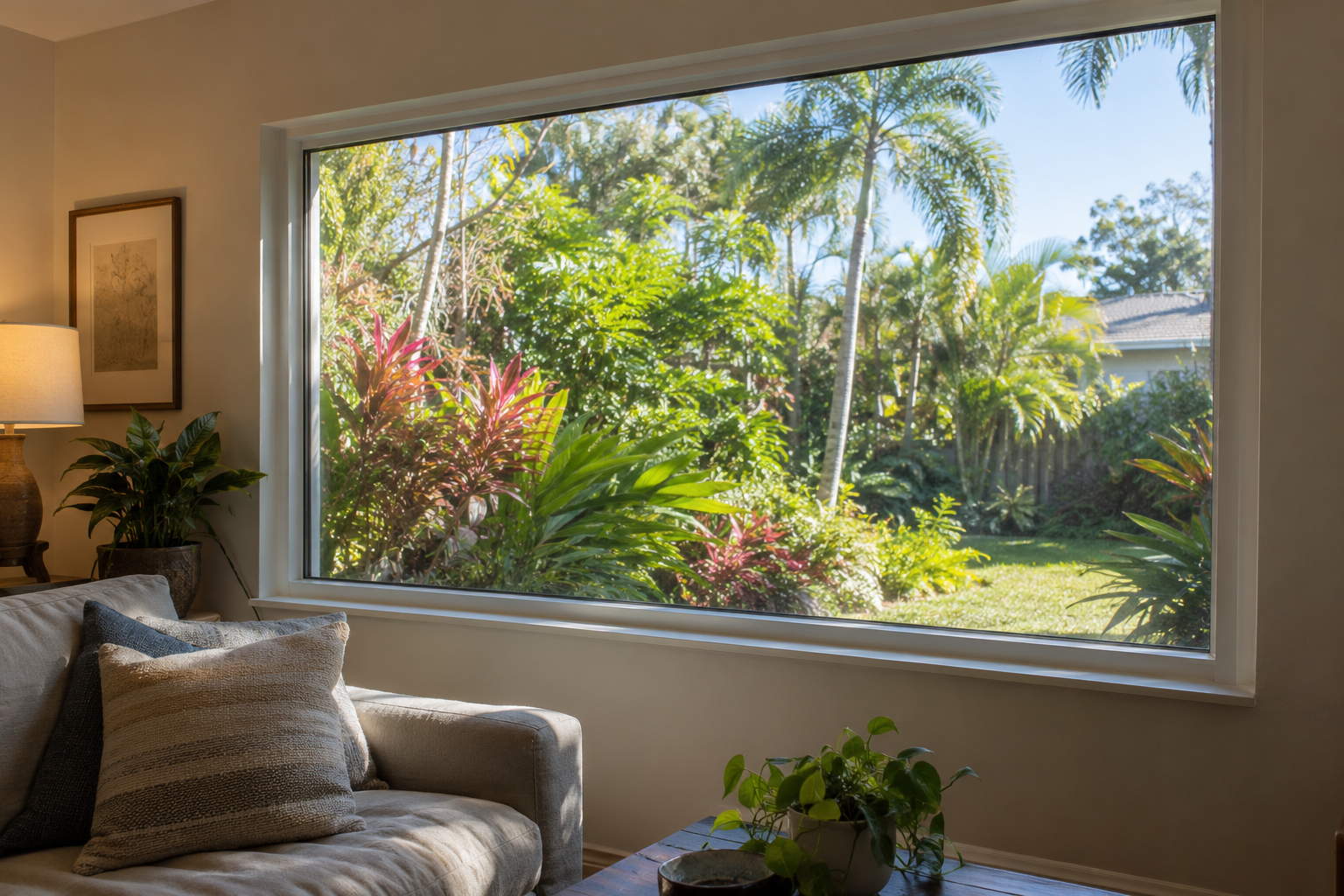
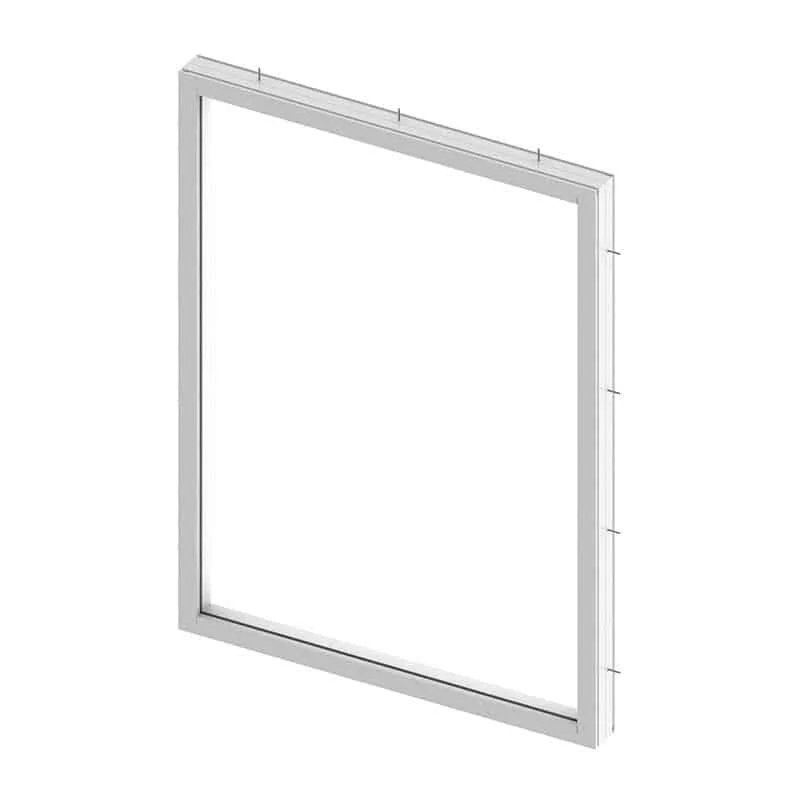
A fixed picture window has no operating sash, so it does not open for ventilation. It can suit a view-focused wall, a high daylight opening or a position beside an operable window. The frame remains part of the view, and any required supports or divisions need to be included in the design.
Bigger glass is not automatically the better choice. Compare the view, sun exposure, cleaning access and the approved size of the selected system. For a group of windows, confirm the complete arrangement and its supports rather than assuming several separate units can simply be joined together.
No. A fixed picture window stays closed. If you want ventilation in that room, plan suitable operable windows or another appropriate ventilation arrangement.
That depends on the exact system, glass configuration, required pressures and installation. Ask for the approved dimensions of the proposed unit rather than relying on a general maximum size.
ES lists ES-EL150 as a fixed window. Its product information can help begin a comparison; confirm the current model, glass and approval proposed for your particular opening. View the manufacturer’s product information.
It can increase unwanted solar gain, depending on orientation, shading and the glass selected. Compare the exact package’s SHGC, U-factor and visible light transmission, alongside how bright you want the room to feel.
A fixed unit cannot serve as an operable emergency escape and rescue opening. It may be part of a bedroom design where all applicable escape, ventilation and other requirements are met through the complete room arrangement.
Picture windows work best when the closed pane is a deliberate choice. Review these points before trading an operating window for a fixed one.
One fixed pane frames the view; plan ventilation through a separate opening.
Identify which nearby windows or other arrangements provide the room’s needed ventilation. Do not remove an important operating opening just to reduce visible divisions.
Look at the wall at different times of day. Compare glazing, shading and indoor screen placement so a good view remains comfortable to use.
Review frame and mullion positions, the surrounding opening and safe cleaning access. Large or elevated units may change handling and installation arrangements.
The reason to choose a picture window is a fixed view and daylight. Its comfort and protection come from the exact product and installation, not simply from having fewer moving parts.
There is no operating sash crossing the view. The selected frame, glass divisions and support members still affect how open the finished wall looks.
A fixed unit can light a space where you do not need an opening sash. Consider sun direction and privacy as well as the amount of glass.
There are no sash handles or tracks to operate on the fixed unit. Glass, frame, drainage and perimeter details still need care and inspection.
Compare energy ratings, tint and visible light for the quoted package. A clearer view should be balanced with the room’s comfort and shading needs.
An impact-rated fixed assembly can protect an opening when its approval and installation match the project. Confirm the exact glass, frame, dimensions and anchoring details.
Choosing between glass packages? Compare impact-window glass options for South Florida homes.
Choose a fixed pane when you do not need that opening to move. Compare an operable alternative before deciding how the whole wall should work.
| Style | Operation | When to consider it | Check first |
|---|---|---|---|
| Fixed picture | Stays closed; provides no ventilation. | Consider it for a view-focused opening with ventilation handled elsewhere. | Approved size, glass performance, supports and cleaning access. |
| Horizontal roller | One or more sashes slide sideways, depending on the model. | Consider it for a broad opening where you also want air without an outward swing. | Track access, sash reach and the actual clear opening. |
| Casement | A side-hinged sash swings outward. | Consider it as an operable companion beside a fixed view. | Outside clearance, handle reach and compatibility with the planned grouping. |
Haze, water or discomfort can have different causes. Have the glass, window perimeter and surrounding wall assessed before deciding what needs replacement.
Persistent haze may need glass or seal assessment. Distinguish moisture on an accessible surface from a problem within a sealed glass unit before selecting a repair.
Water marks can come from the frame, drainage, installation or nearby wall. Trace the cause so the proposal covers more than a new piece of glass.
Glare does not by itself prove the window is defective. Review sun direction, shading and glazing options before deciding whether replacement is the right response.
For an early impact-window replacement budget, the Florida program’s general impact-window benchmark provides a starting point: about $900–$1,750 per window. It is not a style-specific or ES-model price list. Read the published general Florida window-cost benchmark.
The measured size, glass, finish, access and surrounding repairs determine your actual quote. Large or complex work can exceed this reference band. Read what drives impact-window costs in Florida.
Planning guidance, not a USAHI quote or a guaranteed price limit.
Get a price for your actual openings →Source: My Safe Florida Home’s published cost benchmark, dated July 2025, based on a 1,750-square-foot Florida home; checked October 2026. The source does not itemize installation, permits or repairs. Confirm those inclusions in your written quote.
Custom shapes, oversized units and difficult access can exceed this general reference range.
Plan the costCompare the complete scope, then review the available ways to pay.
Explore financing optionsPrice the exact window, removal, installation, necessary opening repairs, finishing work and permit responsibilities together. Confirm which items are included before comparing proposals.
Financing may be available for qualified homeowners through independent third-party providers. Terms, eligibility and availability depend on the program and location. Review the current written offer before committing.
Ask for a schedule covering final measurement, product selection, permit review, manufacture, delivery, installation and inspection. Dates depend on the project and current lead times.
A fixed pane does not open inward for cleaning. Establish safe access to the outside, especially above landscaping, a pool or an upper floor.
Follow the manufacturer’s care instructions for the frame and any drainage openings. Do not seal an opening simply because it appears to be a gap.
Watch for new staining, loose finishes or deterioration around the perimeter. Arrange an assessment if the condition changes rather than covering the evidence.
Ask for the opening dimensions, exact fixed-window model, approval, glass package and visible frame arrangement. Include any mullions or supports, handling access, removal, wall and finish repairs, installation details and written warranties in the scope.
Understand why the installation matters before comparing the complete scope.
Request your project estimateRead your dedicated window guide, then discuss the actual address and proposed work with USAHI. Local requirements are part of planning the project.
Use these answers to prepare for a discussion about your actual openings.
Use our hurricane-window buying checklist to compare the proposed product and scope.
Possibly, if the room’s ventilation and any required escape opening remain compliant and the proposed unit suits the opening. Review the complete room before removing its operating window.
Potentially, but the combined arrangement needs an appropriate system and support design. Check mullions, connections and installation requirements rather than treating the panes as independent replacements.
No. Sound performance depends on the actual glass and frame assembly, installation and other paths for noise. Ask for relevant test evidence if reducing outdoor noise is a priority.
Not automatically. Glass tint, reflections, frame depth and divisions can differ. Compare the proposed finishes and glass appearance together before ordering.
No. Glass-only service and full-frame replacement are different scopes. Ask what can be retained, why it is suitable and how the repair or replacement affects approval and warranty responsibilities.