- Licensed CGC1526707 & CAC1813665
- 4.9 ★ Google Rated
 Skip to content
Casement impact windows hinge on one side and swing outward with a turn of the handle, so the whole sash opens to the breeze. When you close one, the sash pulls in against its weather seal and locks at several points. USA Home Improvement installs ES Windows casements, with a permit on every project.
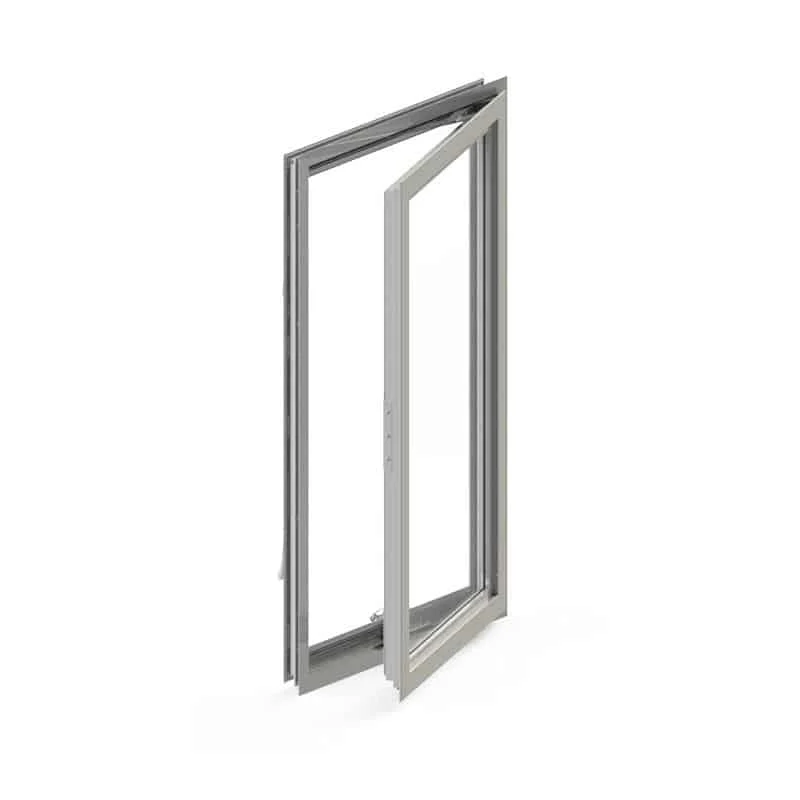
A casement turns on hinges along one side. Turn the handle and the sash swings out like a small door, opening the full height of the window. Angled toward the wind, the open sash catches breezes moving along the wall and steers them indoors; casements on two walls of a room can set up a crosswind.
Closing, the sash draws in, presses into its weather seal and locks at several points. Ask which handle, limiter and screen options come with your series; a limiter stops the sash part-way, which is handy in a child’s room.
Casements suit rooms where you want air: bedrooms, a kitchen wall by the sink, a family room facing the usual breeze. Because the sash swings out, keep it clear of walkways, pool decks and screen enclosures where people pass close to the wall. In those spots, a horizontal roller that slides within its frame may fit better.
Often, yes. The whole sash swings open, so a casement gives a bigger clear opening than a hung or sliding window of the same size, which helps a bedroom meet Florida’s building code for an emergency escape opening. Before ordering, every bedroom gets checked, and the handle must open from inside without keys or tools.
ES lists casement windows among its hurricane-resistant systems; the series for your home is chosen at the estimate from the opening size, the wall and the look you want. We fit both aluminum and vinyl ES frames, and ES describes vinyl as the low-maintenance choice with sound insulation. Each casement is made to measure.
The impact glass is set by the product approval; you then choose how it handles the sun. Low-E glass helps manage solar heat on east and west walls, and Solarban 70, a Low-E glass ES lists for its Multimax line, is an option to ask about rather than a standard pane. Grids come in flat or ogee muntins.
Price follows the number and size of casements, the series, frame, glass, finish and grids, plus any repairs behind the old frames. Every project we do is permitted, HOA approval is needed only when the property has an HOA, and you get a 15-year warranty and a 1-year labor warranty on most jobs, plus a transferable warranty.
The way a casement seals, locks and catches the wind shapes how it handles storms, heat, noise and security. Compare it with every impact window style we install.
In hurricane season, a closed casement’s multi-point lock holds the sash to the frame along its height, not at one latch, and the rated glass and frame mean there are no panels to put up. Read how much force impact windows are built to take.
Noise gets in through gaps as well as through glass. A closed casement presses its sash against the seal all the way around, which usually leaves fewer gaps than a sash that slides past its neighbor. Add laminated impact glass, and a bedroom on a busy road can feel calmer at night.
When a casement locks, its seal is pressed shut rather than brushed, so less cooled air slips out around the sash. Add Low-E glass on walls that take the afternoon sun, and the unit can also help manage heat through the pane and ease the load on your air conditioning.
A Florida wind mitigation inspection records whether a home’s openings are protected, and some insurers offer credits when impact-rated products cover them. Only your insurance company can say what applies to your policy, so call them first. Keep the permit and each casement’s Florida Product Approval number, since an inspector or insurer may ask for them.
A casement has no sash to lift out of a track, and its hinge parts sit concealed in the frame. The multi-point lock holds the closed sash tight at several points, leaving less room to pry. Before you leave home, check that the handle is fully turned and every lock point is engaged.
Cost, Timeline & Financing
Casements are made to measure: manufacturing takes about 6 to 8 weeks depending on project scope, installation averages 1 to 2 days, and the process takes about 3 months start to finish, though it can vary. Our installation team holds direct certification from the manufacturer.
Qualified homeowners may be able to pay over time through independent third-party providers, including PACE where a local program covers the property, with terms, eligibility and availability set by the program and location.
PAYING FOR IT