Skip to content

A hurricane season checklist for a South Florida home has three stages: before the season, when a storm threatens, and after it passes. Before the season, protect the openings, check the roof and yard, review insurance and learn your evacuation zone.
When a storm threatens, finish the short list. After it passes, stay safe first, then document the damage.
The Atlantic hurricane season runs from June 1 to November 30, according to Ready.gov’s hurricane guidance. Each item below is short and comes from FEMA, NOAA, the National Weather Service or a South Florida county, and many link to our guide that covers the topic in depth.
Before Hurricane Season: The Home Checklist
The best time to prepare is before the season begins on June 1, the National Weather Service says. The work in this stage takes the longest, and supplies are easier to buy before the pre-storm rush.
Windows, Doors and the Garage Door
Every window and glass door needs a protection plan before the season. Miami-Dade County says windows and doors should be secured with County-approved storm shutters or boarded with 5/8-inch plywood.
- Pick a method for each opening. Impact windows, approved shutters or plywood: compare every way to protect your windows from a hurricane.
- Test-fit shutters and panels. Find every panel and fastener now, while missing parts can still be replaced.
- Buy plywood early. The NWS recommends 5/8-inch exterior grade or marine plywood, built to fit and ready to install, bought before the season. See how to cut, fit and fasten plywood window covers.
- Check the garage door. NOAA calls the garage door the most vulnerable part of the home. FEMA suggests replacing old garage doors and tracks with a door approved for both wind pressure and impact. Compare impact-rated garage doors for Florida homes.
- Do not forget sliders. FEMA says sliding glass doors are more vulnerable to wind than most other doors and should be covered during a storm.
The upgrade that removes shutter and plywood work is impact windows and doors, which stay in place all season. USA Home Improvement installs ES Windows impact windows in aluminum and vinyl, plus impact doors. Our guide to impact windows in South Florida covers styles, costs and county rules.
Plan it in the off-season. Manufacturing takes about 6 to 8 weeks depending on project scope, installation averages 1 to 2 days, and the whole process takes about 3 months start to finish, though it can vary. Every USA Home Improvement project is permitted.
Want openings with nothing to put up before a storm? Request a free impact window estimate or call (877) 554-6373 while there is time before the next season.
Roof, Straps and Outside Wall Openings
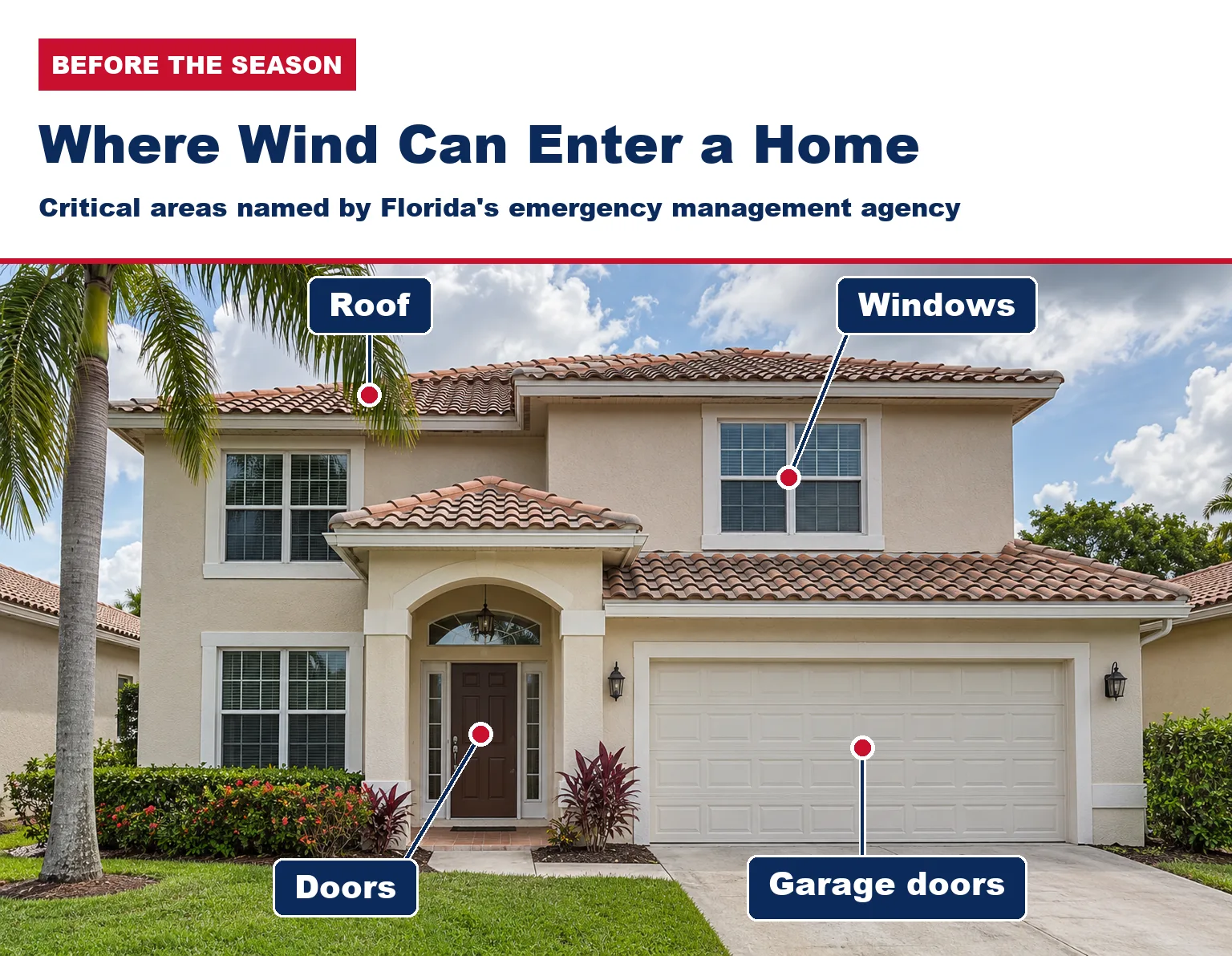
The Florida Division of Emergency Management (FDEM) says the most important step is to protect the places where wind can enter. Its home planning page names five critical areas: roof, straps, windows, doors and garage doors.
- Roof: fix loose or damaged areas before June. Our roofing post covers roof damage to repair before hurricane season.
- Straps and structure: FDEM says to contact your local building code official about requirements before any retrofit. See more ways to brace your house against storms.
- Wall openings: FEMA’s home prep fact sheet says to seal vents, outdoor outlets, hose bibs and spots where cables or pipes pass through the wall, using a high-quality urethane-based caulk.
Yard, Trees and Loose Items
Wind can turn yard items and landscaping into debris that breaks windows and doors, FEMA warns. Clear the yard before the season, then again when a storm threatens.
- Prune trees before the season, as Miami-Dade advises. FEMA adds: cut weak branches that could fall on the house.
- Clear drains and gutters, and bring in outdoor furniture, per Ready.gov.
Insurance, Documents and a Home Inventory
Review your insurance policies now. NOAA’s pre-season guidance says to ask your agent for an insurance checkup and reminds homeowners that home and renters insurance does not cover flooding.
- Flood insurance takes time. NOAA notes a 30-day waiting period, so buy it well before a storm. Check your flood risk on our South Florida flood zone maps guide.
- Photograph every room. NOAA suggests documenting possessions with photos and serial numbers; Broward County suggests video or photos of items of value.
- Copy your documents. Ready.gov says to keep copies in a secure, password-protected digital space. Miami-Dade suggests storing important documents in a waterproof container or bag.
- Ask about premiums. Ask your agent which upgrades affect your premium, and see which upgrades can lower your insurance premium.
Know Your Evacuation Zone and Make a Plan
Look up your zone before the season, because your zone, and the kind of home you live in, decide whether you are told to leave. The state’s Know Your Zone map works for any Florida address, and each county has its own tool:
- Miami-Dade: the county’s hurricane page links its Storm Surge Planning Zone map and the Ready Miami-Dade app.
- Broward: the county’s evacuation page says Plan A covers areas east of the Intracoastal Waterway, homes beside tidal water or in low-lying areas, and all mobile homes. Plan B adds everything east of U.S. 1 (Federal Highway).
- Palm Beach: the county’s Know Your Zone page has an address lookup and separates evacuation zones (storm surge) from flood zones.
Then write the plan down. NOAA suggests family meeting places, including an out-of-town location, and an emergency contact list on paper; Broward adds an out-of-town contact. Ready.gov says to have several ways to get alerts, such as the FEMA app and local alert sign-ups.

Hurricane Supply Kit: How Many Days of Water, Food and Medicine
Plan on one gallon of water per person per day. The number of days depends on who you ask, and South Florida’s county offices ask for the most:
| Source | Water | Food | Medicine |
|---|---|---|---|
| Ready.gov (FEMA) | 1 gallon per person per day, several days | Several days, non-perishable | Prescriptions in the kit |
| NOAA | At least 3 days; longer if possible | At least 3 days | At least 3 days |
| Florida (FDEM) | 1 gallon per person per day | At least 7 days | Two-week minimum |
| Miami-Dade County | 7 days, 1 gallon per person per day, including pets | 7 days | Prescriptions in the kit |
| Broward County | At least 1 gallon per person per day for 7 days | 7 days | Two-week supply |
So in South Florida, store water for 7 days. Ready.gov adds that water needs can double in very hot temperatures, and Miami-Dade warns that outages after a storm may last days, weeks or even months.
The rest of the kit, from Ready.gov’s kit list and the county lists:
- NOAA Weather Radio or a battery or hand-crank radio, flashlights and extra batteries (FDEM says not to use candles)
- First aid kit, manual can opener, phone chargers and a backup battery
- Cash, since FDEM notes banks and ATMs may not be available after a storm
- Copies of documents in a waterproof container, and supplies for pets
For a list to take to the store, print Florida’s disaster supply kit checklist or Miami-Dade’s kits and checklists. Miami-Dade wants supplies fully stocked by June 1 and the kit checked at least once a year.
When a Storm Threatens: The Short List
When a storm threatens, follow the National Hurricane Center and your local officials, and work through this list. Our guide to what a hurricane watch or warning means for your windows splits it by alert.
- Cover every window. The NWS storm action page says to cover all of your home’s windows. Tape does not count; see hurricane window myths that put homes at risk.
- Secure the outside. NOAA says to secure loose outdoor items and all exterior doors, and to move your vehicle to a safe place if you are not using it to leave.
- Charge and fuel up. NOAA says to charge your phone and fill up or charge your vehicle. Broward suggests getting gas at least one or two days before an approaching storm.
- Know the shutter rules. Some cities limit how long shutters can stay closed; check how long hurricane shutters can stay up in your city.
- Evacuate if ordered. NOAA says to always follow evacuation orders and leave early. Impact windows do not change that, because they are designed for wind and debris, not flood water or storm surge; see storm surge vs wind damage to windows.
- If you stay, the NWS says to take refuge in a small interior room, closet or hallway on the lowest level, away from windows, skylights and glass doors. If water rises inside, Ready.gov says to move to the highest level, but not into a closed attic.
After the Storm: Safety First, Then the Damage
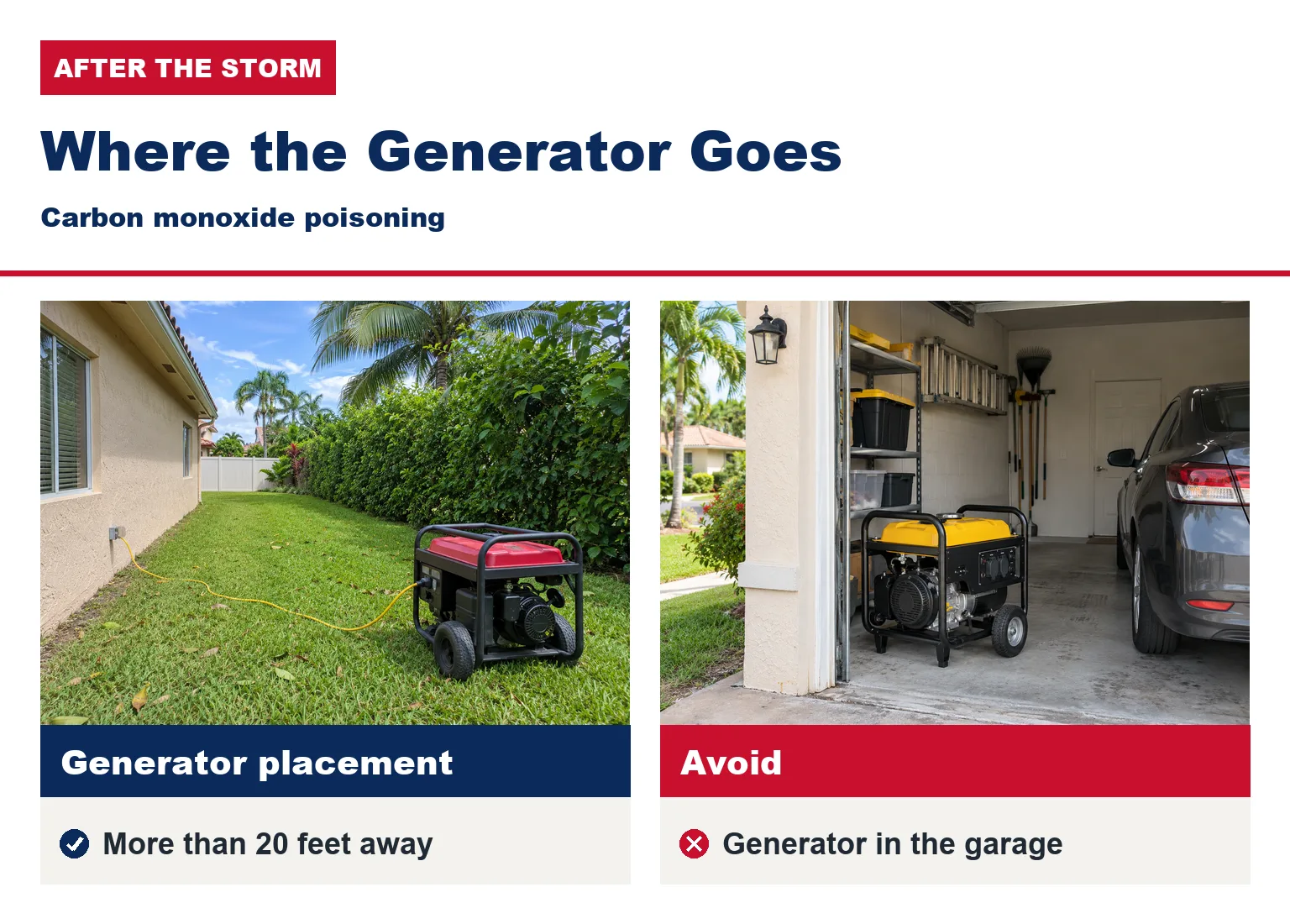
After the storm, stay inside until officials say it is safe, as Miami-Dade advises. If you evacuated, the NWS says to return home only when officials say it is safe. Two mistakes can kill: a generator in the garage and wading in flood water.
- Walk carefully outside and around your home to check for loose power lines, gas leaks and structural damage, per the NWS. NOAA says to get outdoors and call 911 if you smell gas.
- Never run a generator indoors. NOAA’s after-storm page says never to use one inside your home or garage, and to keep it outside, more than 20 feet away from your home, doors and windows. NOAA says carbon monoxide poisoning is one of the leading causes of death in areas dealing with power outages.
- Stay out of flood water. Ready.gov warns that flood water can carry debris and chemicals and be charged by downed power lines, and that one foot of moving water can sweep a vehicle away.
- Photograph property damage before cleanup and contact your insurer, as Ready.gov advises. A damaged window has its own steps and a claim deadline: see what to do with a cracked impact window after a storm.
- Hire carefully. Miami-Dade warns residents to watch out for unlicensed contractors after a storm. For paying for repairs, compare home repair financing options in Florida.
Condos, Snowbirds and Other Special Cases
Condo owners share the job with the association, and the declaration usually decides who protects which windows and doors. Read who is responsible for condo hurricane windows before the season.
If you leave Florida for part of the year, arrange now who will put up shutters and check the house after a storm. Our home tips for Florida snowbirds cover the rest.
Renters should work with the landlord before a storm, NOAA says. Anyone in the household with a disability or special needs may need extra help, so plan for it early, as Ready.gov and Broward County advise.
Hurricane Season Checklist FAQs
When should I start preparing for hurricane season?
Start before June 1, which the NWS calls the best time to prepare. Flood insurance has a 30-day waiting period, and an impact window project takes about 3 months start to finish, though it can vary.
Do I need flood insurance if I am not in an evacuation zone?
Possibly. Palm Beach County separates evacuation zones, which are about storm surge, from flood zones, which also cover poor drainage, sheet flow and coastal tides. FDEM says flood damage is not usually covered by homeowners insurance, so check your policy and your flood zone, not just your evacuation zone.
Is my house safe enough to shelter in place?
Only if you are not in an ordered evacuation zone, a low-lying flood-prone area, a mobile home or an unsafe structure, FDEM says, and local officials have not told you to leave.
FDEM also says homes built to the 2002 or newer Florida Building Code may be more resistant if the roof, straps, windows, doors and garage door are in proper condition and the openings are protected.
Do I still need a supply kit if I have impact windows?
Yes. Impact windows protect openings from wind-borne debris, but they do not keep the power or water on. Miami-Dade warns outages can last days, weeks or even months, so keep the same 7-day water and food supply.
When does hurricane season start and end in Florida?
The Atlantic hurricane season runs from June 1 to November 30, per Ready.gov. Ready.gov says to replace expired kit items and rethink your needs every year, so review this checklist each spring before the season starts.
Start With the Openings, Then Work Down the List
Most of this checklist costs little: a zone lookup, photos, a policy review and supplies. The item that changes storm week the most is the openings. If shutters or plywood are your plan, test them now; if you want nothing to put up, plan impact windows and doors before June.
Compare financing options for impact window and door projects. Financing may be available for qualified homeowners through independent third-party providers. Terms, eligibility and availability depend on the program and location.
USA Home Improvement is licensed (CGC1526707) and insured and has served Florida homeowners for more than 15 years. We sell ES Windows exclusively, and our installation team holds direct certification from the manufacturer.
Get a free estimate or call (877) 554-6373.