Skip to content

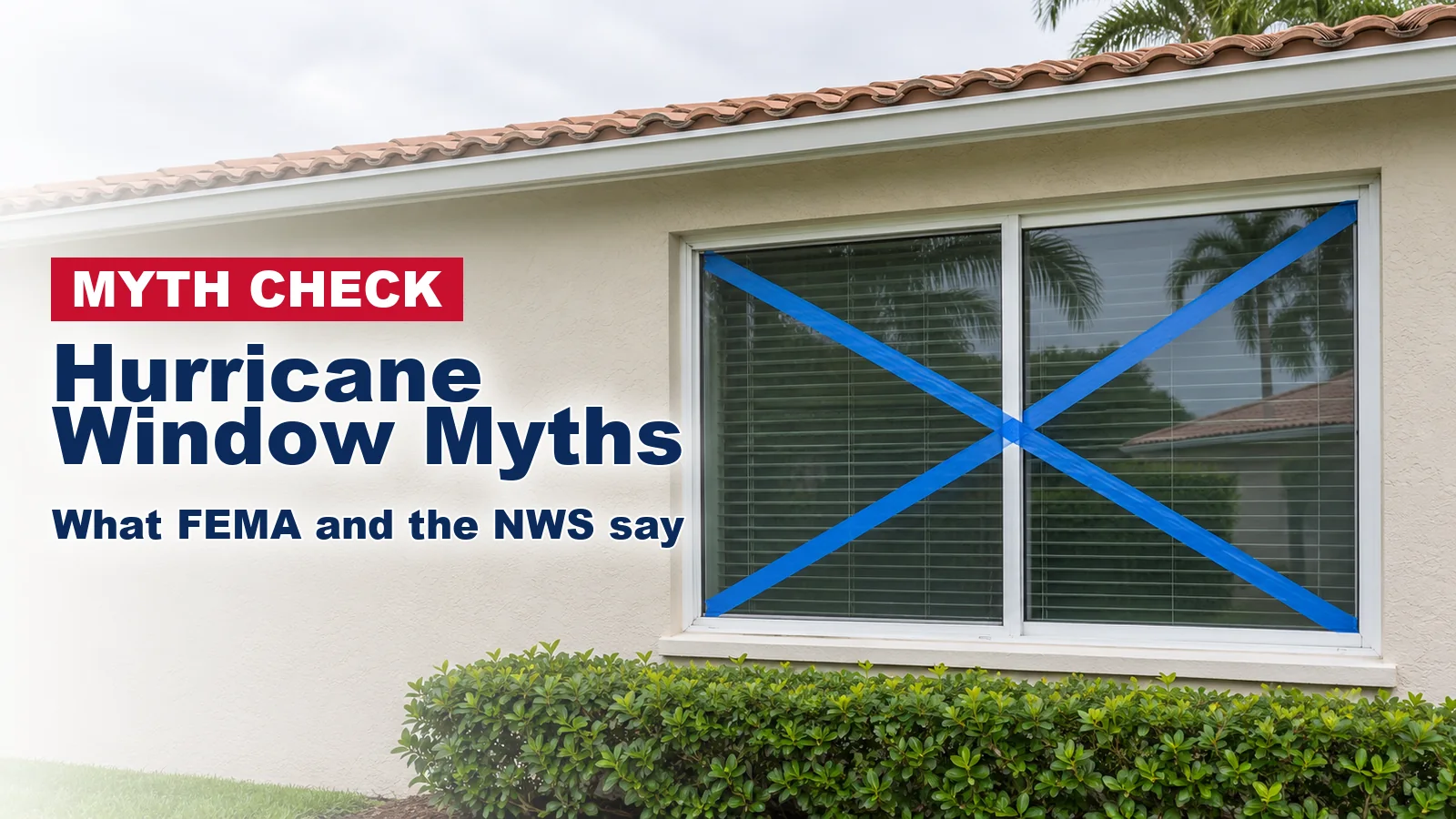
Taping windows does not stop hurricane glass from breaking, and cracking a window open to “equalize pressure” makes damage more likely. The safe plan is the same for both: protect every opening, keep it shut, and wait out the storm away from glass.
This guide checks six common hurricane window myths against FEMA, NWS and Florida Building Code sources, and says what to do instead.
| Myth | What the sources say | Do this instead |
|---|---|---|
| Tape keeps the glass from breaking | The code asks for tested protection, and tape is not a tested product | Approved shutters, impact windows or fitted plywood |
| Cracking a window equalizes pressure | FEMA: one small broken window can pressurize the whole house | Keep every window and door shut |
| Only windows facing the wind need cover | FEMA: openings away from the wind can fail from suction | Protect every opening |
| The bathtub is the safe spot | NWS: a small interior room, closet or hallway on the lowest level | Put walls between you and the glass |
| Impact windows cannot break | The code test allows cracks if the missile does not get through | Stay away from all glass in the storm |
| Shutters are always better | The code accepts approved impact windows or approved shutters | Choose by who will close them |
Myth: Taping Windows Keeps the Glass From Breaking
Tape does not make glass stronger, so it cannot stop a hurricane from breaking a window. Section R301.2.1.2 of the Florida Building Code, Residential says glazed openings in wind-borne debris regions “shall be protected from windborne debris” by products that pass the large missile test.
The type of tape does not matter. Masking tape, duct tape and tape sold for hurricanes are not tested protection products, and the glass behind them is the same glass.
The National Weather Service hurricane action page names two ways to cover windows. It calls permanent storm shutters the best protection, with 5/8-inch exterior-grade or marine plywood, built to fit, as a second option.
If plywood is your plan, here is how to cut and fasten plywood over your windows.
For why taped glass can break into larger pieces, read our look at why tape and window film fall short as storm protection. To compare every real option, see the ways to protect windows when a hurricane is coming.
Myth: Cracking a Window Open Equalizes the Pressure
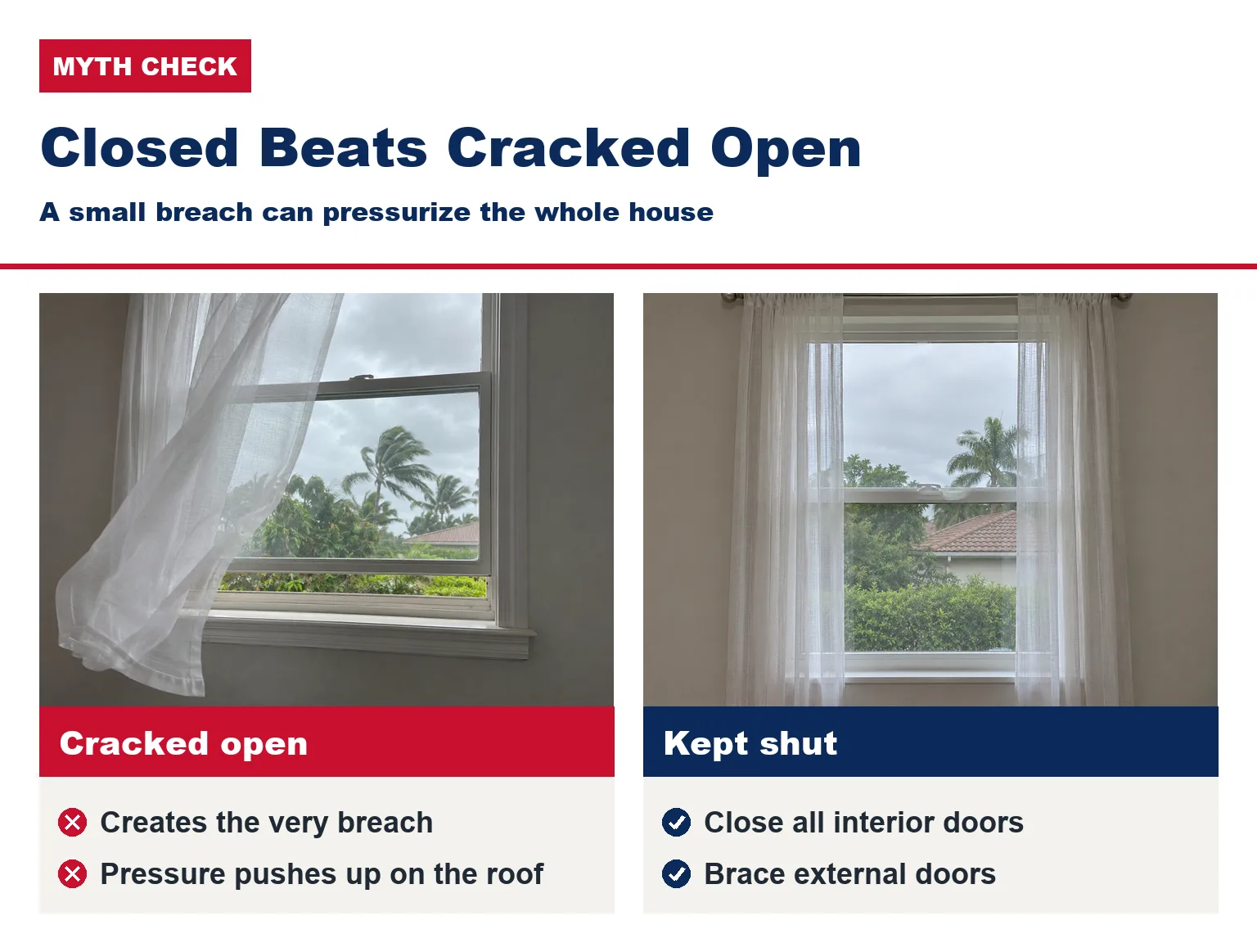
Opening a window during a hurricane does not relieve pressure. It creates the very breach that opening protection is meant to prevent. FEMA’s Local Officials Guide for Coastal Construction (FEMA P-762) explains that wind forces air through unprotected openings until the building “begins to bulge or become pressurized.”
That inside pressure pushes up on the roof while wind suction pulls on the roof from above. FEMA P-762 notes that “the breaching of a small window can be sufficient” to fully pressurize the interior, and that the loads on the exterior walls and roof then rise significantly.
A window cracked open on purpose is that small breach. The guide’s windows chapter adds that wind pressures inside a building are “dramatically increased” once the envelope is breached, and that the damage can stay in one room or lead to complete structural failure.
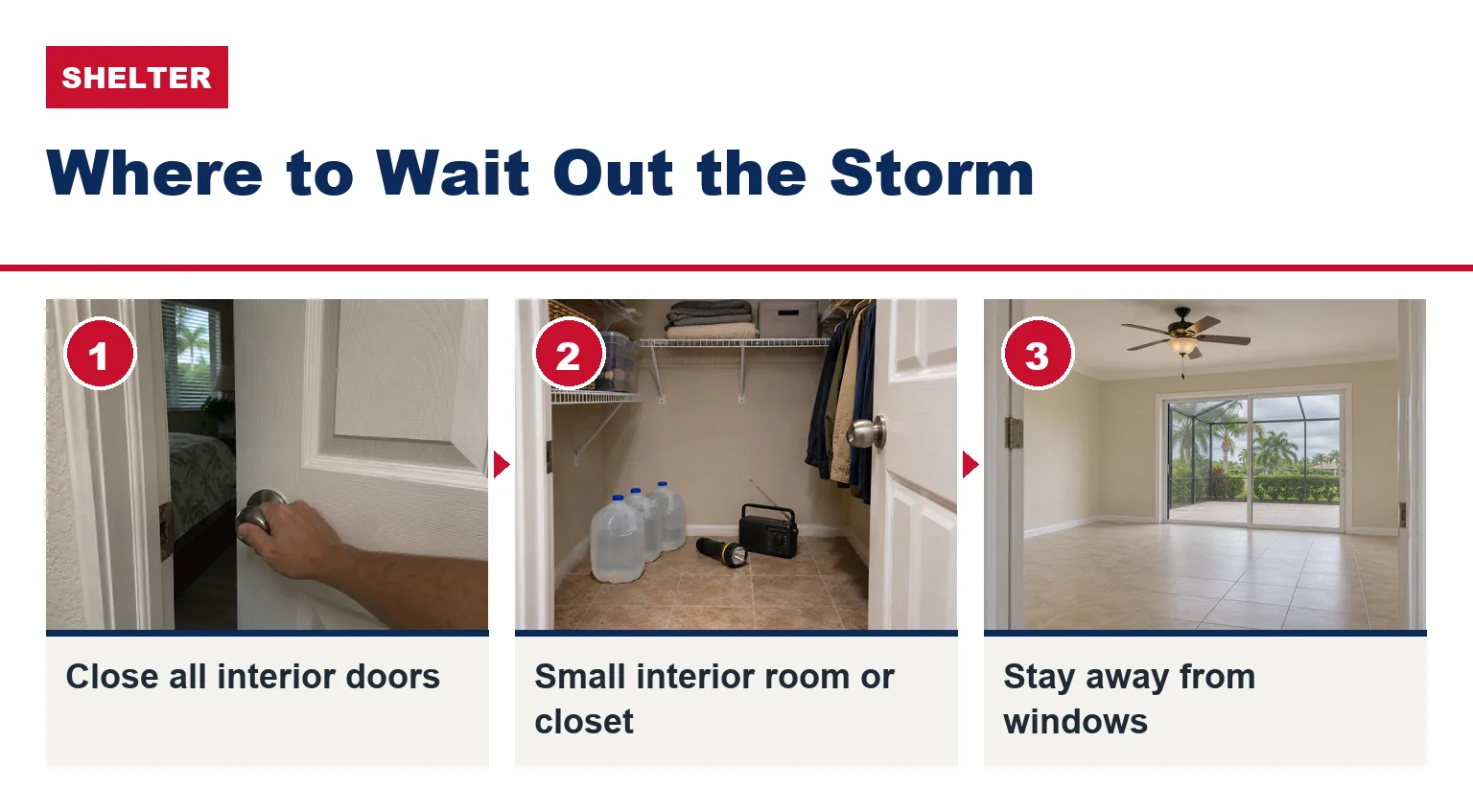
So every window and door stays shut for the whole storm. The NWS hurricane safety flyer also says to close all interior doors, and to secure and brace external doors.
Myth: Only the Windows Facing the Wind Need Protection
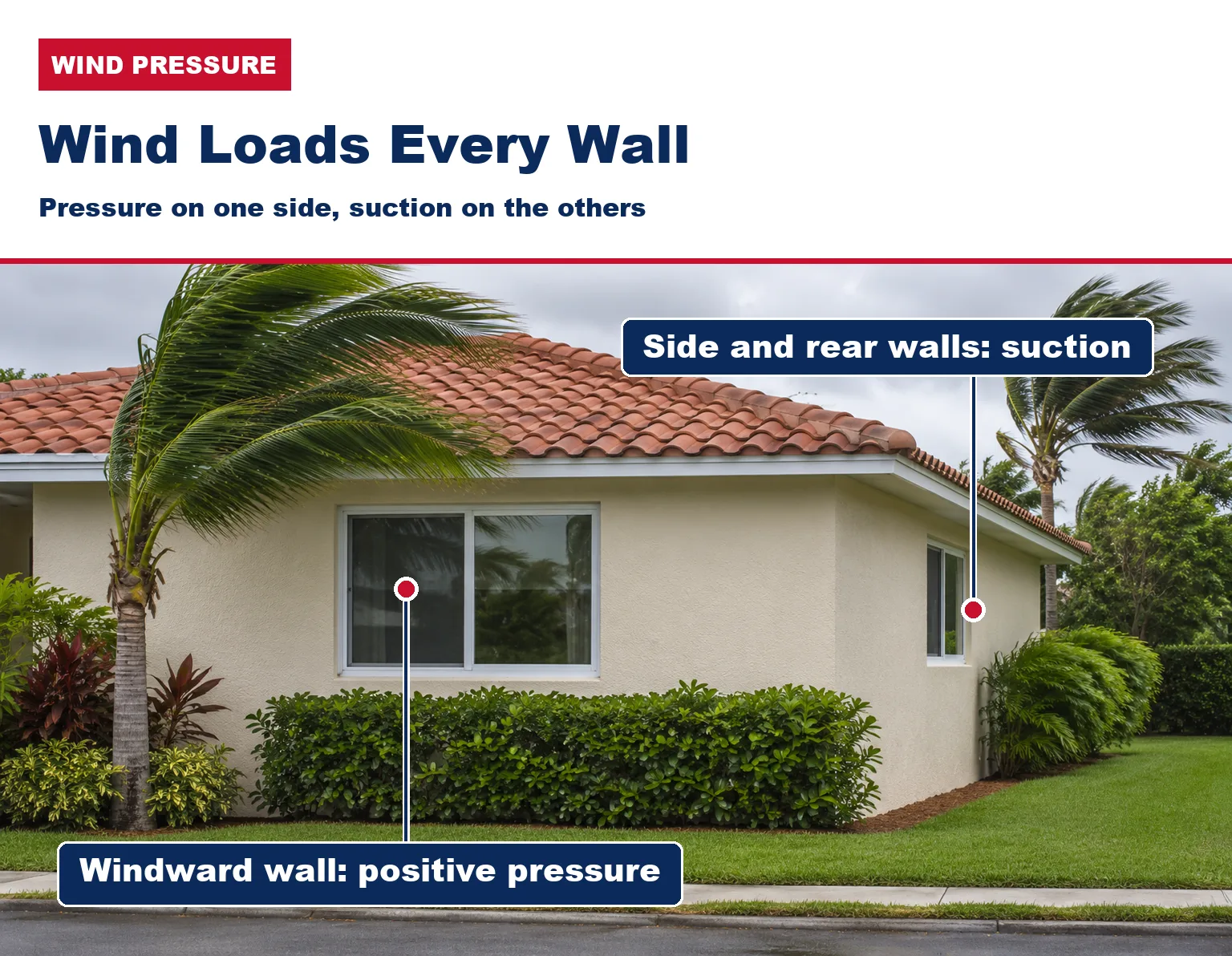
Every glass opening needs protection, including the windows on the side of the house away from the wind. FEMA P-762 says unprotected openings “can be breached on the leeward side,” the side opposite the wind, because of negative pressure, or suction.
Both sides are loaded at once. The windward wall takes positive pressure that pushes air in, while the side and rear walls take suction from wind moving around the building. FEMA’s windows chapter adds that suction failures are more common than failures pushed inward.
The wind can also turn around. The NWS warns that if the eye passes over, the calm is short, and the wind on the other side of the eye returns at hurricane force from the opposite direction. The side that was sheltered can end up facing the storm.
Impact windows take the guesswork out of choosing which side to cover, because each window is its own protection. You can browse the ES Windows impact window styles USA Home Improvement installs, or start with our South Florida impact window guide for styles, costs and county rules.
Myth: The Bathtub Is the Safest Place During a Hurricane
The bathtub is not a hurricane shelter by itself. What protects you is distance from glass and walls between you and the outside.
If you are not ordered to evacuate, the NWS says to take refuge in a small interior room, closet or hallway on the lowest level, and to stay away from windows, skylights and glass doors.
A windowless interior bathroom can fit that description; a bathroom with an outside window does not. The NWS puts it simply: “Put as many walls between you and the outside as you can.” In a two-story house, its flyer says to go to an interior first-floor room.
If floodwater starts coming into the house, FEMA’s Ready.gov says to go to the highest level of the building, but not into a closed attic, where rising water can trap you.
The tub does have a job in NWS hurricane advice. Fill the bathtub and large containers with water in case tap water is unavailable, and use that water for cleaning and flushing only, not for drinking.
Covered or impact-rated glass does not change where you wait. The NWS flyer says to stay away from windows and doors “even if they are covered.” Shutters, plywood and impact windows protect the house; the room next to the glass is still not the place to ride out the storm.
Myth: Impact Windows Cannot Break
Impact windows can crack. What they are tested for is keeping the opening closed after a hit.
In the High-Velocity Hurricane Zone (Miami-Dade and Broward), Section 1626.2.8 of the Florida Building Code, Building says a large missile test passes when three specimens “reject the two missile impacts without penetration” and then survive cyclic wind pressure.
That same test allows cracks in the glass, within set limits. Laminated impact glass is designed for this: the plastic layer between the panes holds broken glass in the frame. Our explainer on how impact windows are tested and how strong they are walks through each step.
Two things follow. Stay away from impact windows during the storm, as you would from any glass, and plan to replace a cracked impact window or door before the next storm, even if it held.
Also check what you are buying, because not every window sold for hurricanes is impact rated. Here is what separates a hurricane window from an impact-rated one.
Planning impact windows before the next storm? Request a free estimate for your home or call (877) 554-6373.
Myth: Shutters Are Always Better Than Impact Windows
Neither one is always better: Florida’s code accepts approved impact windows and approved shutters. Section 1626.1 of the Florida Building Code, Building, says glazing in the High-Velocity Hurricane Zone “shall meet impact test criteria or be protected with an external protection device that meets the impact test criteria.”
The NWS calls permanent storm shutters the best protection for windows, with fitted plywood as the second option. That advice compares ways to cover ordinary windows; the page does not compare shutters with impact windows.
The state wind mitigation form, OIR-B1-1802, published by the Florida Office of Insurance Regulation, gives its top level, Level A, to approved impact-resistant coverings and approved impact products alike.
The real difference is who does the work. Shutters protect only when someone closes them before every storm, and rooms stay dark while they are shut. Impact windows are always in place, which matters if you travel or cannot climb a ladder.
Our comparison of impact windows and hurricane shutters side by side covers cost and daily use. To see what the code allows for each opening, read where Florida requires impact glass or approved shutters.
Hurricane Window Myth FAQs
Can I open the shutters or take down plywood when the eye passes over?
No. The calm of the eye is short, and the NWS says the wind returns at hurricane force from the opposite direction. Leave shutters closed and plywood up, stay inside, and wait until local officials say the storm has passed and it is safe to go out.
Should I leave the garage door open to relieve pressure?
No. FEMA P-762 calls a garage-door failure “a breach of the building envelope” that raises the pressure inside and may lead to building failure. Keep the garage door closed. If yours is old or not wind rated, look at impact garage door options for your home.
Do impact windows mean I do not have to evacuate?
No. Impact windows are tested for wind pressure and flying debris, not for floodwater. The NWS says to be prepared to evacuate if you live in a storm surge risk area, and to leave immediately if ordered. Check your risk with our guide to South Florida flood risk and flood maps.
Do second-floor windows need hurricane protection too?
Yes. Section R301.2.1.2 covers exterior glazed openings in wind-borne debris regions, not only ground-floor glass. Upstairs windows are also the hardest to board from a ladder. Not sure what your upper windows are rated for? See how to check if your windows and doors are hurricane rated.
Replace the Myths With a Storm Plan That Works
Before the next storm, make sure every opening has approved protection, keep every window and door shut once the wind starts, and wait in a small interior room away from glass. If putting up shutters or plywood each time is the hard part, impact windows remove that step.
Financing may be available for qualified homeowners through independent third-party providers. Terms, eligibility and availability depend on the program and location. See how financing for impact window projects works.
USA Home Improvement exclusively sells ES Windows impact windows and impact doors. Every project is permitted, and our installation team holds direct certification from the manufacturer.
USA Home Improvement is licensed (CGC1526707) and insured and has served Florida homeowners for more than 15 years.
Get a free estimate or call (877) 554-6373.