Skip to content

The best home management plan for Florida snowbirds starts about three weeks before you head north: keep the air conditioning running, shut off the water, check your insurance, and decide who protects the windows if a hurricane threatens while you are gone. An empty South Florida home faces heat, moisture and storms all summer.
This guide follows the close-up in order, from the first phone calls to the day you lock the door. It also covers the northern home you leave each winter and what to check when you come back.
Start Closing Up Your Florida Home Three Weeks Before You Leave
Three weeks is enough time to book the people you will need. The Palm Beach County Extension closing checklist starts at that point with an air conditioning service visit, a review of your homeowners insurance and landscaping arrangements.
The same checklist says to find a trusted friend or relative to check on the home or act on your behalf, and to arrange to close shutters or prepare the home if a hurricane threatens. That person is the most important part of the plan, so choose them first.
If you live in a condo or a managed community, ask the management what they look after while you are away. UF/IFAS Extension notes in its guide to closing your seasonal home that many condominiums and communities handle some exterior maintenance, so you only plan for the rest.
Check Your Homeowners Insurance Before the House Sits Empty
Call your insurance agent before you leave, not after a storm. Many homeowners policies include a vacancy or unoccupancy section that can limit coverage when a home sits empty for a set period, and the wording differs from one insurer to the next.
Check your policy for how it defines a vacant or unoccupied home, how long you can be away, and whether it asks for someone to check the house. Ask the agent to put any answer that matters in writing, and keep a copy with your travel papers.
Keep the Air Conditioning On to Control Humidity
Leave the air conditioning on while you are away, because it is what keeps moisture out of the air. UF/IFAS advises setting it no higher than 85 degrees Fahrenheit, since above that the indoor humidity rises past 55 to 60 percent, a level that can lead to mold and bacteria growth.
A cooler setting is not needed for an empty house; the goal is a system that cycles on often enough to dry the air. The Palm Beach County checklist suggests a test two weeks before you leave: run it on the humidistat setting and make sure it runs at least two hours out of every 24.
A UF/IFAS Extension post on Florida homes and humidity says indoor relative humidity should generally stay around 55 percent or lower. A hygrometer or a thermostat with a built-in humidity sensor lets you, or your helper, watch the reading while you are away.
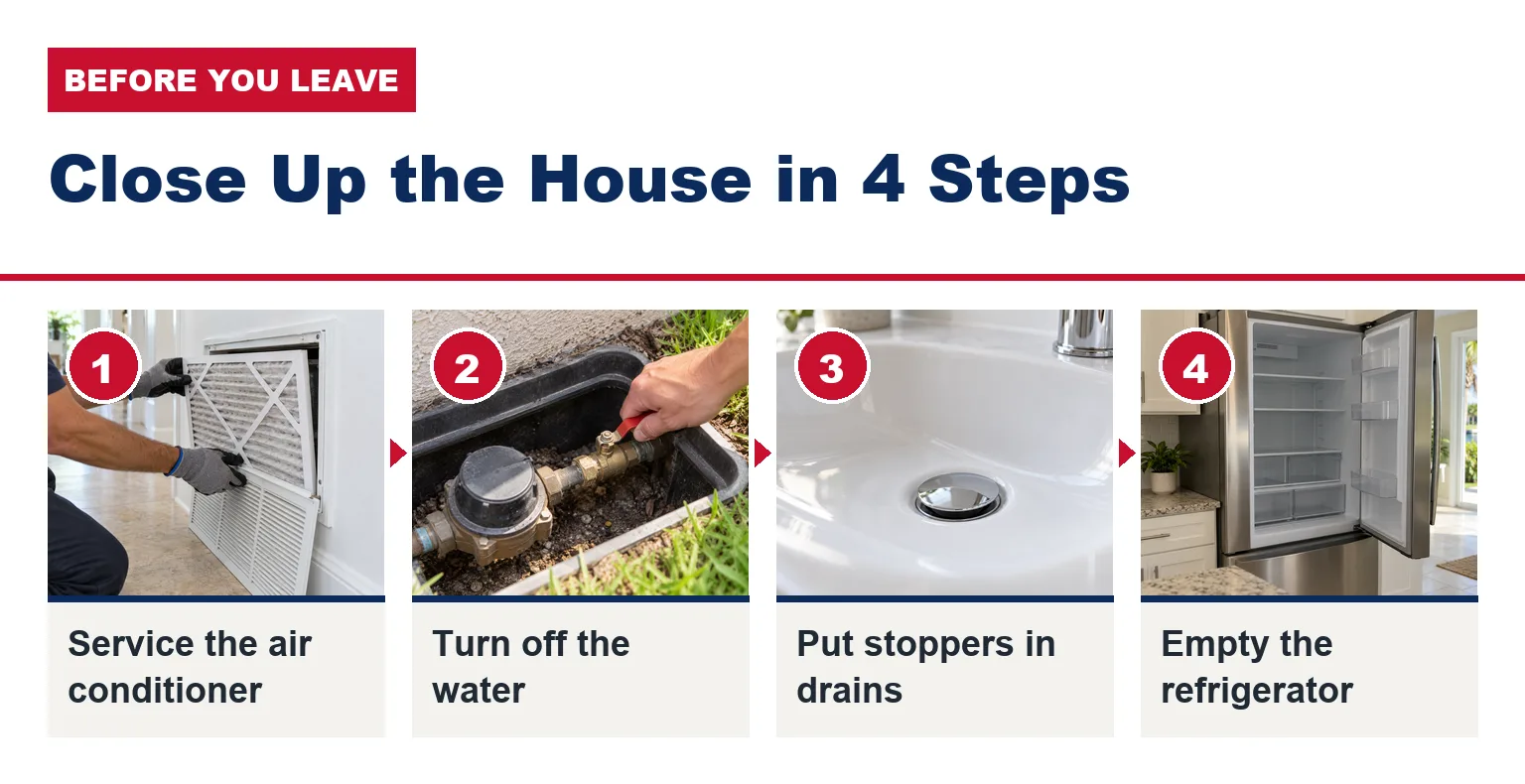
Before you go, service the air conditioner with a professional check-up, change or wash the filter and clean the condensate line, as UF/IFAS recommends. For the rest of the moisture picture, see how to prevent mold in a Florida home.
Turn Off the Water and Seal the Drains
Turn off the water at the meter so a burst pipe or a failed hose cannot flood the house while no one is there. UF/IFAS advises shutting it off at the exterior meter unless that same line supplies your lawn irrigation.
Turn off the water heater if you will be gone for more than a month, and turn off the water supply to the clothes washer to take pressure off its hoses. Water leak sensors and alerts from a smart thermostat or alarm system add a warning if something still goes wrong.
Drains need attention too. Water left in a drain trap can evaporate over a long absence and let sewer gas and pests in, so put stoppers in drains and cover each toilet and tank top with plastic wrap, as UF/IFAS suggests.
Finally, empty the refrigerator and freezer. UF/IFAS says to clean and dry the inside, unplug it, and leave both doors ajar so they cannot close by accident, which keeps odors and mildew from building up.
Decide Who Puts Up Your Hurricane Shutters While You Are Gone
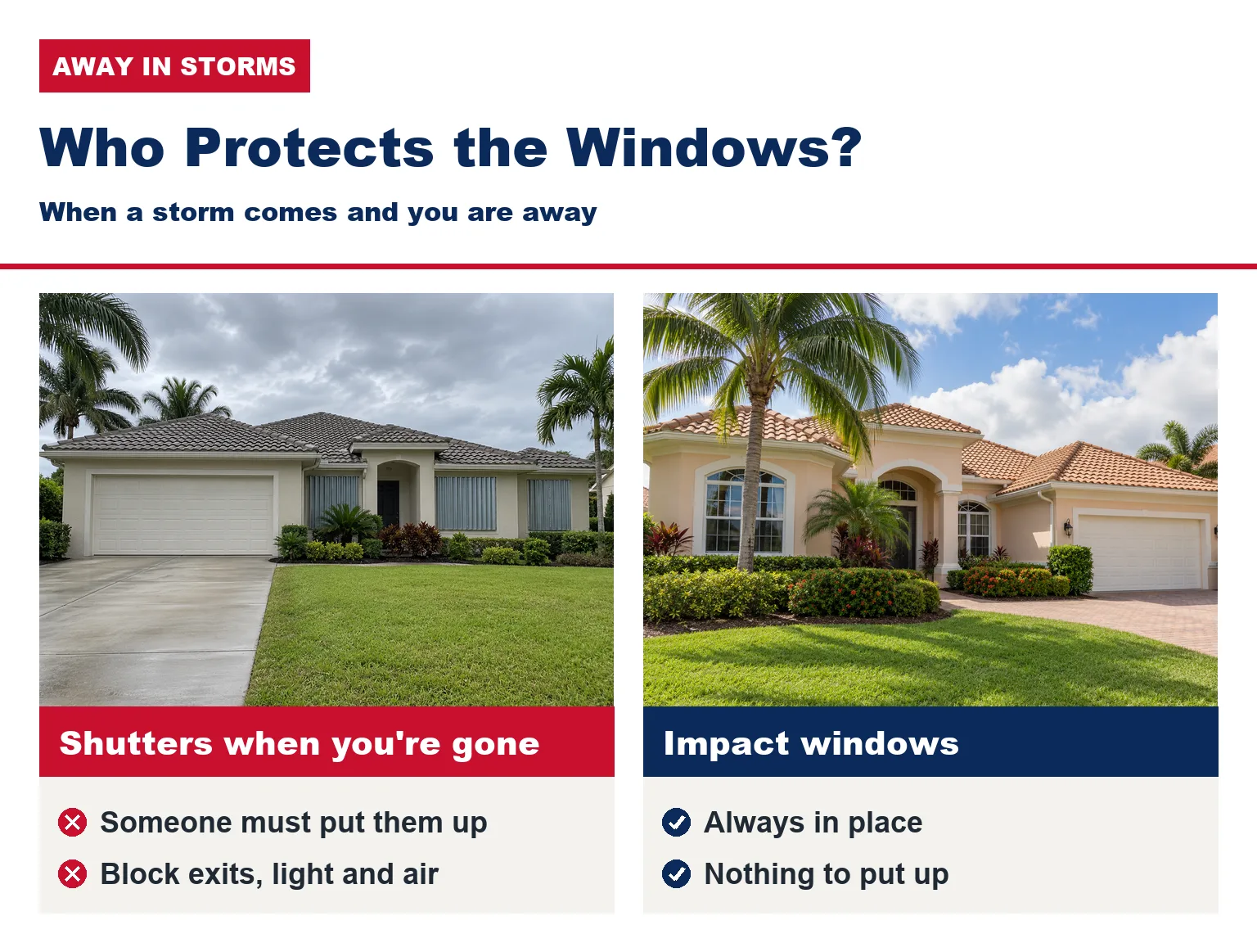
If your home relies on shutters or panels, someone must put them up before a storm, and that person has to be nearby when it counts. The National Hurricane Center issues a hurricane watch 48 hours before tropical-storm-force winds are expected, and a warning 36 hours ahead.
That is a short window, and many helpers will be protecting their own homes at the same time. Book a neighbor, a property manager or a paid service before you leave, and confirm they will still be in town during hurricane season.
If no one reliable will be nearby, impact windows that stay ready all season take this job off the list, as the next section explains.
Write the plan down so nothing depends on memory:
- Which windows and doors get covered, and in what order.
- Where the panels, tracks, fasteners and tools are stored, and how to reach them.
- Keys, alarm codes and a phone number that reaches you.
- Photos of the shutters in place, sent to you before the storm and again after.
Plywood is a last resort for openings without shutters, and it takes time to cut and fasten. Our guide on how to install plywood over windows shows what that job involves.
City Rules for Closed Shutters on an Empty Home
Some South Florida cities limit how long shutters can stay closed, and some treat an unoccupied home differently. Check your own city’s code before you leave shutters up all summer, because closed shutters can also block exits, light and air.
In Coral Springs, city code section 7-202 generally bars keeping hurricane shutters closed for more than 14 consecutive days. A home with no one in residence is an exception, but from June 1 to November 30 the owner must give the fire department the vacancy dates on its form.
Outside that June to November period, Coral Springs allows closed shutters only during a hurricane or tropical storm watch. So if you leave before June 1 or return after November 30, ask your helper to keep the shutters open outside the season unless a watch is in effect.
In Hallandale Beach, section 14-12 says panels on an occupied building must come down within 14 days after the hurricane watch or warning for the county is lifted.
A Hallandale Beach owner who is away may leave the panels up longer by giving contact details to the property manager or condo association president, or to the city’s Development Services if there is neither. The city manager can still require removal at any time.
Impact Windows Need No Shutters When No One Is Home
Impact windows remove the shutter problem for every opening they replace. In Florida’s wind-borne debris region, Section R301.2.1.2 of the Florida Building Code, Residential requires glass openings to be protected from windborne debris, either by impact-rated products or by approved shutters.
For a snowbird, the difference is who has to act. Shutters must be closed or put up before every storm, and in some cities they must come down on time. Impact windows are always in place, so there is nothing to put up when a watch is issued.
Protection covers only the openings you replace. A home with impact windows and an old sliding glass door, front door or garage door still needs a plan for those openings, which is why many owners pair the windows with impact doors for entries and patios and impact-rated garage doors for Florida storms.
USA Home Improvement exclusively sells ES Windows impact windows, in aluminum and vinyl frames. If you are still deciding, read how impact windows and hurricane shutters compare before you choose.
Timing matters for seasonal owners. Manufacturing takes about 6 to 8 weeks depending on project scope, and installation averages 1 to 2 days, for about 3 months start to finish, though it can vary. Starting early in your winter stay leaves room for installation while you are still in town.
Every USA Home Improvement project is permitted, and we handle the permits and coordinate HOA approval when the property has an HOA. Opening protection can also matter for insurance, so read about upgrades that can lower homeowners insurance rates before you price the project.
Financing may be available for qualified homeowners through independent third-party providers. Terms, eligibility and availability depend on the program and location. Look at financing options for qualified homeowners early.
Secure the Yard, Pool and Roof for Hurricane Season
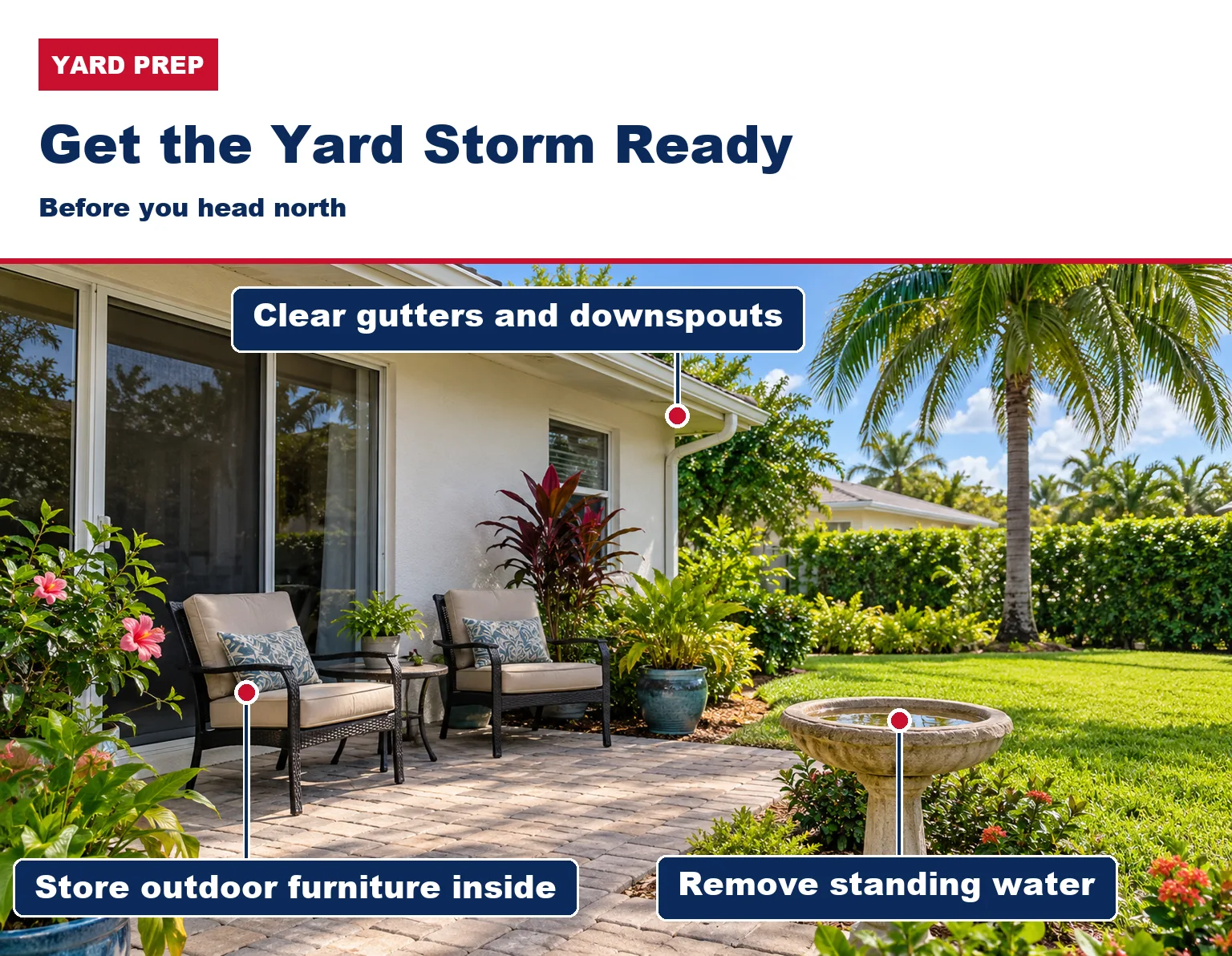
The Atlantic hurricane season runs from June 1 to November 30, according to the National Hurricane Center, which covers most of a snowbird’s time away. Anything loose in the yard can be thrown by the wind, so UF/IFAS advises you to store outdoor furniture inside if it could blow away or cause damage.
Remove standing water from buckets, bird baths and plant saucers to keep mosquitoes from breeding, and give potted plants to a neighbor rather than leaving them inside, since watering them indoors adds moisture to the air, as UF/IFAS notes. Arrange regular mowing and trimming, and have a professional trim branches that hang over the roof.
UF/IFAS also says not to drain the pool, because the sun can dry it out and rain pressure can crack an empty shell. A pool service should check the water every seven to ten days while you are gone.
Clear gutters and downspouts and look for loose or damaged roofing before you leave, since a small leak can run for months in an empty house. Check the list of roof damage to fix before hurricane season.
Keep Mail From Piling Up and Make the House Look Lived In
A stack of mail and newspapers tells strangers that no one is home. The USPS Hold Mail service holds mail for a minimum of 3 days and a maximum of 30 days, so a summer away calls for a forwarding service instead.
Cancel newspapers and magazines, and ask your helper to pick up flyers and packages. Put lamps on timers or smart plugs that follow a normal evening, set the alarm, and check that smoke detectors and thermostats have fresh backup batteries.
Close drapes and blinds, lock every door and window, and leave a key with the person checking the house, never under a mat. For more layers, see our eight ways to theft-proof your home.
Leave the Northern Home Safe for Winter
The home you leave in the fall needs the same care in reverse, with cold instead of humidity as the threat. The American Red Cross advises that if you will be away during cold weather, you leave the heat on, set no lower than 55 degrees Fahrenheit, to keep pipes from freezing.
Shut off and drain the water, or have a plumber do it, and seal toilets and drains as you would in Florida. Hire someone to clear snow and ice so the home looks lived in, including heavy snow on roof edges before an ice dam causes leaks.
Snowbird Home Questions South Florida Owners Ask
How often should someone check my Florida home while I am away?
On a regular schedule you agree on before you leave, and after every storm, power outage or heavy rain. Ask your helper to check the humidity reading, look for water on floors and ceilings, and confirm the air conditioning is running. Also confirm what your insurance policy expects.
Do impact windows mean I can skip all hurricane prep?
No. They protect the openings they replace, but someone still needs to bring in loose outdoor items and protect any door or window that is not impact rated. Our guide to impact windows in South Florida explains styles and options.
What should I do first when I come back in the fall?
Turn the water back on and check under sinks and around the water heater for leaks before you turn the heater on. Then run each faucet and flush each toilet, remove the plastic wrap and stoppers, and look for signs of mold or roof leaks. Open any shutters still in place.
Book the Help You Need Before You Head North
Settle three things before you leave: the air conditioning plan, the water shutoff and the person who will protect the windows if a storm comes. If finding that person is the hard part, impact windows and doors can take the shutter job off the list for good.
USA Home Improvement is licensed (CGC1526707) and insured and has served Florida homeowners for more than 15 years. Our installation team holds direct certification from the manufacturer, and customers can receive the Florida Product Approval number for each window and door on request.
Request a free, no-obligation estimate or call (877) 554-6373.