 Skip to content

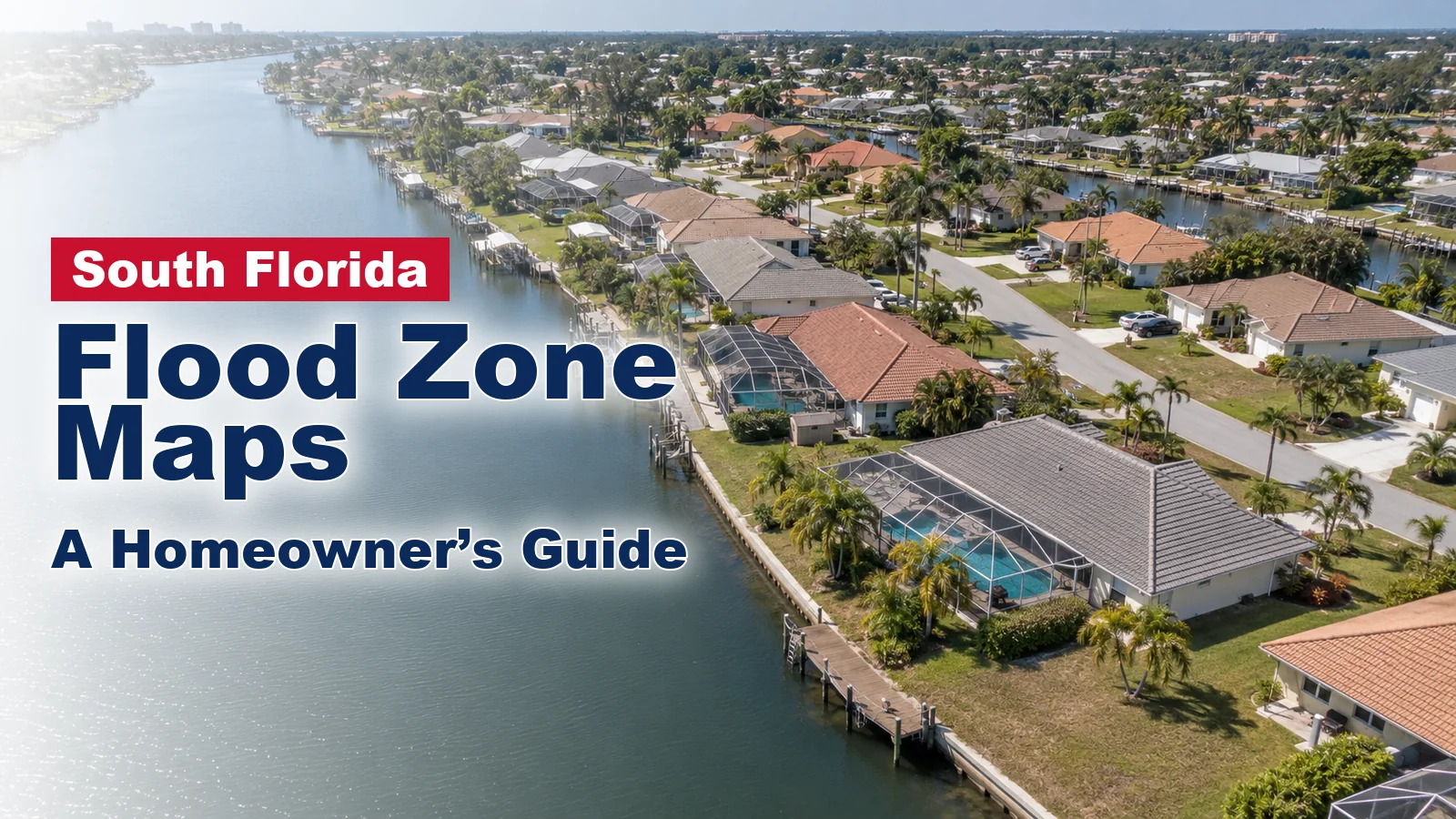
Your FEMA flood zone shows how likely your property is to flood, and it affects whether you must carry flood insurance. Broward and Palm Beach adopted new FEMA maps in 2024, and Miami-Dade’s update is still pending. You can check your zone for free with your county’s online map.
This guide explains what each flood zone means, how to look up your address, and what the zone means for insurance and renovations.
Why Flooding in South Florida Is Not Only a Hurricane Problem
South Florida homes can flood from several sources, not only hurricanes. The most common are:
- Heavy rain that falls faster than streets and canals can drain it
- High tides, including seasonal King Tides that cause “sunny day flooding”
- Storm surge, the rise of seawater pushed onshore by a tropical storm or hurricane
FEMA puts it simply: “There is no such thing as a ‘no-risk zone,'” though some areas have lower or moderate risk (FEMA).
For tidal flooding dates and a checklist, see our South Florida King Tide dates and homeowner checklist.
What Your FEMA Flood Zone Means
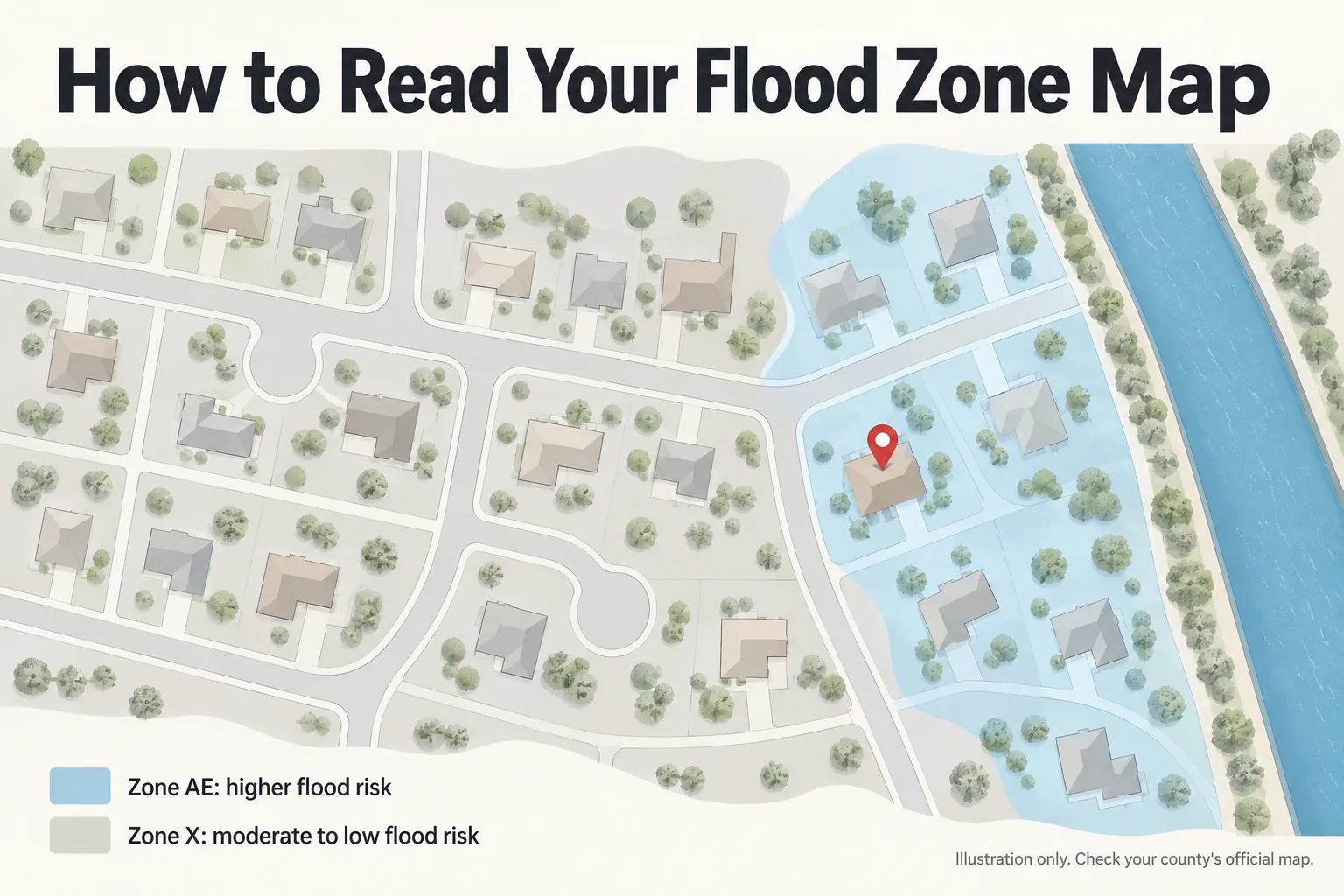
A FEMA flood zone is a label on a Flood Insurance Rate Map (FIRM). It describes your property’s flood risk. Areas with a 1% or higher chance of flooding each year are high risk. FEMA says those areas have at least a one-in-four chance of flooding during a 30-year mortgage (FEMA).
These are the zones South Florida homeowners see most often:
| Zone | Risk level | What it means |
|---|---|---|
| AE | High | 1% annual chance flood area with a Base Flood Elevation (BFE) shown |
| AH | High | 1% annual chance area, usually ponding with 1 to 3 feet of water |
| AO | High | 1% annual chance area, usually shallow sheet flow |
| VE | High, coastal | 1% annual chance area with added risk from storm-driven waves |
| X (shaded) | Moderate | Within the 0.2% annual chance floodplain (often called the 500-year floodplain) |
| X (unshaded) | Lower | Outside the 0.2% annual chance floodplain |
Zone definitions from FEMA Flood Insurance Rate Map legends.
The A and V zones together are called the Special Flood Hazard Area (SFHA). That label matters for insurance, as explained below.
Flood Map Status in Miami-Dade, Broward and Palm Beach Counties
Each county is at a different point in the FEMA map update process.
| County | Current effective maps | What’s changed |
|---|---|---|
| Miami-Dade | Effective September 11, 2009 | Preliminary maps were published in 2021. They are not yet effective and may change (Miami-Dade County) |
| Broward | Effective July 31, 2024 | New maps added many properties to high-risk zones (Broward County) |
| Palm Beach | Effective December 20, 2024 | More than 16,000 parcels saw their Base Flood Elevation rise by one foot or more (Palm Beach County) |
If you live in Broward or Palm Beach and haven’t checked your zone since 2024, check it again.
How to Check Your Property’s Flood Zone
The fastest way to check your flood zone is your county’s free online map. Enter your address and the map shows your zone.
| County | Where to check | Phone help |
|---|---|---|
| Miami-Dade | Miami-Dade Flood Zone Maps | Flood Zone Hotline: 305-372-6466 (Mon to Fri, 8 a.m. to 5 p.m.) |
| Broward | Broward County Flood Zone Maps | Your city’s building or floodplain office |
| Palm Beach | Palm Beach County Flood Zone Update | Unincorporated PBC Flood Zone Hotline: 561-233-5374 |
| Any address | FEMA Flood Map Service Center | FEMA |
Also ask your seller, city or insurance agent for your home’s Elevation Certificate. It shows how high your home sits compared with the flood level for your zone. Miami-Dade notes that elevation certificates are required for new construction and substantial improvements.
Homeowners Insurance vs Flood Insurance: What Each Covers
Standard homeowners insurance usually does not cover flood damage. You need a separate flood policy, through the National Flood Insurance Program (NFIP) or a private insurer (FloodSmart).
When flood insurance is required:
- Federally backed mortgage in a high-risk zone. If your home is in an SFHA and you have a government-backed mortgage, flood insurance is required (FloodSmart).
- Citizens Property Insurance policyholders. Citizens is phasing in a flood insurance requirement for personal residential policies that include wind coverage (Citizens).
| Effective date | Citizens policies required to carry flood insurance (outside the SFHA) |
|---|---|
| Jan 1, 2024 | Dwelling value $600,000 or more |
| Jan 1, 2025 | Dwelling value $500,000 or more |
| Jan 1, 2026 | Dwelling value $400,000 or more |
| Jan 1, 2027 | All policies, regardless of value |
Citizens homes inside the SFHA already need flood coverage. Condo unit-owner, tenant contents and wind-excluded policies are exempt.
Timing matters. An NFIP policy typically has a 30-day waiting period before coverage starts. There are exceptions, such as when flood insurance is required as part of a new or renewed loan. If you need coverage by January 1, 2027, don’t wait until December.
For ways to lower your windstorm premium, see home upgrades that can lower your homeowners insurance rates.
What Your Flood Zone Means for Renovations
Your flood zone can affect how much you can renovate without raising your home. Miami-Dade County explains that if a house is damaged or improved by more than 50% of its market value, it must be raised to meet the current elevation requirement (Miami-Dade County).
This is often called the “50% rule” or the substantial improvement rule. Each city calculates it slightly differently.
If you live in a high-risk zone and plan a large remodel, ask your building department how the rule applies before you sign a contract.
Why a Flood Map Is Only One Part of Your Flood Risk
A flood map is a useful starting point, but it doesn’t show every way your home can flood. FEMA maps are based on studies of specific flood scenarios. Local drainage problems, heavy rain and high tides can flood homes outside high-risk zones.
To get a fuller picture:
- Ask neighbors or the seller whether the street floods during heavy rain or King Tides.
- Check NOAA’s Sea Level Rise Viewer for areas that flood more often at high tide.
- Ask your insurance agent about a flood quote even if you’re in zone X.
Florida’s Flood Disclosure Law for Sellers and Landlords
Since October 1, 2025, Florida requires flood disclosures in many home sales and leases (Florida Senate, SB 948 (2025)).
- Sellers of residential property must disclose whether they know of flood damage during their ownership. They must also disclose whether they received flood damage assistance from any source.
- Landlords signing leases of one year or longer must give tenants a flood disclosure.
If you’re buying a home, read this disclosure closely alongside the flood zone.
Where Impact Windows and Doors Fit in Flood Protection
Impact windows and doors are not a flood solution. They are tested for wind pressure and wind-borne debris, not for holding back standing water.
They do matter in the same storms that bring surge and heavy rain. Hurricane impact windows for South Florida homes help keep wind and debris out of your home. For flooding, focus on your flood zone, elevation, insurance and the flood mitigation options your local floodplain office recommends.
Frequently Asked Questions About South Florida Flood Zones
Do I need flood insurance in zone X?
Federal rules don’t require flood insurance in zone X for a government-backed mortgage, but your lender may still ask for it. Citizens will require flood coverage for all wind-covered personal residential policies starting January 1, 2027, regardless of zone.
How do I know if the flood maps changed for my home?
Check your address on your county’s flood zone map and compare it with your insurance declarations page. Broward’s maps changed July 31, 2024 and Palm Beach’s December 20, 2024. Miami-Dade’s preliminary maps are not yet effective.
Can I challenge my flood zone?
Yes, in some cases. If your home sits higher than the map shows, a surveyor can prepare an Elevation Certificate. FEMA has a process to request a map change. Your county floodplain office can explain the steps.
Does a King Tide count as a flood for insurance?
Damage from tidal flooding is generally treated as flood damage, which standard homeowners policies usually exclude. Check your flood policy and ask your agent about your specific coverage.
What to Do Next
Look up your flood zone today, then compare it with your insurance. If you’re with Citizens, make sure you’ll have flood coverage in place before January 1, 2027. For hurricane-season upgrades, see our guide to upgrades that make your home more hurricane resilient.