Skip to content

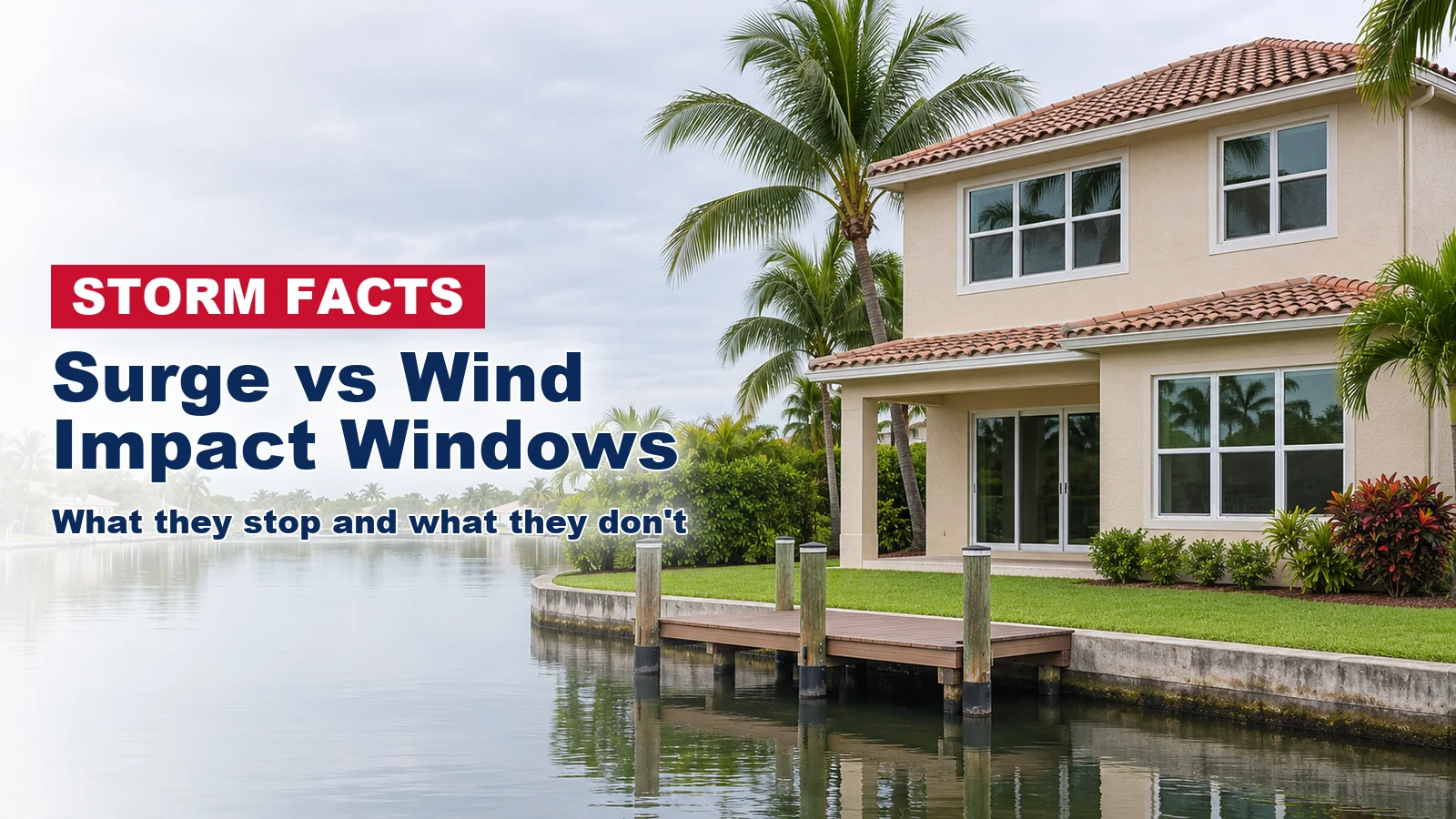
No. Impact windows do not stop flooding or storm surge. They are tested to resist wind pressure and wind-borne debris, and none of those tests holds back standing water or surge.
Storm surge is rising seawater, and it can reach a home at ground level whether the windows hold or not. This guide explains how surge and wind damage a home differently, where impact windows still help, what protects against floodwater, and how flood insurance and wind coverage split.
Storm Surge vs Wind: Two Different Hurricane Hazards
Storm surge and wind damage a home in different ways. The National Hurricane Center defines storm surge as “an abnormal water level rise generated by a storm over and above the predicted astronomical tide.” Wind damage comes from air pressure and from the debris the wind throws.
Surge is the deadlier hazard. The NHC says storm surge “is currently the leading cause of fatalities from hurricanes.” Water weighs about 1,700 pounds per cubic yard, the NHC adds, and repeated pounding by waves can demolish any structure not specifically designed to withstand those forces.
Wind is dangerous in its own way. The NHC’s hurricane hazards page says hurricane-force winds of 74 mph or more can destroy buildings, and that signs, roofing material, siding and small items left outside “become flying missiles during hurricanes.”
| Question | Storm surge | Hurricane wind |
|---|---|---|
| What it is | Seawater pushed above the normal tide by the storm | Sustained winds of 74 mph or more at hurricane strength |
| How it damages a home | Water weight, battering waves and flooding at ground level | Pressure on walls, roof and openings, plus flying debris |
| Does the category measure it? | No. The category scale leaves surge out | Yes. The category is based on sustained wind speed |
The hurricane category is a wind number only. The Saffir-Simpson Hurricane Wind Scale is based only on maximum sustained wind speed and does not take storm surge or rainfall flooding into account. The NHC is direct about it: “Hurricanes of all categories can produce deadly storm surge.”
Rain is a third source of water. The NHC notes that tropical cyclones often bring rain in excess of 6 inches and that “flooding is the major threat from tropical cyclones for people living inland.” Impact windows do not hold back rising rainwater either.
What Impact Windows Are Tested For, and What They Are Not
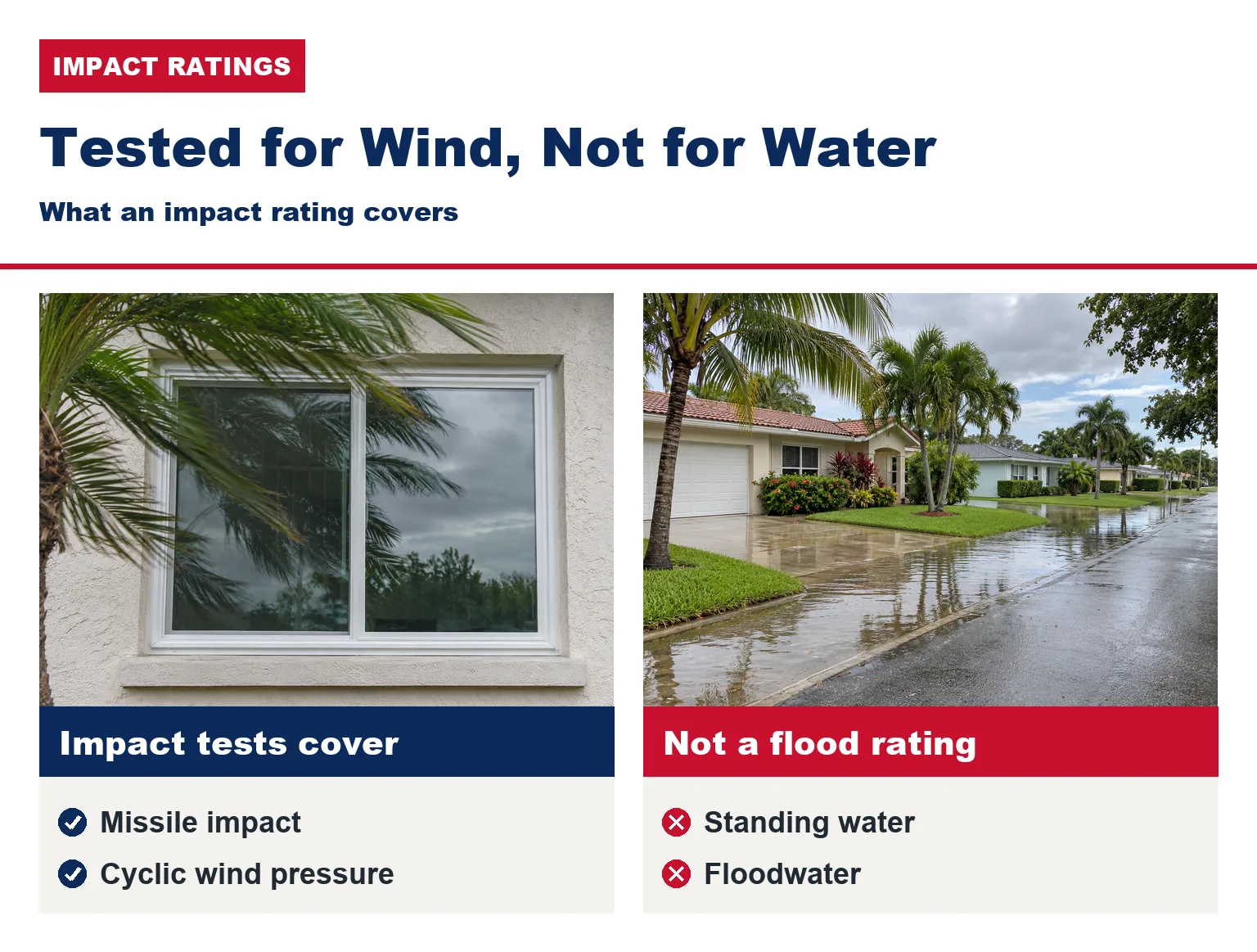
Impact windows are tested against wind and debris only. Florida’s impact tests start with a missile impact, then apply cyclic wind pressure, repeated cycles of pushing and pulling on the window. Our explainer on how hurricane impact windows are tested step by step walks through each part.
An impact window’s approval lists its missile rating and its design pressure. Neither one is a flood rating. Our comparison of hurricane windows and impact windows on a quote explains what those two ratings mean.
USA Home Improvement customers can receive the Florida Product Approval number for each window and door on request, so you can read those ratings yourself.
Flood resistance has its own test in Florida. The 9th Edition (2026) Florida Building Code adds TAS 204, a protocol for passive flood barriers used for dry floodproofing in A zones, according to the Florida Building Commission’s analysis of changes.
TAS 204 includes a hydrostatic load test that measures how much water seeps through the barrier, plus a debris impact load test. Coastal high hazard areas (V zones) and Coastal A zones are not covered by the protocol.
Homes in high-risk flood zones generally cannot use that route. FEMA’s Technical Bulletin 3 says the NFIP regulations “do not permit the use of dry floodproofing for residential buildings in Zone A,” and dry floodproofing is not permitted for any building in Zone V.
So for a new or substantially improved home in a high-risk flood zone, sealing the walls, doors and windows is not the flood plan. Elevation is, as the protection section below explains.
How Impact Windows Still Help When a Storm Brings Surge
Impact windows still matter in a surge storm because hurricane wind reaches far beyond the water. The NHC notes that “winds can stay above hurricane strength well inland,” so homes the surge never touches can still lose a window to debris.
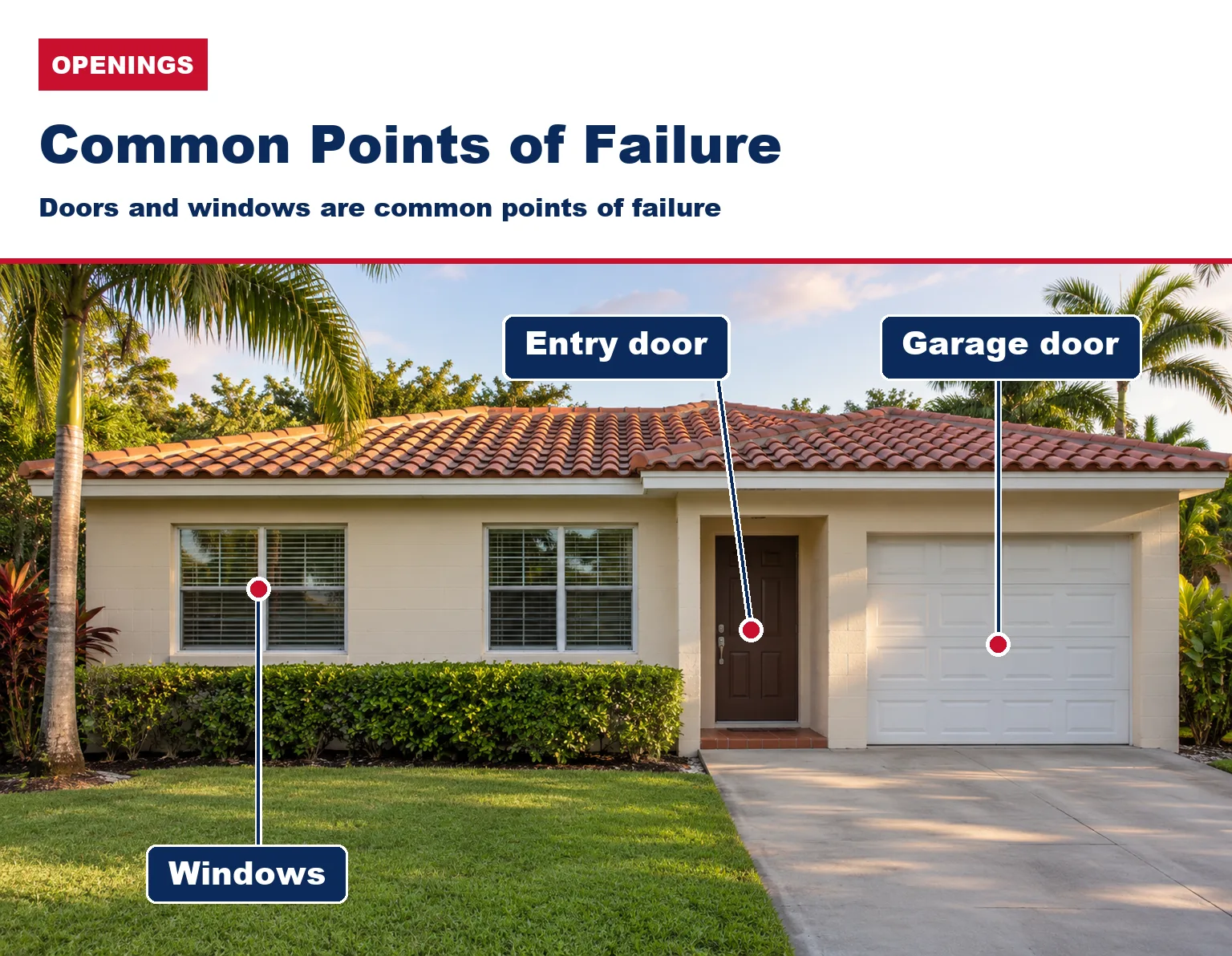
FEMA’s guide Protect Your Property From Storm Surge lists window and door protection among its steps. It says “doors and windows are common points of failure during a storm,” and when they break open, wind, water and debris can seriously damage the house and belongings.
The same guide says storm shutters and high-impact glass “can prevent glass from breaking.” It also warns that conventional garage doors “are not meant to withstand the force of water or high winds,” so the garage door belongs in your opening plan too.
Impact windows help whether you leave or stay. If you evacuate, every opening is already protected, with nothing to put up on the way out.
The Florida Division of Emergency Management’s Know Your Zone page says that in an evacuation zone ordered to evacuate, or in a flood zone, “you should evacuate no matter what.”
If no order covers your area and your house is not in an evacuation zone, the state says you may consider sheltering in place. You should then know your home’s “ability to withstand strong winds and heavy rain.” Impact windows and doors are built for the wind and flying-debris part of that test.
USA Home Improvement installs ES Windows impact windows in aluminum and vinyl frames for South Florida homes, along with impact entry doors and sliding glass doors for the other openings FEMA names.
Want a price for protecting every opening in your home? Request a free estimate or call (877) 554-6373.
What Actually Protects a Home From Storm Surge and Flooding
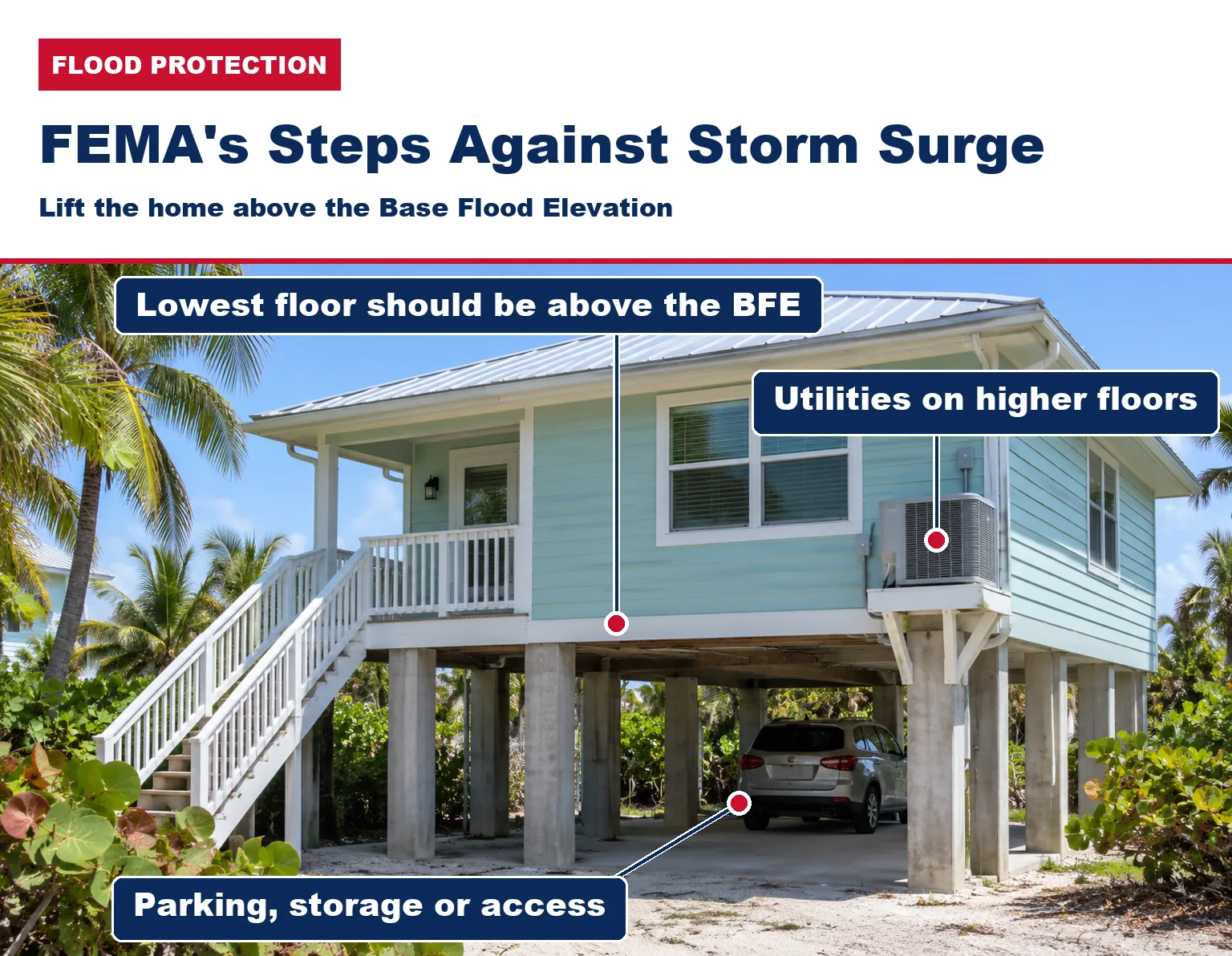
Elevation is the strongest protection against storm surge. FEMA calls elevating a home “one of the most effective ways to mitigate storm surge effects.”
When a home is properly elevated, FEMA says, its lowest floor should be above the Base Flood Elevation (BFE), the height floodwater is likely to reach in a 1%-annual-chance event.
FEMA’s other surge steps work at the same height. Keep water heaters, washers, dryers and electric panels on higher floors, and use flood-resistant materials such as tile. Store valuables and important documents above the BFE in waterproof containers.
Many coastal communities require utilities to be elevated 12 inches or more above the BFE, an extra margin FEMA calls freeboard. Areas below the BFE on an elevated home can be used for parking, storage or access to the house.
Local rules decide what is allowed below the BFE, so check with your building department and floodplain manager before planning any flood work. For the wind side of the house, see our list of upgrades that make a home more hurricane resilient.
Flood Insurance vs Wind Coverage: Two Separate Policies
Flood damage and wind damage are usually insured separately. FloodSmart, the National Flood Insurance Program (NFIP) site, says most homeowners and renters insurance does not cover flood damage. NFIP building policies cover up to $250,000 and contents policies up to $100,000.
The NFIP’s definition of a flood is a general and temporary condition of inundation of 2 or more acres of normally dry land, or of 2 or more properties, including from “overflow of inland or tidal waters.” Storm surge spreading through a neighborhood fits that description.
Ask your agent how your homeowners policy and your flood policy each treat water that rises from outside and rain that enters through storm damage. Those answers are in each policy, not on the window.
Timing matters too. FloodSmart says new flood coverage “will go into effect 30 days after your date of purchase,” with four exceptions. A policy bought once a storm forms may start too late for it.
Impact windows work on the wind side of the premium. Florida Statute 627.0629 requires residential property rate filings to include discounts or credits for features shown to reduce windstorm loss, including “opening protection, and window, door, and skylight strength.”
That law covers windstorm losses, so any credit applies to the wind side of the premium, not to a flood policy. FEMA notes that elevating a home may lower the flood premium.
See how wind-mitigation upgrades can cut your insurance premium, and look up your zone with our guide to South Florida flood zone maps.
A Wind Plan and a Water Plan Before Hurricane Season
Every South Florida home needs two plans, one for wind and one for water. These four steps follow guidance from the state, FEMA and Ready.gov.
Look up your evacuation zone. Check your evacuation zone by address on the state’s Know Your Zone map. The NHC’s National Storm Surge Hazard Maps show the near worst-case surge flooding for each hurricane category.
Buy flood insurance early. FEMA advises flood insurance for your home and its contents even if you do not live in a high-risk flood zone. Buy it long before a storm forms, because of the 30-day wait.
Protect every window and door. Impact windows and doors stay in place all season, while shutters and panels must go up before each storm. Our guide to how shutters, panels and impact glass compare for hurricane season compares the options.
Leave when officials say so. Ready.gov says that if you live in a mandatory evacuation zone and local officials tell you to evacuate, “do so immediately.” Impact windows do not make a surge zone safe to stay in.
Storm Surge and Impact Window FAQs
Will storm surge break impact windows?
No one can promise either way. Florida’s impact tests use missiles and wind pressure, not waves or standing water, so an impact rating says nothing about surge. The NHC warns that pounding waves can demolish structures not designed for them, so in a surge zone, plan to leave when ordered.
What is the difference between storm surge and storm tide?
Storm surge is the extra rise of water the storm creates above the predicted tide. Storm tide, the NHC says, is “the water level rise due to the combination of storm surge and the astronomical tide,” so a surge at high tide pushes water higher.
Is storm surge only a danger for beachfront homes?
No. The NHC says storm surge “can even travel up rivers and canals, reaching well inland from the coastline,” and a slower storm pushes surge farther inland than a fast one. Canal-front homes in South Florida should check their evacuation zone, not just their distance from the beach.
Do impact doors keep floodwater out?
No. Impact doors meet the same kind of missile and wind pressure tests as impact windows, and those tests do not cover standing water. For floodwater, plan on elevation, raised utilities and flood insurance instead.
Plan for Wind With Impact Windows, and for Water Separately
If you want every opening protected from wind and debris with no storm-day prep, impact windows and doors are built for that job. If your home sits in a surge or flood zone, add elevation, flood insurance and an evacuation plan, because no window stops rising water.
USA Home Improvement sells ES Windows exclusively, every project is permitted, and our installation team holds direct certification from the manufacturer. We are licensed (CGC1526707) and insured and have served Florida homeowners for more than 15 years.
Financing may be available for qualified homeowners through independent third-party providers. Terms, eligibility and availability depend on the program and location. See ways to finance a window and door upgrade.
Get a free estimate or call (877) 554-6373.