Skip to content

The Atlantic hurricane season ends on November 30. Once it does, spend an afternoon on your windows and doors: inspect them, clean the tracks and weep holes, test every lock, store your shutters, document what you have, and plan any upgrade for the calm months.
This guide gives a short recap of the 2026 season from National Hurricane Center data, explains why a quiet year still matters in South Florida, and walks through each post-season check.
The 2026 Hurricane Season in Brief
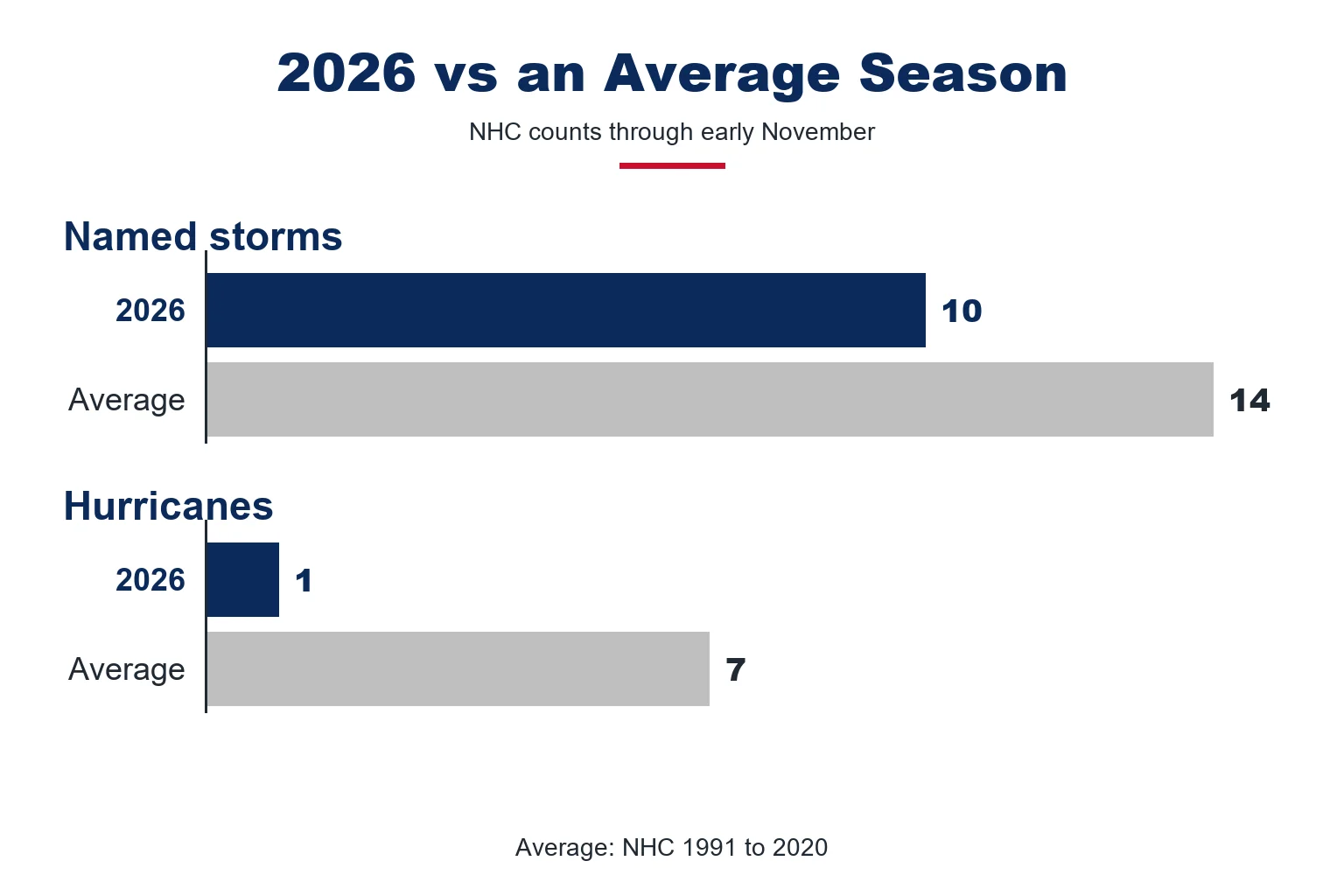
The 2026 Atlantic season was quiet. The National Hurricane Center’s 2026 season table counted 10 named storms and one hurricane, Isaias, through early November. An average season has 14 named storms and 7 hurricanes, based on NHC’s 1991 to 2020 climate period.
The first hurricane also came late. NHC’s climatology page says the first hurricane tends to form in early to mid-August. Isaias did not become a hurricane until the night of October 7, according to NHC’s update that evening.
Isaias then struck Florida. NHC’s landfall update says it made landfall near Destin, in the Florida Panhandle, on October 9 with maximum sustained winds of 105 mph.
South Florida homes were far from that landfall, but a Florida landfall in October is a reminder that the season runs to the end.
Why a Quiet Season Is Not a Reason to Wait
A quiet season says nothing about the next one, and one storm is enough. NHC’s 1992 season table counts just seven named storms, and Andrew was the first storm that year to be given a name. NHC’s history page says Andrew blasted across south Florida on August 24, 1992.
NHC counts 23 deaths in the United States from Andrew and $26.5 billion in U.S. damage, almost all of it in south Florida. NHC adds that the vast majority of the Florida damage was due to the winds. Our list of Florida’s most destructive hurricanes puts Andrew in context.
The calendar is not a hard wall either. NHC says tropical cyclone activity sometimes occurs after November 30. Our Florida hurricane season calendar shows when storms are most likely.
The quiet months are the time to fix weak openings. USA Home Improvement installs ES Windows impact windows that need no storm setup, in aluminum and vinyl, with nothing to put up. Our guide to choosing impact windows for a South Florida home covers styles, costs and county rules.
Your Post-Season Window and Door Checklist
These six checks take an afternoon for most homes. Work through them in order, because what you find in the first three decides what you plan in the last one.
1. Inspect Every Window and Door, Inside and Out
Walk the house slowly and look at each window and glass door from both sides. A small problem found in December is far easier to fix than one found when a storm is in the forecast.
- Glass: cracks, chips or a hazy edge on any pane.
- Frame: bends, loose corners or gaps where the frame meets the wall.
- Weatherstripping and caulking: FGIA, the window and door industry group, says missing, cracked or damaged weatherstripping and caulking should be replaced.
- Water signs: stains on the wall or floor under a window or slider.
If you find a crack or a bent frame, our guide on what a cracked impact window means and what to do next explains each finding.
2. Clean the Tracks, Weep Holes and Frames
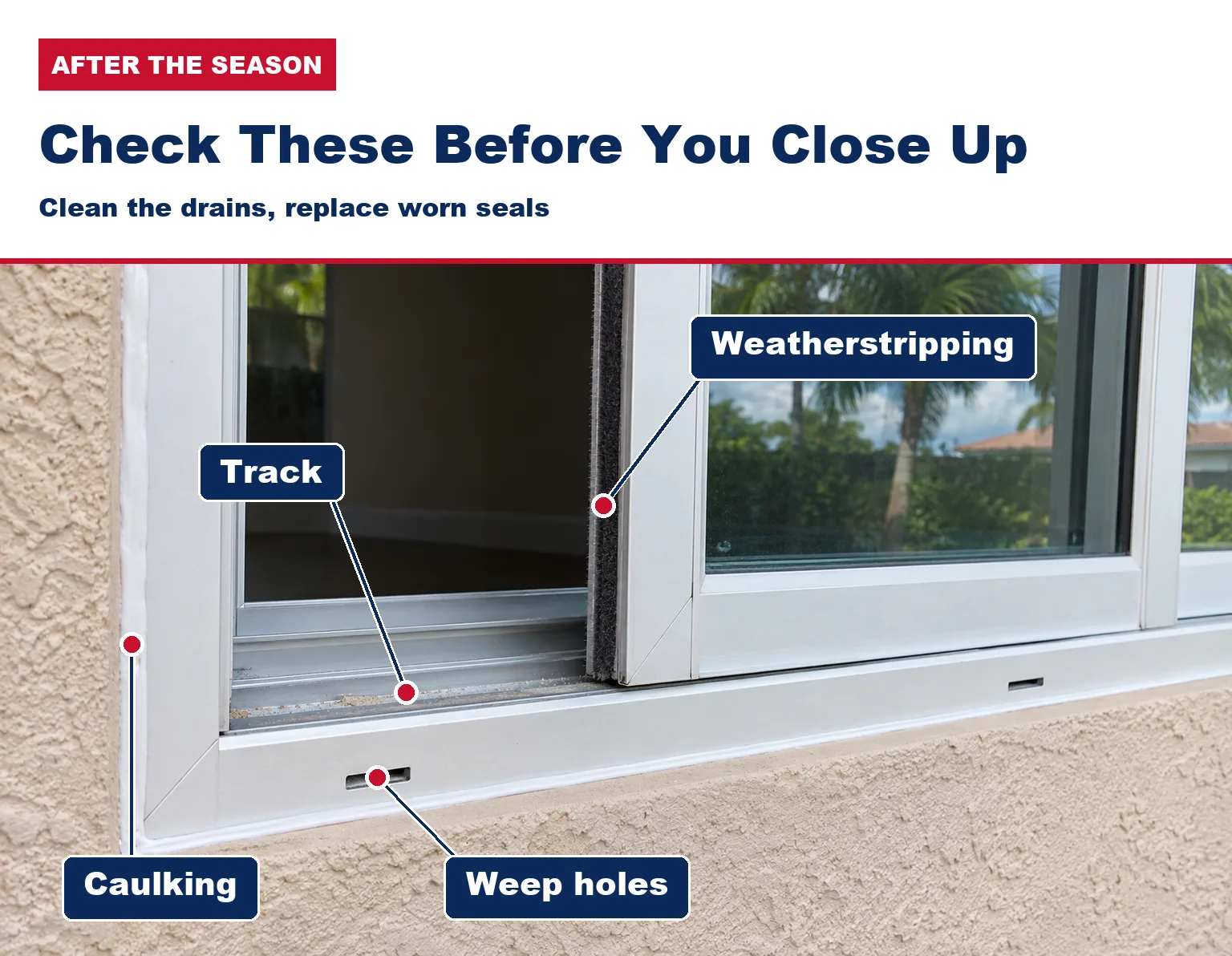
Clean tracks and weep holes before you close up the season. Weep holes are the small drain slots at the bottom of a window or sliding door frame, and they let water out. When sand or debris blocks them, the water has nowhere to go.
Clean the drains, and replace worn seals you found in the first check. The FGIA homeowner care page gives three rules that matter here:
- Clean tracks and weep holes with a dry paint brush or a vacuum brush attachment.
- Keep oil-based lubricants away from weep holes, which they can damage.
- Never use a pressure washer or high-pressure sprayer on windows or doors.
Salt air makes this a regular job near the coast. Our coastal cleaning schedule for impact windows covers rinsing, products to avoid and a year-round schedule.
3. Test Every Lock and Latch
Open, close and lock every window and door at least once. An impact door that drags or will not lock is easier to deal with in December than with a storm in the forecast.
Turn each handle with normal hand pressure only. If a door sticks, a lock will not throw, or you have to push or lift the panel to latch it, do not force it or modify the hardware. Check your warranty and the manufacturer’s care guide before anyone adjusts it.
Our post on why an impact door sticks or is hard to lock separates what you can check yourself from what needs a pro. If a door is near the end of its life, compare impact entry, French, sliding and pivot doors.
Run the garage door up and down once too. If it drags, binds or has dented panels, have it looked at before June, and see impact garage doors built for Florida wind.
4. Take Down, Check and Store Shutters and Panels
Take shutters and panels down once the storm threat is over, and check them before you store them. Several South Florida cities limit how long shutters can stay closed; see each city’s rule on how long shutters can stay up.
- Count the panels and hardware. Replace missing wing nuts, bolts and anchors now, while stores have them.
- Mark each panel with the opening it fits, so next year’s setup goes faster.
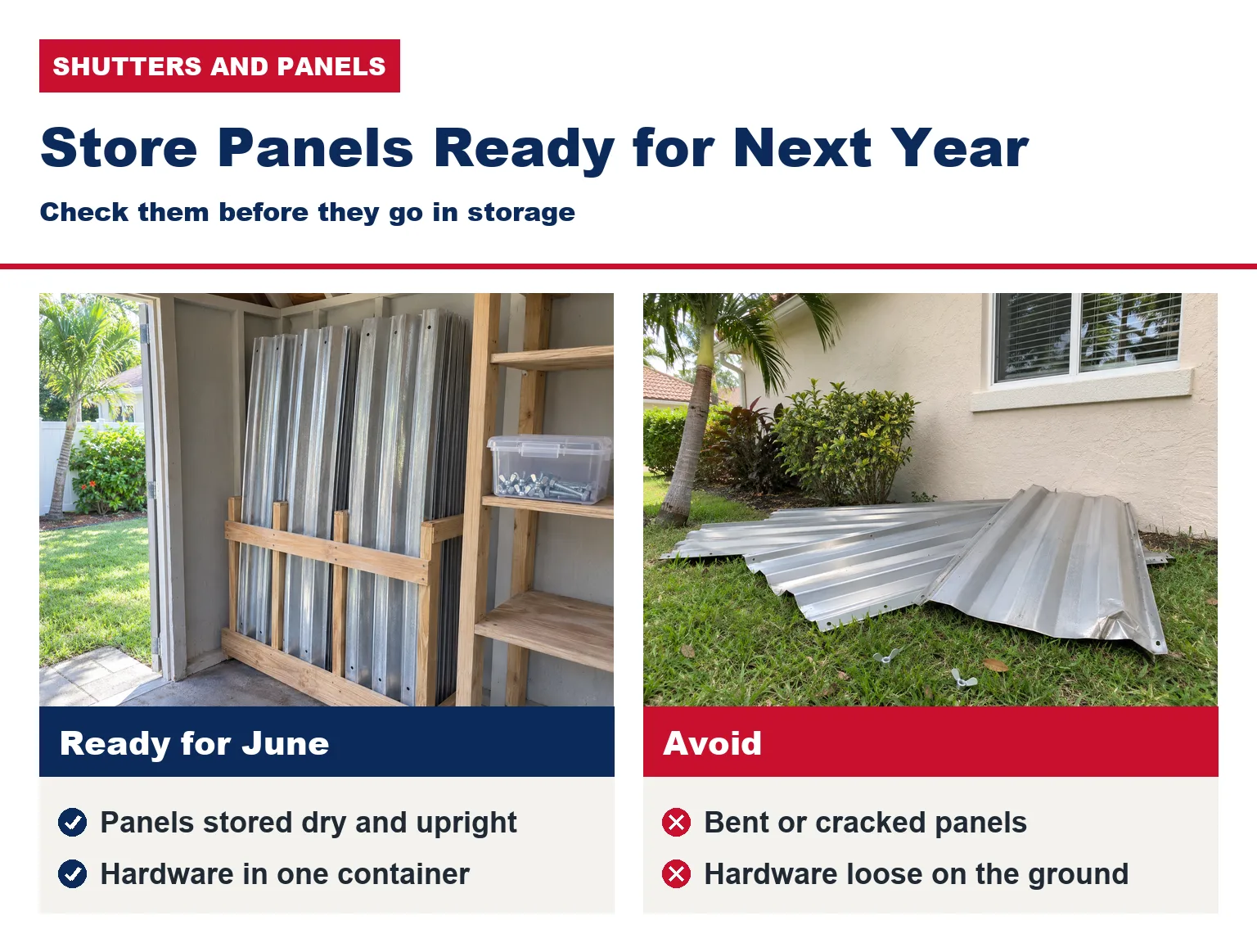
- Set aside bent or cracked panels and replace them before June.
- Store everything dry and upright, off the ground, with the hardware in one container next to the panels.
- Accordion and roll-down shutters: close and open them fully once, and follow the maker’s instructions for cleaning and lubrication.
Plywood users should check each board for warping or rot and keep the fasteners with it. Our guide to cutting and fitting plywood window covers covers the rest. The National Weather Service lists checking storm shutters as part of getting ready before the season.
5. Document the Condition and Keep Your Records
Photograph every window and door while they are in good shape. Photos taken now give you a clear “before” record if a future storm causes damage, and Ready.gov already tells homeowners to document any property damage with photographs after a storm.
- A wide photo of each side of the house, then each window and door up close.
- Invoices and warranty papers for any impact windows and doors.
- The Florida Product Approval number for each product. USA Home Improvement customers can receive the number for each window and door on request.
- Permit records for past window, door and shutter work.
Store copies in a secure, password-protected digital space, as Ready.gov suggests. If a storm this season did cause damage, our guide to the storm damage claim to window replacement process walks through the steps. Check with your insurer about your own policy and deadlines.
6. Plan Upgrades While the Weather Is Calm
Plan any upgrade now, so it is done before the next season. At USA Home Improvement, manufacturing takes about 6 to 8 weeks depending on project scope, and installation averages 1 to 2 days. The whole process takes about 3 months start to finish, though it can vary.
Our guide on the best time to install impact windows in South Florida counts back from June 1. Before you buy, check whether your home qualifies for Florida’s sales tax refund on impact windows and doors.
Bring your inspection notes to the estimate, so every weak opening gets priced. Book a free impact window and door estimate or call (877) 554-6373 while the off-season gives you time.
When spring comes, our pre-season hurricane checklist for South Florida homes picks up where this list ends.
Post-Season Window and Door FAQs
When should I take down my hurricane shutters?
Take them down once the storm threat has passed, not at the end of the season. Closed shutters can block escape routes in a fire.
Some South Florida cities also limit how many days shutters may stay closed after a watch or warning, so check your own city’s code.
Does a quiet hurricane season mean next year will be quiet?
No. NHC’s numbers for an average season come from 1991 to 2020, and one season’s count says nothing about the next. NHC’s 1992 table counts only seven named storms, and Andrew was one of them, so plan every year as if a storm will come.
Do I need a permit to replace windows or doors in the off-season?
Yes. In South Florida, plan on a building permit for any window or exterior door replacement, in any month; the season does not change that.
Every USA Home Improvement project is permitted. See when Florida requires a permit for windows and doors.
What should I do about a damaged window until it is replaced?
Keep a temporary plan for that opening: a shutter, a panel or plywood cut to fit, ready to go up if a storm forms early. If a cracked pane is still in the frame, leave it in place, photograph it and keep people back until it is replaced.
How should I store hurricane panels after the season?
Store them dry and upright, off the ground, with all the hardware in one container beside them. Before they go in, count the panels and fasteners, mark which opening each panel fits, and set aside any bent or cracked panel to replace before June.
Close Out the Season, Then Fix the Weak Openings
Most of this list costs nothing but an afternoon: a walk around the house, a brush and a vacuum, a lock test, labeled panels and a folder of photos. The item that changes next season is the openings you found weak. Fix them while the weather is calm.
Compare ways to finance an impact window or door project. Financing may be available for qualified homeowners through independent third-party providers. Terms, eligibility and availability depend on the program and location.
USA Home Improvement is licensed (CGC1526707) and insured and has served Florida homeowners for more than 15 years. We sell ES Windows exclusively, and our installation team holds direct certification from the manufacturer.
Get a free estimate or call (877) 554-6373.