Skip to content

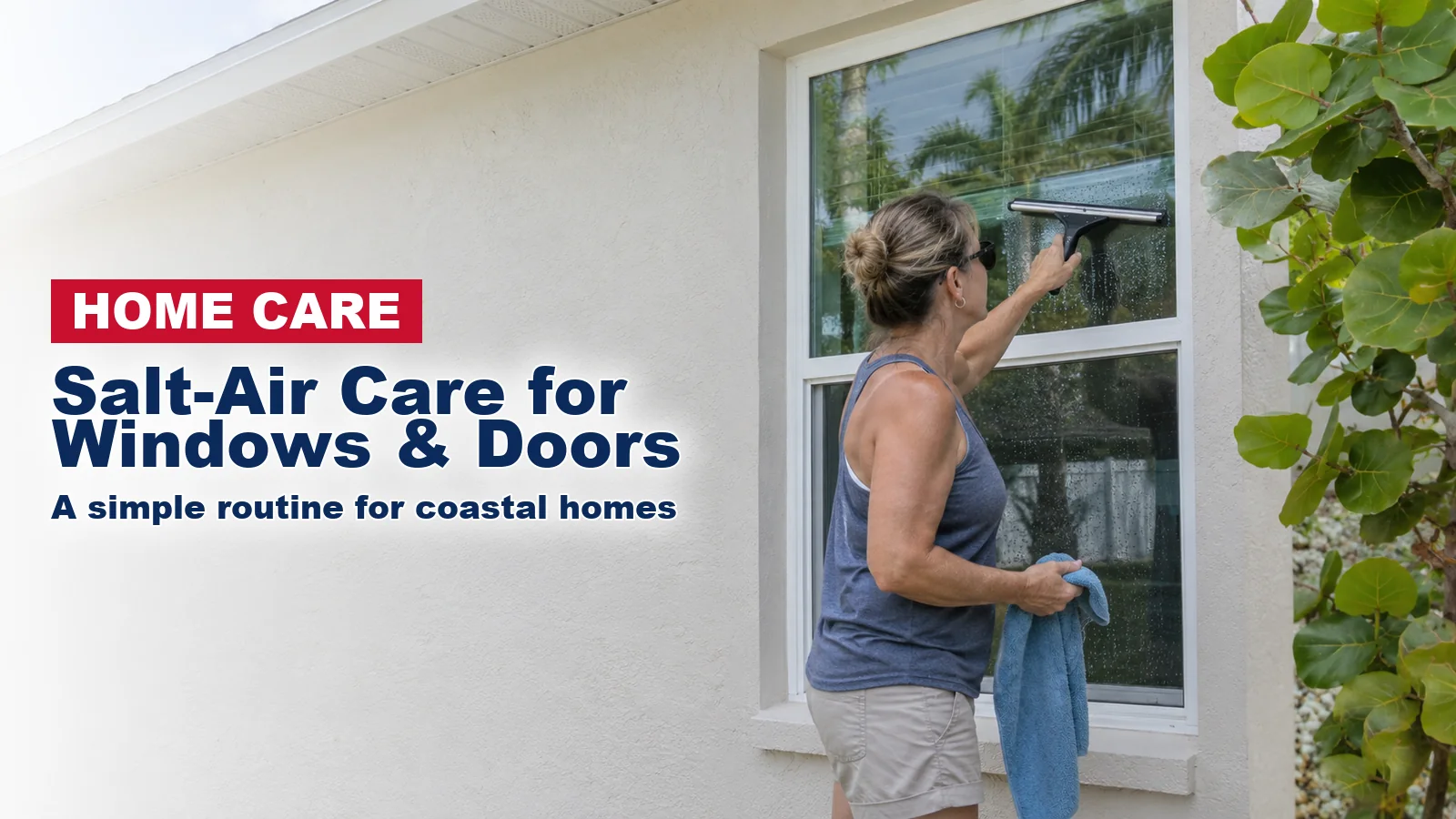
To care for impact windows and doors in salt air, rinse the salt off the frames, glass and tracks with fresh water, wash with mild soap and a soft cloth, and keep the weep holes clear. Near the coast, ES Windows recommends cleaning once a month.
Lubricate moving parts as your manufacturer directs, and never use a pressure washer, razor blade or abrasive pad. This guide covers each step, what to avoid, a schedule for the year and the signs that need a professional.
Why Salt Air Is Hard on Impact Windows and Doors
Salt air leaves salt and dirt on the outside of windows and doors. AAMA, a standards body now part of the Fenestration and Glazing Industry Alliance (FGIA), says in its aluminum cleaning guide that in foggy coastal regions, repeated condensation and drying can build up salts and dirt that stick hard to aluminum finishes.
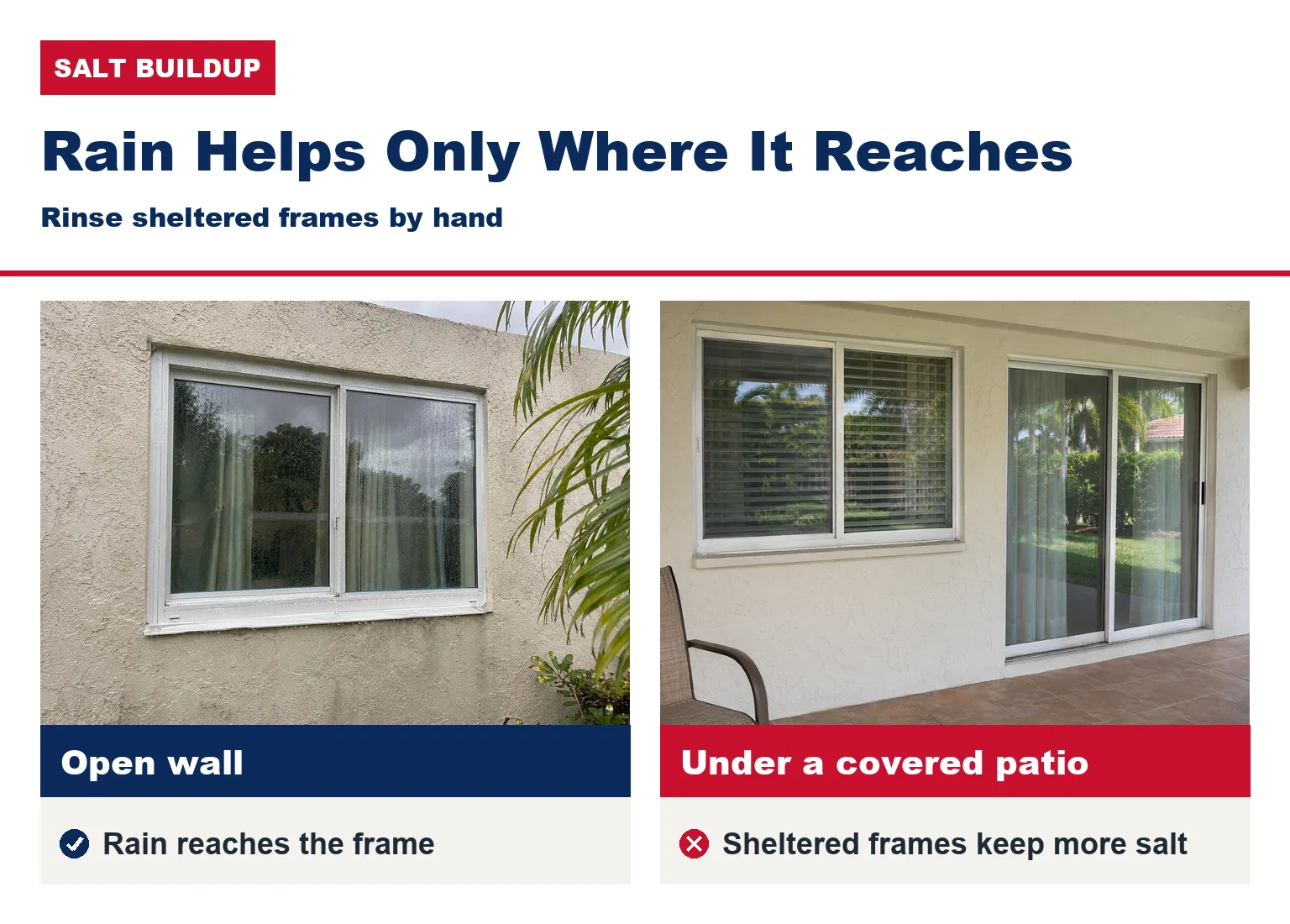
Rain helps, but only where it reaches. The 2009 edition of the AAMA 609 and 610 cleaning guide says recessed and sheltered areas usually get dirtier because rain does not wash them. In a South Florida home, that means frames under a balcony, a deep roof overhang or a covered patio.
Sheltered frames keep more salt and dirt, so rinse them by hand.
Regular cleaning stops soil from building up. AAMA says built-up soil can, in some conditions, speed up weathering of the finish, and that the more often aluminum is cleaned, the easier each later cleaning is.
Moving parts need extra attention. Locks, hinges, rollers and tracks work every time you open the unit, so salt and sand there affect how smoothly it operates. That is true whether you have aluminum or vinyl impact windows from ES Windows or impact entry doors, French doors and sliders.
How to Rinse and Wash Frames Without Damaging Them
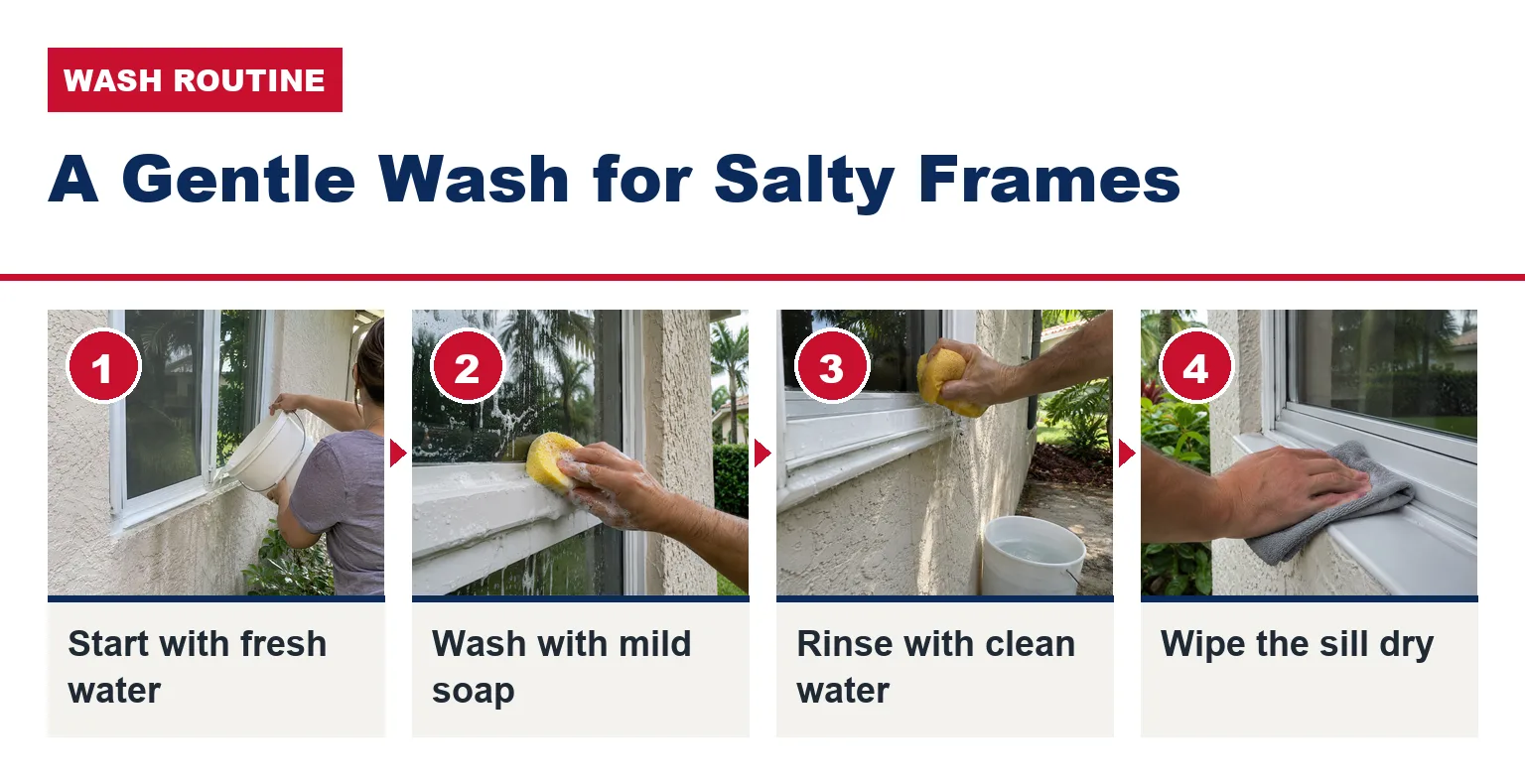
Start with fresh water to float off loose salt and sand before anything touches the frame. FGIA says homes near saltwater should rinse the outside of windows and doors with water several times a year.
A bucket and a soft sponge are the gentlest way to rinse.
If you use a garden hose, keep the pressure low: FGIA’s homeowner care guide warns that high water pressure can push water into the home. At least one major manufacturer’s care guide lists garden hoses among the tools not to use, so check your own guide.
Then wash with a mild, nonabrasive soap or detergent and a soft cloth or sponge. FGIA says to test any cleaner in a hidden spot first. Rinse with clean water so no soap dries on the frame.
Work in the shade. AAMA says not to clean hot, sun-heated aluminum, because chemical reactions speed up on hot metal and can leave streaks that may not come out.
Finish by wiping the sill and frame dry. For aluminum frames, AAMA says metal seams, crevices, sills and any spot that traps water, cleaner or dirt must be cleaned and thoroughly dried, or the puddles can leave stains later.
How to Clean Laminated Impact Glass Without Scratching It
Clean impact glass the way FGIA advises for any window glass: a vinegar-based glass cleaner, or mild soap and water, with a soft, lint-free cloth. Rinse with clear water, then dry with a soft cloth or a squeegee to avoid water spots.
Keep vinegar cleaner off the frames. ES Windows advises avoiding abrasive or acidic cleaners, so rinse any drips off the frame with clear water.
Impact glass is laminated glass, two or more layers bonded to a tough interlayer, as our guide to choosing laminated glass for impact windows explains. The outer surface still scratches like any glass, so the tool rules matter.
FGIA says never to use a razor blade, putty knife, steel wool, abrasive pad or anything that can scratch the glass surface. It also says to avoid washing glass in direct sunlight, which causes streaks.
Do not reach for petroleum-based cleaners or solvents. FGIA warns they can streak the glass and weaken the seal between the glass and the frame.
Tracks, Sills and Weep Holes: Keep the Drain Path Open
Tracks and sills collect the salt and sand that the rest of the unit sheds, so clean them before you wash the frame. FGIA says to vacuum dirt from the sill and track first, then clean tracks and weep holes with a dry paint brush or a vacuum brush attachment.
Weep holes are the small drain openings at the bottom of the frame. FGIA says it is normal for water to collect in the sill or track during wind-driven rain, and that the product is built to drain it outside as long as the weep system is clear.
- Keep the outside and inside weep holes free of sand, dirt, stucco, paint and sealants, as FGIA lists. A small, soft bottle brush clears them.
- Check that the small flaps, called baffles, on the weep holes move freely.
- If the weep holes have insect screening, follow your manufacturer’s cleaning instructions.
If water reaches the floor inside a sliding door during rain, cleaning may not be enough. Our guide on why impact sliding doors leak in heavy rain explains how to tell a blocked drain from a rating or installation problem.
Locks, Hinges, Rollers and Weatherstripping
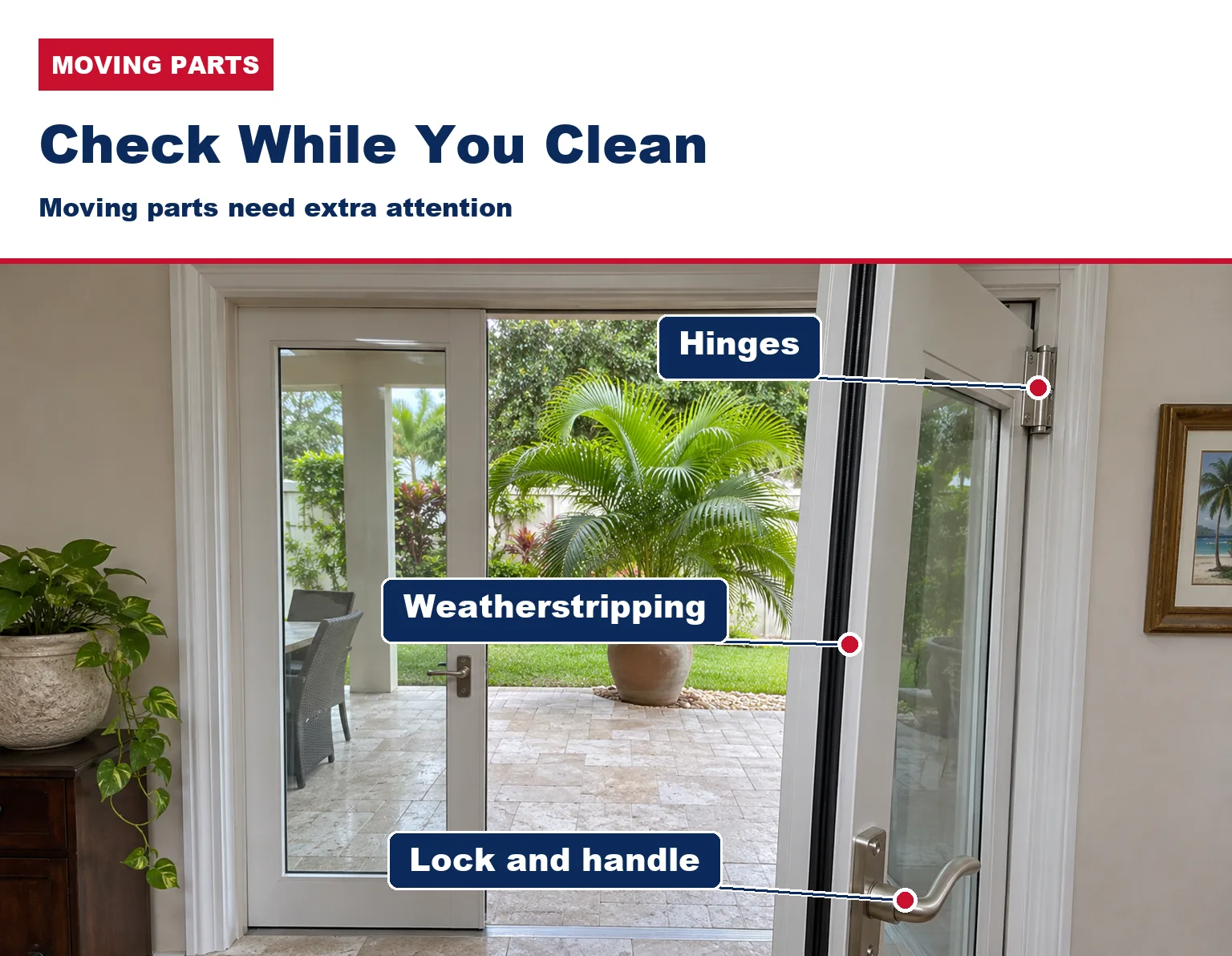
Lubricate moving hardware, tracks and rollers on the schedule in your manufacturer’s maintenance instructions. FGIA says that in salt air this may need to be done more often, and to check your manufacturer’s warranty for the details.
Choose the lubricant your manufacturer names. FGIA warns that oil-based lubricants can damage weep holes, so a general-purpose oil sprayed near the track can create a drainage problem.
Check the weatherstripping, hardware and caulking while you clean. FGIA says broken, worn or damaged parts should be replaced, because poor-performing components can lower security and energy efficiency.
Clean screens with a soft brush and mild soap and water, or vacuum them with a brush attachment, as FGIA describes. Let them dry before you put them back.
If a door still drags or will not lock after cleaning, do not force it. Our guide to what makes an impact door hard to lock covers what you can check safely and what needs a professional.
What Not to Use on Impact Windows and Doors
Most damage during cleaning comes from the wrong tool or cleaner, not from salt. Skip these, as FGIA and AAMA advise:
- Pressure washers and high-pressure sprayers. FGIA says they can dislodge seals and gaskets and damage frame parts.
- Razor blades, putty knives, steel wool and abrasive pads. FGIA says they can damage the window and scratch the glass.
- Abrasive, caustic or petroleum-based cleaners and solvents. FGIA says these can damage the frame finish or the glass.
- Strong acid or alkaline cleaners on aluminum. AAMA says never to use aggressive alkaline or acid cleaners on aluminum finishes.
- Mixed cleaners. AAMA warns that mixing bleach with cleaners that contain ammonia can release poison gas.
- Acidic cleaners on frames. ES Windows advises avoiding abrasive or acidic cleaners.
- Sealant or paint in the weep holes. FGIA lists both among the materials to keep out of them.
A Salt-Air Care Schedule Through the Year
Near the coast, plan on a monthly rinse and wash, with a few extra checks around hurricane season. The ES Windows care and maintenance page recommends cleaning once every 4 months for most materials and once a month for homes near the coast.
| When | What to do | Source |
|---|---|---|
| Once a month near the coast | Rinse and wash frames, glass and tracks; wipe sills dry | ES Windows |
| Once every 4 months away from the coast | Same routine | ES Windows |
| On your manufacturer’s schedule, more often in salt air | Lubricate hardware, tracks and rollers | FGIA |
| Before June 1 | Clear weep holes, test every lock, check weatherstripping | FGIA checks; season dates from NOAA |
| After November 30 | Full look at every opening after the season | FGIA inspection list |
The Atlantic hurricane season runs from June 1 to November 30. For the pre-season tasks around the house, use our South Florida hurricane season checklist. For the end of the season, see our window and door checks after hurricane season ends.
Signs Your Windows or Doors Need a Professional
Routine care cannot fix damaged parts. FGIA’s inspection list names the signs that call for repair or replacement:
- Cracks, dents or marred surfaces on the frame or glass
- Moisture or fogging between the glass panes (on insulated glass)
- Weatherstripping or caulking that is missing, cracked or damaged
- Broken, worn or damaged parts
For repairs, contact your installer or the manufacturer, and read your written warranty first. If storm debris cracked the glass, follow our steps for a cracked impact window after a storm.
If you are not sure your older windows and doors are impact-rated at all, learn how to tell whether your windows and doors are hurricane rated before you invest in repairs.
If your windows or doors are older and these signs keep adding up, book a free impact window and door estimate or call (877) 554-6373.
Salt-Air Care FAQs
Can I pressure wash my impact windows?
No. FGIA says never to use a pressure washer or high-pressure sprayer on windows, doors or skylights, because the force can dislodge seals and gaskets and damage frame parts. A bucket, a soft sponge and a low-pressure rinse remove salt without that risk.
Do vinyl and aluminum impact frames need different care?
Both get the same basic routine: fresh water, mild soap, a soft cloth and a dry wipe. AAMA says never to use strong acid or alkaline cleaners on aluminum finishes, and FGIA’s warning against petroleum-based and caustic cleaners covers every frame. Follow your manufacturer’s cleaner list.
Can I put window film on impact glass?
Only with the manufacturer’s approval. FGIA says applied film should be added only with approval from the window or door maker, because after-market products may void the original warranty or change how the product performs.
Does skipping maintenance affect my warranty?
It can. ES Windows says routine care helps maintain the validity of your warranty, and FGIA tells owners to check the manufacturer’s warranty for care details. Read your written warranty terms and keep a simple record of when you clean and lubricate.
Is vinegar safe for cleaning impact glass?
Yes, on the glass. FGIA names a vinegar-based glass cleaner, or mild soap and water, as a safe choice for glass. Keep it off the frames, because ES Windows advises avoiding acidic cleaners, and rinse any drips with clear water.
A Few Minutes a Month Keeps Salt From Building Up
Salt-air care is simple: rinse, wash gently, dry the sills, keep the weep holes open and lubricate on schedule. Older units with worn hardware and seals need the closest watch.
If your openings are due for replacement, compare styles, frames and costs in our impact windows guide and door types in our impact doors guide. Every USA Home Improvement project is permitted.
Compare ways to pay for new impact windows and doors. Financing may be available for qualified homeowners through independent third-party providers. Terms, eligibility and availability depend on the program and location.
USA Home Improvement is licensed (CGC1526707) and insured and has served Florida homeowners for more than 15 years. We sell ES Windows exclusively, and our installation team holds direct certification from the manufacturer.
Get a free estimate or call (877) 554-6373.