Skip to content

Peak hurricane season in Florida falls between mid-August and mid-October, and the Atlantic peak is September 10. The Atlantic hurricane season runs from June 1 to November 30, and the National Hurricane Center (NHC) says most activity falls in that mid-August to mid-October stretch.
Florida’s own record matches. In an NHC count of major hurricane direct hits on Florida from 1851 to 2010, September has the most, followed by October and August.
This guide walks through the season month by month, shows which months hit South Florida hardest, and explains what the calendar means if you plan to upgrade to impact windows built for South Florida homes and impact doors.
Florida Hurricane Season Dates and the September 10 Peak
Florida follows the Atlantic hurricane season, which officially runs from June 1 to November 30. On its tropical cyclone climatology page, NHC states that “the peak of the Atlantic hurricane season is September 10, with most activity occurring between mid-August and mid-October.”
September 10 is the high point of NHC’s daily activity chart, which counts the named storms and hurricanes that occur on each calendar day across many decades. It is an average, not a forecast, so any single season can be busier earlier or later.
Based on the 1991 to 2020 climate period, NHC says an average Atlantic season has 14 named storms, 7 hurricanes and 3 major hurricanes (Category 3, 4 or 5). Those are totals for the whole Atlantic basin, not for Florida alone.
The official dates are not a hard wall. NHC notes that tropical cyclone activity sometimes occurs before June 1 and after November 30.
Florida Hurricane Season Month by Month
Florida’s hurricane risk is lower in early summer, rises in August, peaks in September and stays high into October. The table pairs NHC’s description of each part of the season with NHC’s published count of major hurricane direct hits on Florida by month, 1851 to 2010.
| Month | What NHC data shows | Major hurricane direct hits, Florida (1851-2010) | Southeast Florida |
|---|---|---|---|
| June | Season opens June 1; the first named storm typically forms in mid to late June | None listed | None listed |
| July | Early season; pre-August major hurricanes favor the northern Gulf Coast | 2 (both northwest Florida) | None listed |
| August | First hurricane tends to form in early to mid-August; the core of the season begins | 6 | 4 |
| September | Peak on September 10 | 19 | 8 |
| October | Core of the season runs to mid-October; most major October U.S. hurricanes affect southern Florida | 10 | 3 |
| November | Season ends November 30 | None (NHC’s table ends in October) | None (NHC’s table ends in October) |
The counts come from Table 11 of NHC’s technical memo on the deadliest, costliest and most intense U.S. hurricanes. They cover only major hurricanes, Category 3 or stronger, that made a direct hit on the coast. Tropical storms and weaker hurricanes are not included.
In NHC’s table, southeast Florida runs from Cape Canaveral south along the east coast, and southwest Florida from Tarpon Springs south along the Gulf coast.
Early Season: June and July
Early season activity is lighter. NHC’s climatology says the first named storm of an average season forms in mid to late June, and the first hurricane tends to form in early to mid-August.
NHC’s memo says the northern Gulf Coast, from Texas to northwest Florida, is the prime target for pre-August major hurricanes. Its table lists no June major hurricane hits on Florida and two in July, both in northwest Florida.
The Core of the Season: Mid-August to Mid-October
The core of Florida hurricane season runs from mid-August to mid-October. NHC says the first major hurricane of an average season forms in late August or early September, and the season peaks on September 10.
NHC’s memo adds that the threat of major hurricanes moves from west to east as the season goes on, favoring the U.S. East Coast by late September. It also says most major October hurricanes in the United States affect southern Florida.
October stays active. NOAA’s satellite service notes that of the 14 named storms in a typical season, about three form in October.
Late Season: Late October and November
Late season activity tapers but does not stop. The official season ends November 30, and NHC says activity sometimes occurs after that date. Every major hurricane direct hit on the U.S. mainland in NHC’s 1851 to 2010 table came between June and October.
Weaker hurricanes still reach Florida late in the season. NHC’s report on Hurricane Nicole shows it made landfall at Vero Beach as a Category 1 hurricane on November 10, 2022, so keep following NHC advisories until the season closes.
What Month Has the Most Hurricanes in Florida?
September is the month with the most major hurricane hits on Florida. NHC’s table lists 19 Florida major hurricane direct hits in September from 1851 to 2010, out of 37 for the state, with 10 in October and 6 in August.
NHC puts it this way in the memo: “September has about as many major hurricane landfalls as October and August combined.” That line covers the whole U.S. mainland, and the Florida row follows the same pattern.
For South Florida, October stays a serious month. NHC says most major October U.S. hurricanes affect southern Florida, and its table lists 6 October major hurricane hits on southwest Florida, close to the 7 in September. For southeast Florida, it lists 4 in August, 8 in September and 3 in October.
NHC notes that Florida’s total does not necessarily equal the sum of its regional rows. The regional rows add up to more than 37, so some storms count in more than one region. For the storms behind these numbers, see our look at the worst hurricanes in Florida’s history.
What the Hurricane Calendar Means for Window and Door Upgrades
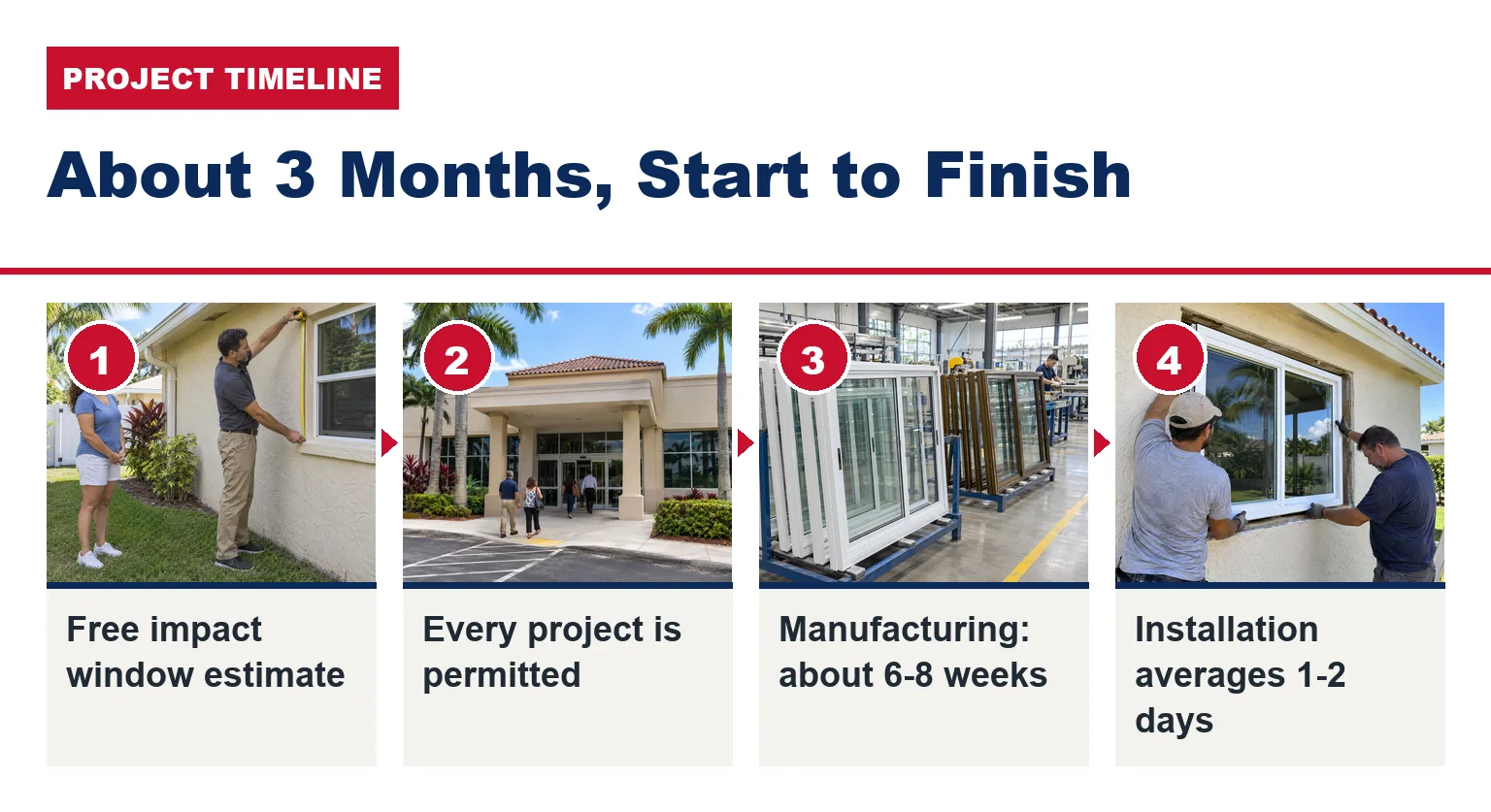
An impact window project takes months, so the calendar matters more than the install day. At USA Home Improvement, manufacturing takes about 6-8 weeks depending on project scope, and installation averages 1-2 days. The total process takes about 3 months start to finish, though it can vary.
At USA Home Improvement, every project is permitted, and HOA approval is needed only when the property has an HOA. That paperwork sits inside the roughly 3-month timeline, which is why a project started when a storm is forecast will not be finished in time for that storm.
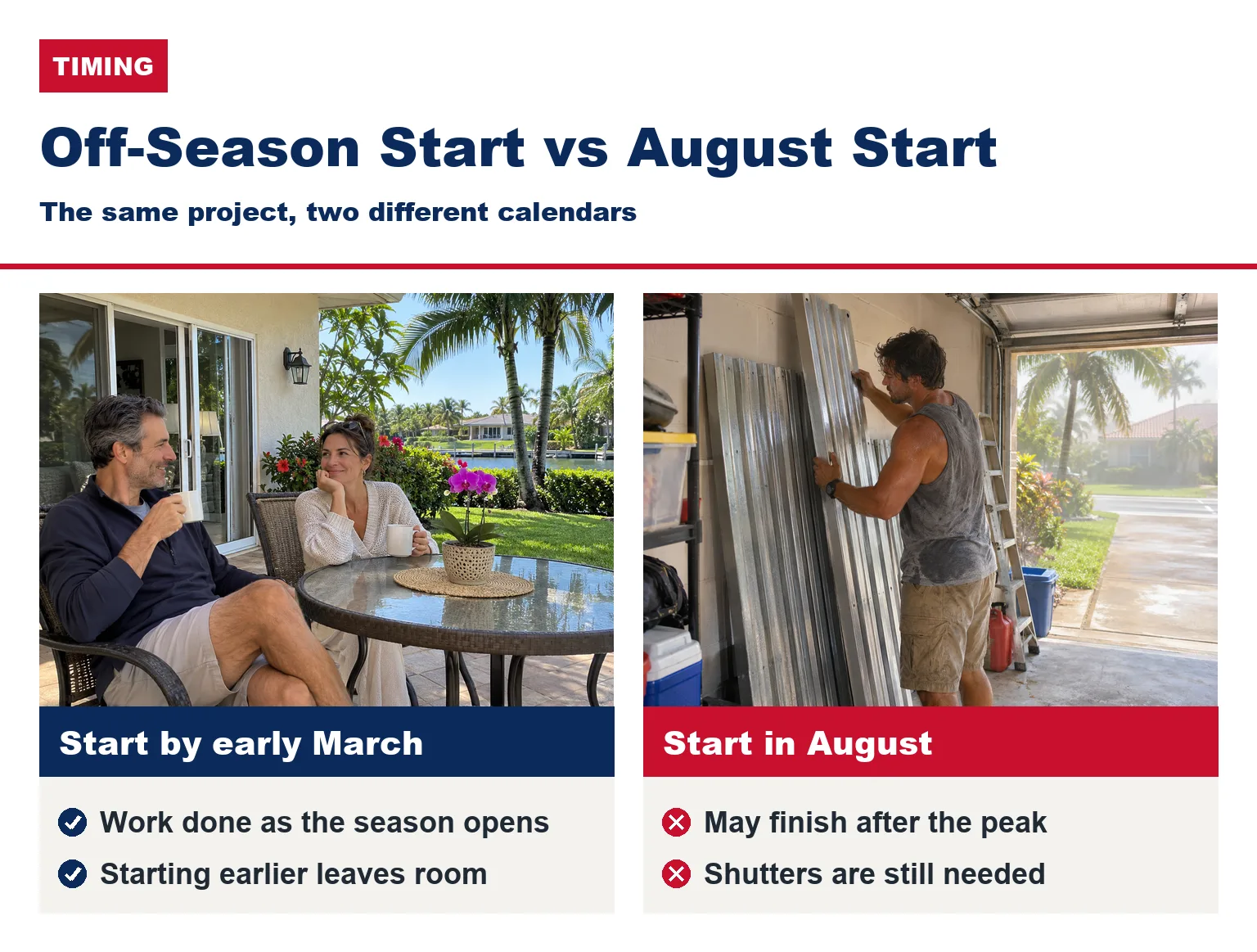
Work backward from the date you want protection: about 3 months before June 1 is early March, so a project started by around early March can have the work done as the season opens.
About 3 months before mid-August is mid-May. Starting earlier leaves room if the timeline runs longer.
Compare impact window styles and frames and impact doors for entries and patios before you book. If you are not sure your home needs them, read when Florida requires impact windows.
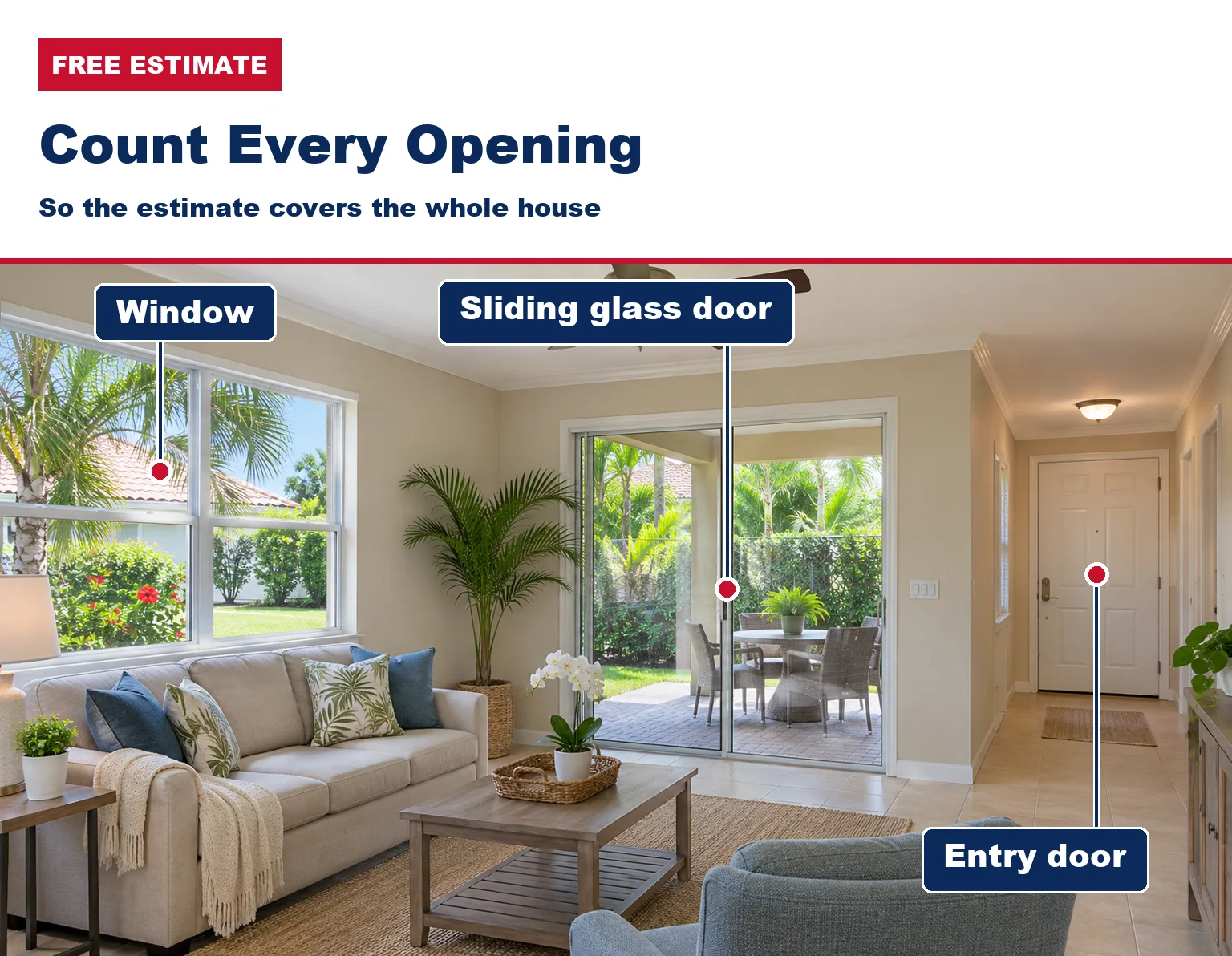
Want your windows done before next season’s peak? Book a free impact window estimate or call (877) 554-6373. Before you call, count every window, sliding glass door and entry door you want to replace, so the estimate covers the whole house.
Why Winter and Spring Are the Best Time to Upgrade
Winter and spring are the best time to upgrade, as long as you start by around early March for June 1 or by around mid-May for the mid-August core.
NOAA’s guide to preparing before hurricane season says the best time to prepare is well before the official start, and it lists installing storm shutters, accordion shutters or impact glass as ways to strengthen your home.
A project started in August, with about 6-8 weeks of manufacturing alone, may finish after the September peak. Until then, your shutters are still needed.
If you spend winters in South Florida, those are the months you are home to meet for measuring and installation. Our guide to managing a Florida home as a snowbird covers the rest of the house while you are away.
Until new impact windows are in, keep your shutters, panels or plywood ready. Our guide on how to protect your windows during a hurricane compares the options, and you can cut and fit plywood for each window as a backup.
Florida Hurricane Season FAQs
Is October a bad month for hurricanes in Florida?
Yes. October is part of the season’s core, and NHC’s record lists 10 major hurricane direct hits on Florida in October from 1851 to 2010, second only to September. NHC also says most major October hurricanes in the United States affect southern Florida.
Is November still hurricane season in Florida?
Yes. The Atlantic hurricane season runs until November 30. Activity is usually lower by then, and NHC’s 1851 to 2010 table records no major hurricane direct hits on the U.S. mainland in November, but Hurricane Nicole made landfall on Florida’s east coast as a Category 1 hurricane in November 2022.
Can a hurricane hit Florida outside hurricane season?
Yes, it can happen. NHC says tropical cyclone activity sometimes occurs before June 1 and after November 30, so follow NHC if a system forms in May or December.
Can I get impact windows installed during hurricane season?
You can start a project at any time of year, but plan for the timeline. Manufacturing takes about 6-8 weeks depending on project scope, and the whole process takes about 3 months, though it can vary. Keep your current protection ready until installation is done.
When is peak hurricane season in South Florida?
NHC does not publish a separate peak for South Florida. The Atlantic core of mid-August to mid-October applies, NHC’s table shows September with the most major hurricane hits on southeast Florida, and NHC says most major October U.S. hurricanes affect southern Florida, so stay ready through October.
Plan Your Upgrade Before the Next Peak
If your windows and doors need shutters or plywood before every storm, the off-season is the time to change that. A project started by around early March can typically be finished by June 1, and one started by around mid-May can typically be done before the mid-August core.
See what impact windows cost for a Florida home, and read the South Florida impact window guide for ratings and styles.
Ask about ways to finance a window and door project. Financing may be available for qualified homeowners through independent third-party providers. Terms, eligibility and availability depend on the program and location.
USA Home Improvement is licensed (CGC1526707) and insured and has served Florida homeowners for more than 15 years. We sell ES Windows exclusively, in aluminum and vinyl impact windows plus impact doors, and our installation team holds direct certification from the manufacturer.
Get a free estimate or call (877) 554-6373.