Skip to content

An insurance binding moratorium is a pause on new policies and coverage increases that Florida insurers use when a tropical storm or hurricane threatens. Citizens Property Insurance Corporation, for example, stops binding new or increased coverage statewide once a watch or warning is issued for any part of Florida.
So buy, raise or rework your coverage before a storm forms, ideally before hurricane season. This guide covers what freezes, when it starts and ends, what you can still do, and how to ready your policy and your windows first.
What an Insurance Binding Moratorium Is
To “bind” coverage means to put it in force. Florida law treats a binder as temporary insurance that can be made orally or in writing and carries the usual terms of the policy, under Section 627.420, Florida Statutes.
A binding moratorium, also called a binding suspension or binding restriction, is a short period when an insurer will not bind new business or coverage increases. In practice, coverage cannot be bought or raised once a storm is already threatening Florida.
Florida law recognizes these pauses. Under Section 624.4301, an insurer must notify the Office of Insurance Regulation (OIR) before it temporarily stops writing new residential property policies.
The notice is not required for a hurricane pause that ends within 72 hours after hurricane conditions leave Florida. It is also not required for a pause limited to counties under a declared state of emergency that ends within 72 hours after the emergency there is over.
When a Binding Moratorium Starts: The Watch or Warning Trigger
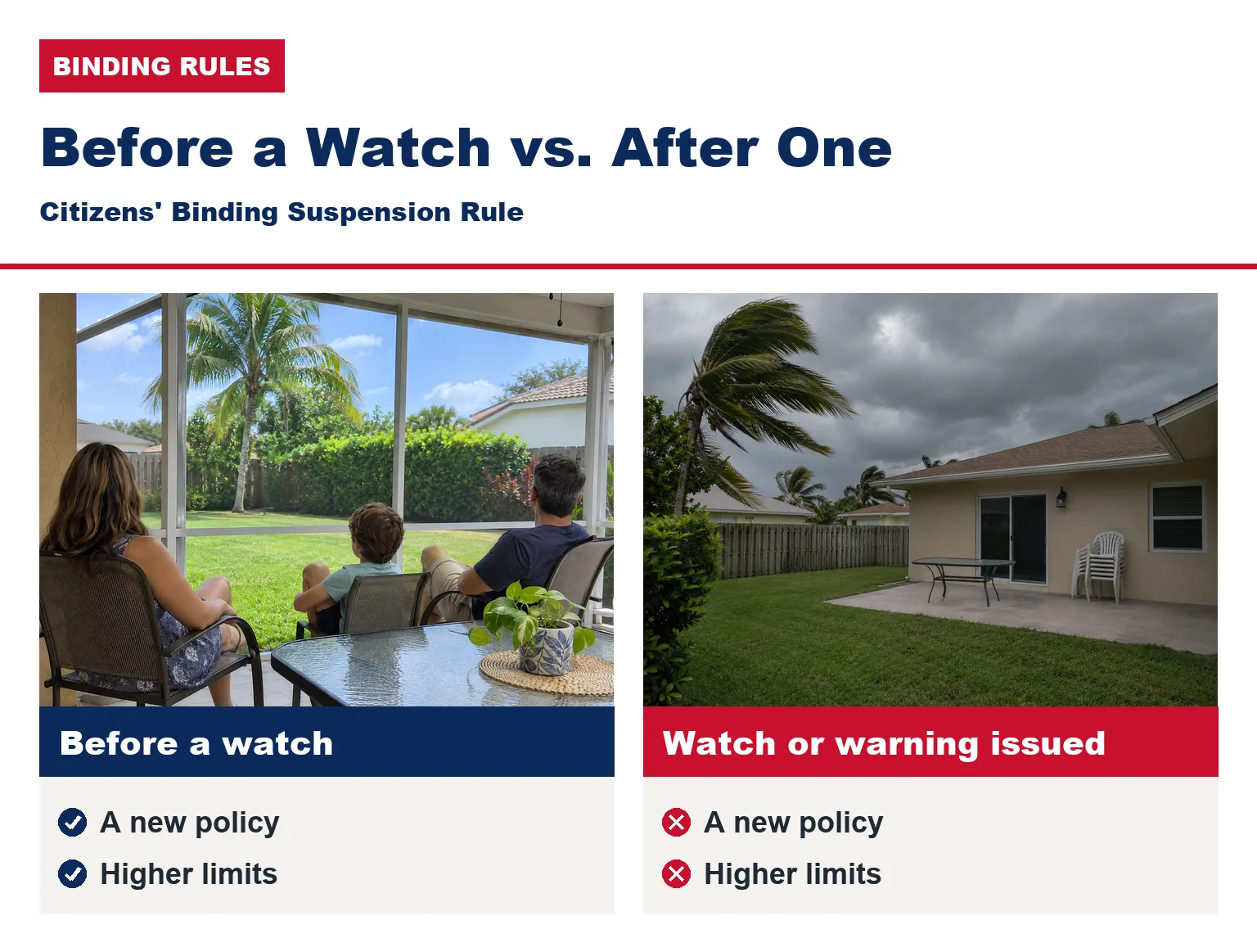
Citizens prints its trigger in every binding suspension alert. Citizens’ Binding Suspension Rule reads:
“Agents may not bind applications for new coverage or policy changes for increased coverage, regardless of effective date, when a tropical storm or hurricane watch or warning has been issued by the National Weather Service for any part of the State of Florida.”
Three phrases in that rule matter. “Any part of the State” means a watch for the Panhandle also freezes new coverage in Broward or Miami-Dade.
“Regardless of effective date” means you cannot bind today a policy that starts next month. And a tropical storm watch is enough; no hurricane is needed.
The National Hurricane Center (NHC) issues a hurricane watch 48 hours before tropical-storm-force winds are expected and a warning 36 hours before, its glossary says. Our guide to watches, warnings and your windows covers the home side of each alert.
A suspension can start before a storm has a name. In 2024, Citizens suspended binding for “Potential Tropical Cyclone Four” and “Nine,” which became Debby and Helene. The NHC uses that label for a disturbance, not yet a tropical cyclone, that could bring storm conditions to land within 72 hours.
Other insurers set their own triggers, so ask your agent which event starts yours and whether it covers the whole state.
What You Cannot Do During a Binding Suspension
During a binding suspension, you generally cannot get new coverage or raise the coverage you already have. Under Citizens’ rule, that includes:
- A new policy. Buying a homeowners, condo or wind policy, including a move from another insurer.
- Higher limits. Raising your dwelling limit after a renovation or a rise in rebuilding costs.
- Added coverage. Adding coverage the policy lacks, such as more law and ordinance coverage, which helps pay for code upgrades after a loss. Our guide to a storm damage claim that ends in new windows explains how it works.
Deductible changes are less clear-cut. Citizens’ deductibles page says increased and decreased deductible options may be available, but its suspension rule names only new and increased coverage. Ask your agent before counting on a deductible change.
Florida law adds one deductible rule. If you had a hurricane loss and are offered a lower hurricane deductible on a new or renewal policy, the insurer must tell you in writing that it will not apply until January 1 of the next calendar year, under Section 627.701.
Some changes still go through. Citizens’ hurricane season notice to agents says that during a binding suspension, agents can still update policyholder contact information and mortgage company information. The rule limits new and increased coverage; it does not, by itself, end the coverage you already have.
How Long a Binding Moratorium Lasts
A binding suspension usually lasts a few days. Citizens posts a separate alert when binding resumes, saying “All regular Citizens business operations have resumed.” Its binding alerts page shows these recent suspensions, all statewide:
| Storm | Binding suspended (ET) | Binding resumed (ET) |
|---|---|---|
| Isaias | Oct. 7, 2026, 11:05 a.m. | Oct. 10, 2026, 5 a.m. |
| Bertha | July 19, 2026, 11 a.m. | July 22, 2026, 2 p.m. |
| Imelda | Sept. 27, 2025, 11:01 a.m. | Sept. 28, 2025, 5:01 p.m. |
| Rafael | Nov. 4, 2024, 4:15 p.m. | Nov. 7, 2024, 7:15 a.m. |
| Milton | Oct. 7, 2024, 5 a.m. | Oct. 10, 2024, 5:01 p.m. |
| Helene | Sept. 23, 2024, 5:05 p.m. | Sept. 27, 2024, 8:27 a.m. |
| Debby | Aug. 2, 2024, 11:06 a.m. | Aug. 6, 2024, 8:01 a.m. |
In these seven cases, new coverage at Citizens was frozen for roughly one to four days. In 2024 alone, Citizens suspended binding four times.
Florida law does not cap how long a pause lasts. Section 624.4301 skips the advance OIR notice only for pauses that end within 72 hours after the storm or local emergency clears. Plan to lose several days of shopping time with every storm that threatens Florida.
Impact windows run on a longer clock than any watch. A project takes about 3 months start to finish, though it can vary, so like your policy it belongs before the season.
USA Home Improvement installs ES Windows impact windows that need no shutters, in aluminum and vinyl, plus impact doors, and every project is permitted.
Want protected openings before next season? Get an estimate before the next watch or call (877) 554-6373.
If Your Policy Ends or Renews While a Hurricane Is Near
A binding freeze is about new coverage. Florida has a separate protection for residential policies that are about to end. Under Section 627.4133, if a cancellation or nonrenewal would take effect during a hurricane, its effective date is extended until the hurricane is over.
The insurer may collect premium for the extra time, and the extension does not apply if you already have replacement coverage in effect.
For this rule, Section 627.4025 says a hurricane lasts from the NHC’s first hurricane warning for any part of Florida until 72 hours after the last hurricane watch or warning ends.
OIR can also issue emergency orders after a major storm. After Hurricane Milton, its October 2024 order extended policyholder grace periods and barred cancellations and nonrenewals in the listed counties, except at the policyholder’s written request, until December 10, 2024.
These orders protect existing policies; they do not open new ones.
Section 627.4133 requires at least 45 days’ advance written notice of your renewal premium on a residential policy. If renewal falls between June and November, use that notice window to settle your coverage, so a suspension cannot catch you between two policies.
Buying a Home or Switching Insurers During Hurricane Season
Home buyers often feel a binding moratorium first. If your lender requires proof of insurance before closing, a statewide suspension can hold up the closing until binding resumes. Ask your lender and agent early when the policy must be bound, and bind it before any watch if you can.
The same applies if you are switching insurers or replacing coverage after a nonrenewal: under Citizens’ rule, a policy meant to start next month still cannot be bound while a watch is up.
Sellers can help the buyer bind coverage early by having the wind mitigation form and window records ready. See which impact window records to gather before you sell.
Flood Insurance Runs on a Different Clock: The 30-Day Wait
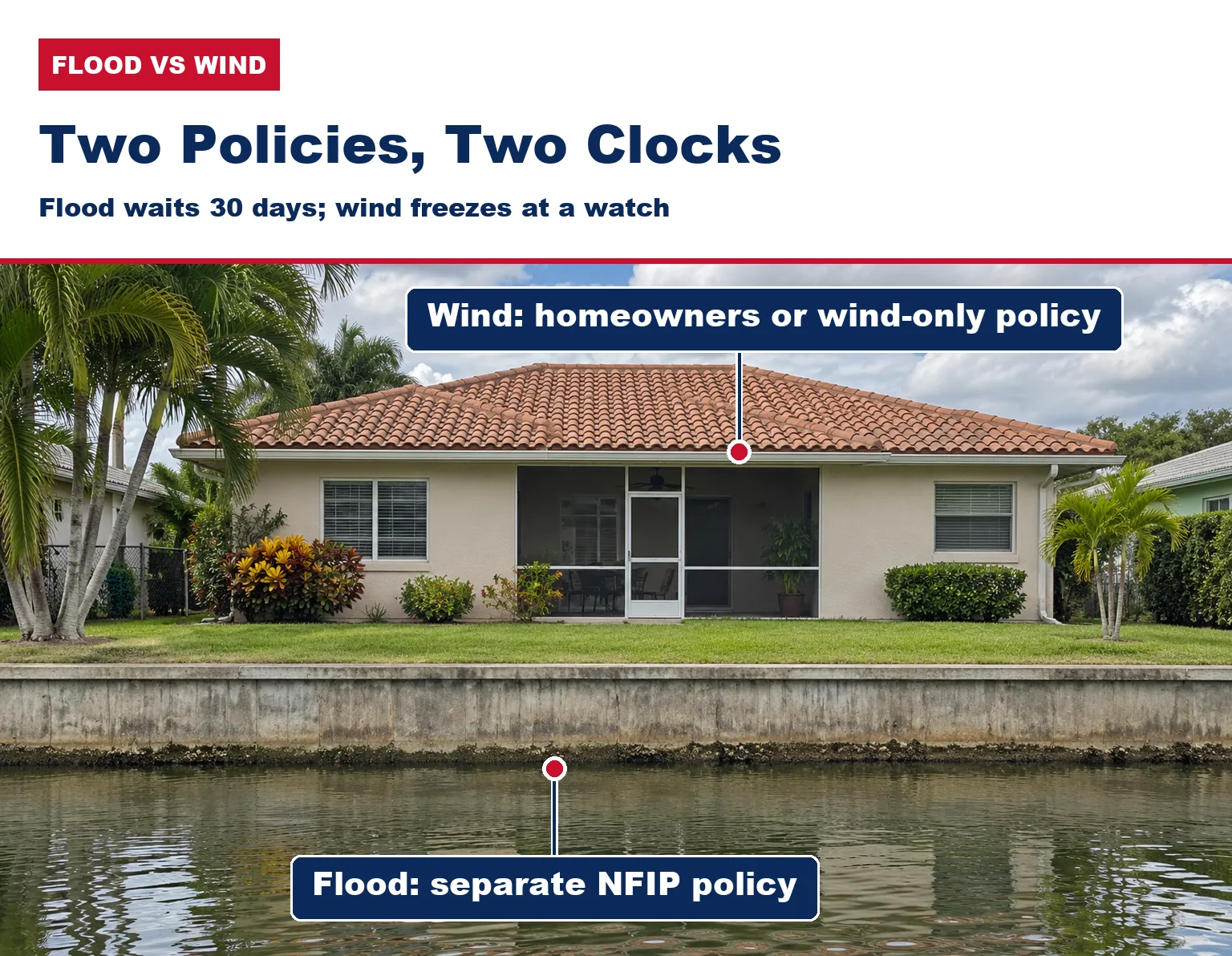
Flood coverage works differently. FEMA says most homeowners insurance does not cover flood damage, and there is typically a 30-day waiting period for a National Flood Insurance Program (NFIP) policy to go into effect.
FEMA names the exceptions: coverage required by a government-backed lender, or coverage related to a community flood map change. Outside those cases, a flood policy bought once a storm is on the map will not start in time for that storm.
Wind damage from a hurricane falls under your homeowners policy or a separate wind-only policy, which Citizens also offers. That is the coverage a binding suspension freezes. Flood needs its own policy, started well before June.
Get Coverage and Protection in Place Before the Season
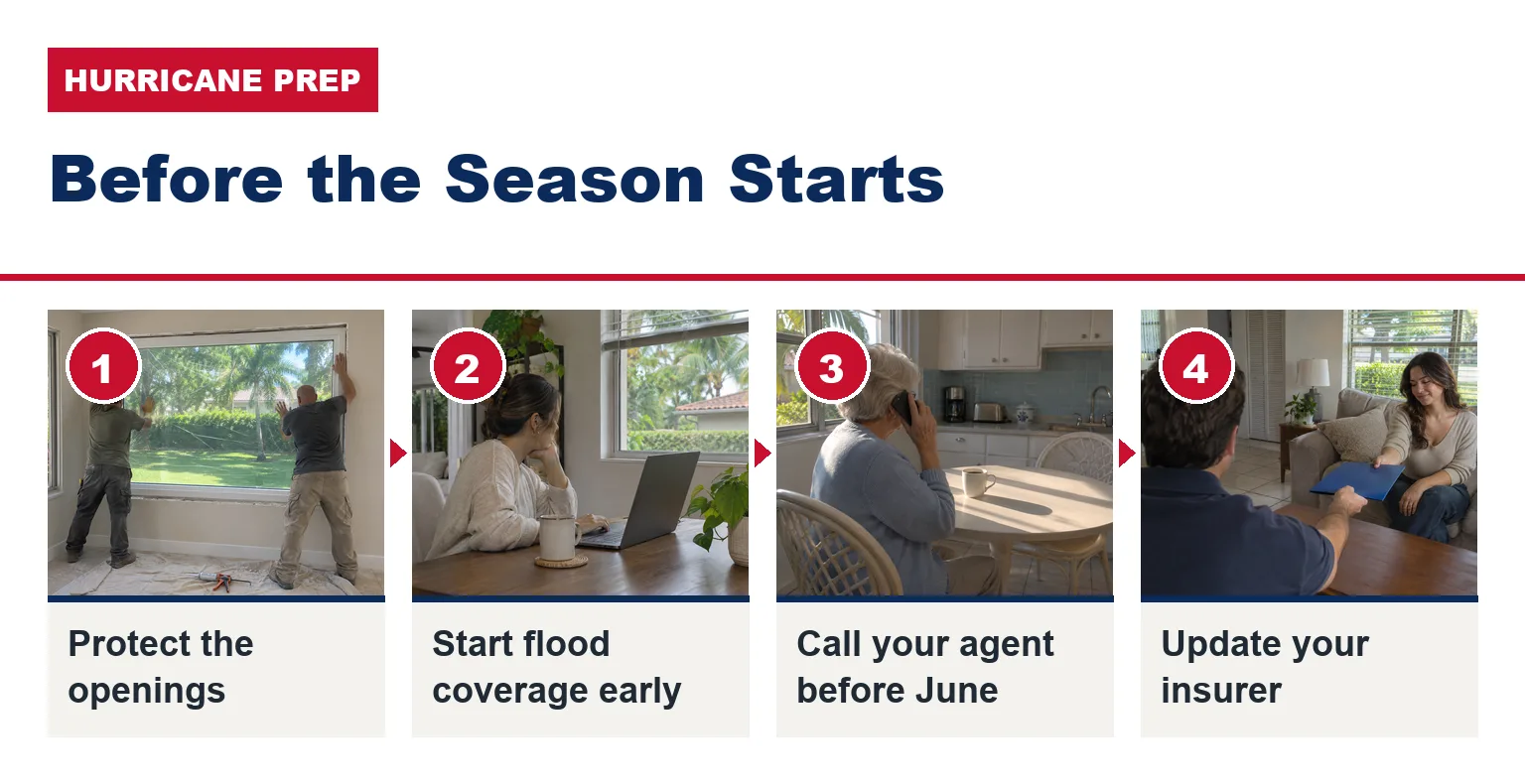
The fix for a binding moratorium is timing. The Atlantic hurricane season runs from June 1 to November 30, according to Ready.gov, so do this work in winter and spring, starting with the longest lead time:
Protect the openings. Start in winter, since the window project takes the longest. Protected openings are among the features a wind mitigation inspection records; see home upgrades that can lower your insurance premium.
Start flood coverage early. With the typical 30-day wait, a flood policy bought by the end of April is in force when the season opens on June 1.
Call your agent before June. Review your dwelling limit, your hurricane deductible and your law and ordinance coverage. Raising any of them is the kind of change a suspension blocks.
Update your insurer. Once the work is done, give your agent the permit and product approval details and ask how the upgrade affects your policy. For timing the project itself, see the best months to install impact windows in South Florida.
Insurance Binding Moratorium FAQs
Can I buy homeowners insurance during a hurricane watch in Florida?
Not from Citizens. Its rule bars binding new coverage once a tropical storm or hurricane watch or warning is issued for any part of Florida. Other insurers set their own rules, so ask your agent.
Does a binding moratorium cancel my existing policy?
No. Citizens’ rule stops new coverage and coverage increases; it does not, by itself, end your policy. Florida law also extends a cancellation or nonrenewal that would take effect during a hurricane until it is over, unless replacement coverage is in effect.
Does the moratorium only apply where the storm is headed?
At Citizens, no. Its rule is triggered by a watch or warning for any part of Florida, and its alerts say binding is suspended statewide. Other insurers may set a narrower area, so check your own insurer’s notice.
Can I buy flood insurance when a hurricane is coming?
A new NFIP flood policy typically takes 30 days to go into effect, FEMA says, so it would not cover that storm. The exceptions are coverage required by a government-backed lender and coverage related to a community flood map change. Buy flood coverage before the season.
Does an insurer need state approval to stop writing policies before a storm?
No. Section 624.4301 says insurers do not need OIR’s approval to temporarily stop writing new residential policies. They must give OIR notice first, except for short hurricane or local emergency pauses that end within 72 hours after conditions clear.
Bind Your Coverage and Protect Your Openings Before the Watch
A binding moratorium cannot be avoided, only planned around. Settle your policy, your flood coverage and your renewal before June, and protect your windows and doors while there is still time to build and install them.
Compare financing for an impact upgrade before renewal. Financing may be available for qualified homeowners through independent third-party providers. Terms, eligibility and availability depend on the program and location.
USA Home Improvement is licensed under CGC1526707, insured, and has served Florida homeowners for more than 15 years. We sell ES Windows exclusively, and our installation team holds direct certification from the manufacturer. See how impact windows work in South Florida homes, from styles to county rules.
Get a free estimate or call (877) 554-6373.