Skip to content
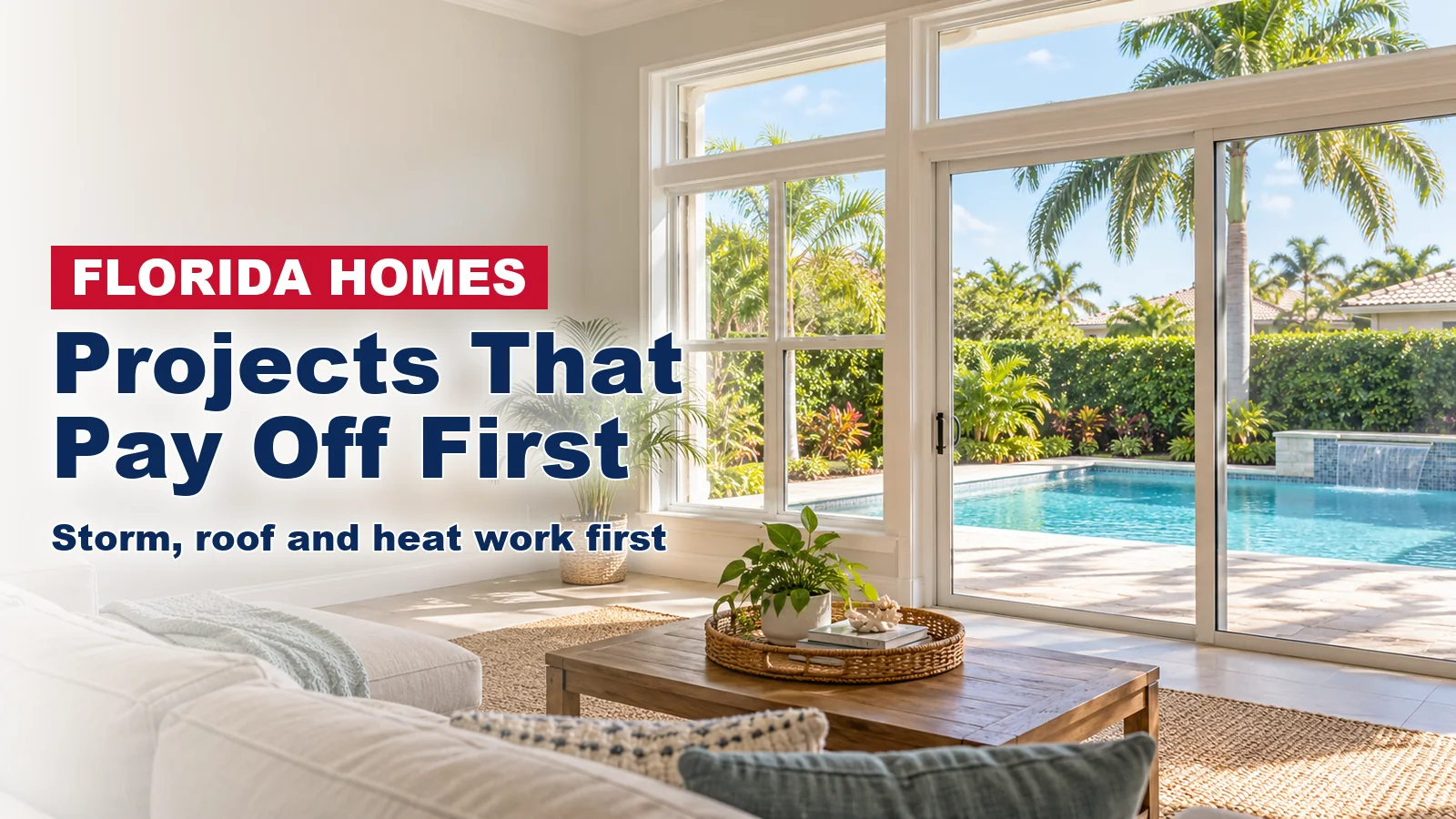
The home projects that pay off first in Florida are the ones that answer hurricanes, heat and insurance: impact windows and doors, a roof your insurer will accept, and attic insulation. Comfort projects come next, because storm damage can undo them in one night.
This guide ranks seven common projects, from impact glass to an outdoor kitchen, new countertops and a better laundry room. It explains what each one does in a Florida house and shows the order to plan them in before hurricane season.
Which Home Projects Pay Off Most in Florida?
Florida home projects pay off most when they lower the risk of wind damage, cut cooling load or help you keep insurance. Florida law lists opening protection and roof strength among the features that insurance rate filings must credit, so those two lead the list.
| Project | What it answers in Florida | When it moves to the top |
|---|---|---|
| Impact windows and glass doors | Hurricane debris, wind, insurance credits | Your windows have no impact rating |
| Roof replacement | Wind, leaks, insurance renewal | The roof is near 15 years old |
| Attic insulation | Heat and cooling cost | The attic has thin or uneven insulation |
| Impact front door | Wind, debris, curb appeal | The door is old or not impact rated |
| Outdoor kitchen | Outdoor living, a cooler indoor kitchen | Storm and roof work is done |
| Kitchen countertops | Daily use, moisture at the sink | Seams or the sink edge are failing |
| Laundry room upgrade | Humidity, water leaks | You see damp walls or musty smells |
The first four projects protect the house itself. The last three improve how you live in it, and they last longer once the shell is sound.
1. Protect Windows and Glass Doors With Impact Glass
Impact windows and doors are the top Florida home project because one broken window or glass door lets storm wind and rain into the house. Section 627.0629 of the Florida Statutes says residential rate filings must include discounts or credits for features that reduce windstorm loss.
That list includes opening protection and window, door and skylight strength, along with roof strength and roof-to-wall strength. How much your premium changes depends on your insurer and your wind mitigation inspection, so ask your agent before you count on a number.
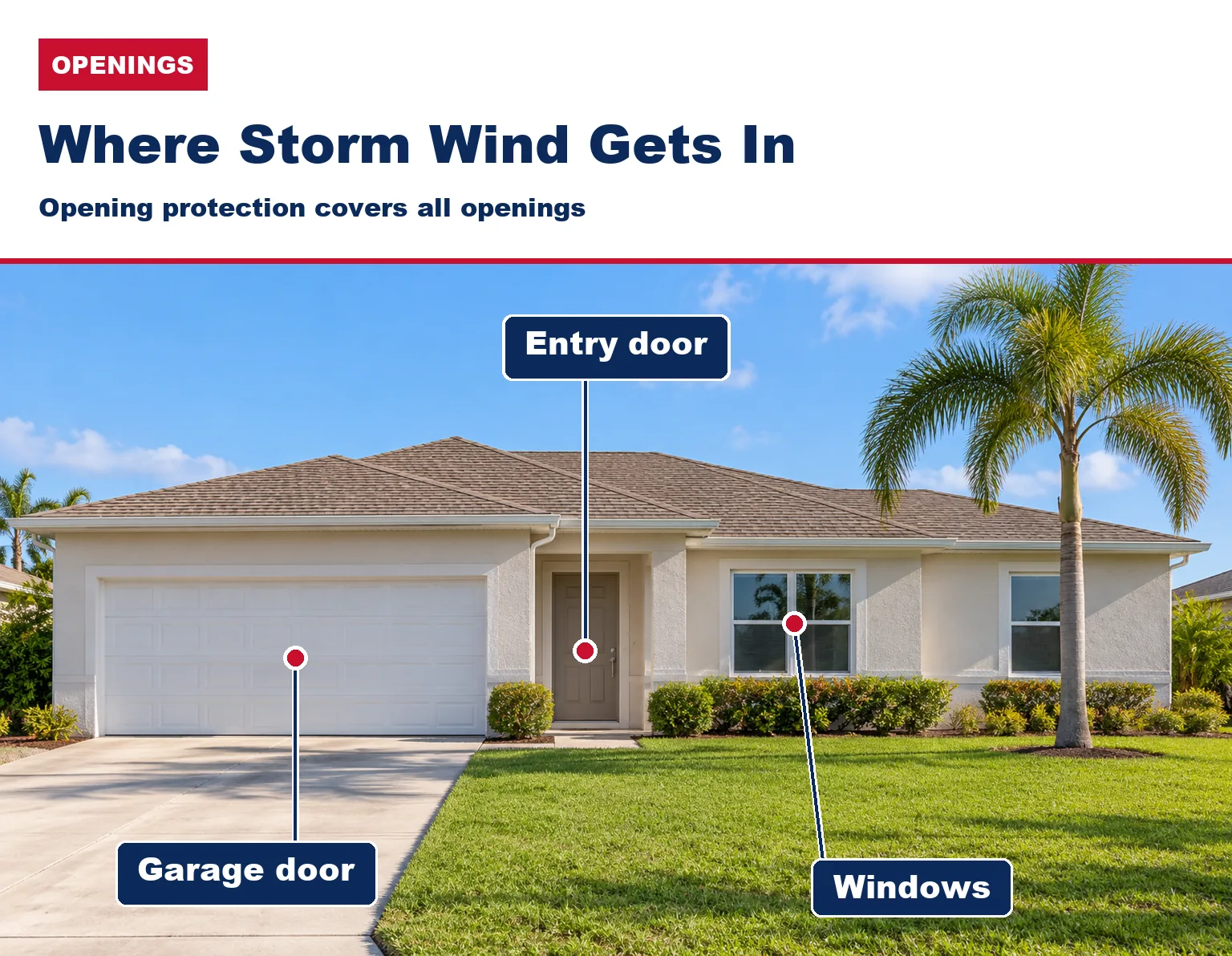
On the state wind mitigation form, OIR-B1-1802, opening protection covers all openings, including windows, doors, sliding glass doors and garage doors. The form records the weakest protection on the house, so one unprotected opening can hold back the opening credit.
In Florida’s wind-borne debris region, section R301.2.1.2 of the Florida Building Code, Residential says exterior glazed openings “shall be protected from windborne debris” with products or devices that pass the code’s large missile impact tests.
If your garage door is the gap, see our impact garage doors for Florida homes.
Impact glass stays in place all year, so there is nothing to put up when a storm is coming. Our post on impact-resistant windows compared with hurricane shutters covers the trade-offs if you are deciding between the two.
USA Home Improvement exclusively sells ES Windows: aluminum and vinyl impact windows, and impact doors. You can see the ES impact window styles we install, or read our complete guide to impact windows in South Florida.
For the insurance side in more depth, see which home upgrades can lower your insurance rates.
2. Keep the Roof Young Enough for Your Insurer
A roof replacement moves to the top of the list as the roof approaches 15 years old, because that is where Florida’s roof-age rule changes.
Under section 627.7011(5) of the Florida Statutes, an insurer may not refuse to issue or renew a policy solely because of the age of a roof that is less than 15 years old.
For a roof at least 15 years old, the insurer must allow an inspection by an authorized inspector, at your expense, before requiring a replacement. If it shows 5 years or more of useful life left, the insurer may not refuse the policy solely because of roof age.
So an aging roof is not only a leak risk. It can decide whether your policy renews. Read the five signs a roof needs replacing first, then compare options on our roofing services for South Florida homes page.
3. Add Attic Insulation to Cut Florida Heat
Attic insulation is the most direct heat project for a Florida house, because the attic sits between the roof and your living space. Florida falls in the two warmest climate zones, 1 and 2, on the energy code map.
The ENERGY STAR insulation table recommends R30 for an uninsulated attic floor in Zone 1 and R49 in Zone 2. If the attic already has 3 to 4 inches, it recommends adding R25 in Zone 1 and R38 in Zone 2.
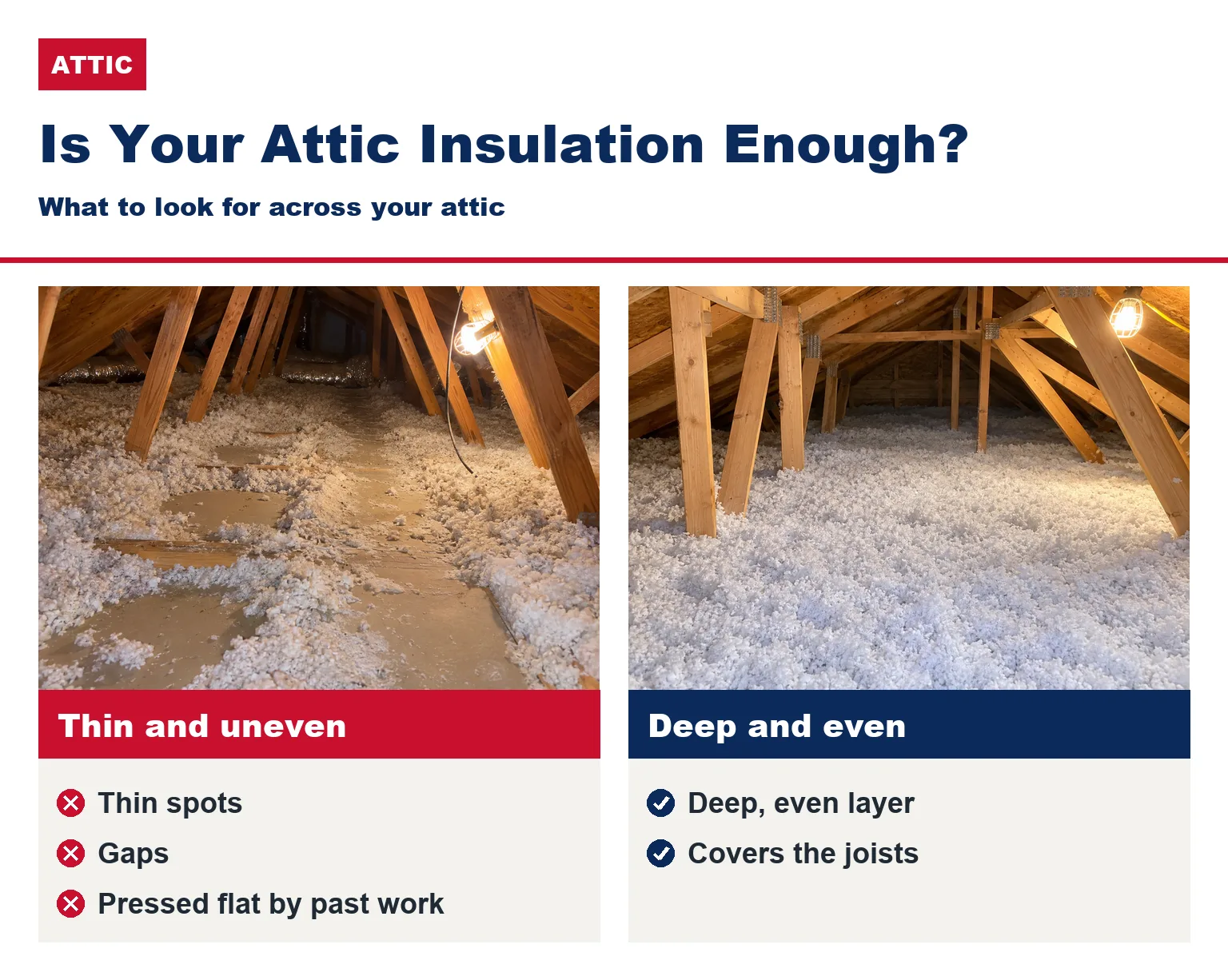
Look across your attic for thin spots, gaps and insulation pressed flat by past work. A well-insulated attic has a deep, even layer that covers the joists.
Our attic insulation service for Florida homes page explains the work, and our guide to more ways to make your home energy efficient covers windows and air sealing.
4. Replace the Front Door With an Impact Door
A new front door is worth doing in Florida when it is an impact door, because the entry door is part of the storm envelope as well as the first thing guests see.
In Broward and Miami-Dade, the High-Velocity Hurricane Zone, section 1626.1 of the Florida Building Code, Building names outside doors among the parts that must meet impact test criteria or be protected.

A replacement door also lets you match the style of your entry, from a single door to double doors with glass. See the impact front and entry doors we install, and our full guide to impact doors in South Florida.
5. Build an Outdoor Kitchen Made for Sun, Salt and Storms
An outdoor kitchen suits Florida’s long outdoor season, and it keeps cooking heat and smells out of the house. It belongs after the storm projects, because a patio kitchen is exposed to the same wind as the rest of the home.

Choose materials that handle sun, humidity and salt air near the coast, and plan where furniture and grills go when a storm is coming. New gas lines or wiring usually need a permit, so check with your building department first.
The glass doors that open onto the patio are often the largest openings in the house. Our impact sliding glass doors for patios page shows the options.
6. Choose Kitchen Countertops That Handle Moisture
New kitchen countertops are a comfort project in Florida, not a protection project, so plan them after the storm and roof work. They change the look of the kitchen and make daily cooking easier.

In a humid climate, pay attention to the seams, the sink edge and the backsplash joint, where water can sit. Ask the installer how the surface is sealed and how often it needs resealing.
7. Upgrade the Laundry Room for Florida Humidity
A laundry room upgrade pays off in Florida when it controls moisture, because a washer and dryer add water and heat to a room that is often small and closed. Shelves and storage help, but the dryer vent and the water hoses matter more.

Make sure the dryer vents to the outside, check the washer hoses for cracks or bulges, and look for damp walls or a musty smell. Our guide on how to keep mold out of your home covers the moisture sources to watch.
Plan the Order: Storm Work Before Hurricane Season
Plan storm projects first and give them enough lead time to finish before hurricane season. The National Hurricane Center says the Atlantic hurricane season runs from June 1 to November 30.

Impact windows are made to order. At USA Home Improvement, manufacturing takes about 6 to 8 weeks depending on project scope, installation averages 1 to 2 days, and the whole process takes about 3 months start to finish, though it can vary.
Every USA Home Improvement project is permitted, and HOA approval is needed only when the property has an HOA. Our beginner’s guide to planning home improvements covers budgets, permits and checking a contractor’s license.
A wind mitigation inspection shows which features your home already has. My Safe Florida Home offers free wind mitigation inspections and grant help for approved upgrades to eligible homeowners, so check whether it is accepting applications.
For a wider list of storm upgrades, see upgrades that make a home hurricane resilient. Financing may be available for qualified homeowners through independent third-party providers. Terms, eligibility and availability depend on the program and location.
You can compare financing options for home improvement projects before you choose which projects to do this year.
FAQs About Florida Home Projects
Do impact windows lower homeowners insurance in Florida?
They can. Florida law requires residential rate filings to include discounts or credits for features that reduce windstorm loss, including opening protection. The amount depends on your insurer, your home and your wind mitigation inspection, so ask your agent what your policy would change.
Is a wind mitigation inspection worth getting?
Yes, if you have never had one or you have added storm features since. The inspection records features such as roof attachment and opening protection that insurers use for credits, and it shows which upgrades your home still lacks.
Does a front door need to be impact rated in Florida?
In Broward and Miami-Dade, the High-Velocity Hurricane Zone, outside doors must meet impact test criteria or be protected. Elsewhere, the rules depend on whether the home is in the wind-borne debris region, so check with your building department before you replace a door.
Which projects matter most if I plan to sell?
Buyers and their insurers look closely at the roof and the windows, so the storm projects help a sale too. Our post on profitable improvements to make before selling covers pre-sale choices in more detail.
Start With the Project That Protects Everything Else
If your windows have no impact rating, start there; if your roof is close to 15 years old, put it first. Kitchens, laundry rooms and outdoor spaces are easier to enjoy once the house can stand up to the next storm.
USA Home Improvement is licensed (CGC1526707) and insured and has served Florida homeowners for more than 15 years. Our installation team holds direct certification from the manufacturer, and you can receive the Florida Product Approval number for each window and door on request.
Call (877) 554-6373 or request a free, no-obligation estimate for impact windows and doors.