Skip to content

To prevent mold in your home, control moisture: keep indoor humidity below 60 percent, fix leaks at windows, doors, the roof and plumbing quickly, and dry anything wet within 24 to 48 hours. In South Florida’s humid climate, that means steady air conditioning, good ventilation and fast repairs.
This guide covers the moisture sources you control, how to clean a small spot safely, and when to call a licensed mold professional instead.
What Causes Mold in a South Florida Home
Mold grows where moisture stays. The EPA’s guide to mold and moisture puts it plainly: “The key to mold control is moisture control.” There is no practical way to remove every mold spore indoors, so the goal is to take away the water mold needs.
In a South Florida home, that water can come from humid indoor air, leaks around windows, doors and the roof, plumbing leaks, and condensation on cold surfaces. Each one has its own fix, covered in the sections below.
Mold affects people differently. The CDC’s page on mold and health says damp and moldy places “may cause a variety of health effects, or none at all,” and people with asthma or mold allergies may have severe reactions. If anyone in your home has health concerns, talk to a health professional.
Keep Indoor Humidity Below 60 Percent
The EPA advises keeping indoor relative humidity below 60 percent, ideally between 30 and 50 percent. The CDC sets a stricter line of no higher than 50 percent. A small hygrometer shows you the reading in each room.
Air conditioners and dehumidifiers are the tools the EPA names for lowering humidity. Use the AC when needed, and add a dehumidifier in any room that still reads high with the AC running.
The AC itself needs care. The EPA advises keeping the drip pan clean and the drain line flowing. If you know or suspect mold inside the heating and cooling system, the EPA says not to run it until it is cleaned.
Air movement helps too. The CDC also advises making sure the air in your home “flows freely,” with kitchen and bathroom exhaust fans that vent outside. A small gap between large furniture and exterior walls also helps air reach the wall.

Ventilate the Kitchen, Bathrooms and Laundry Room
Cooking, showers and laundry add moisture to the air every day. The EPA advises venting appliances that produce moisture, such as clothes dryers and stoves, to the outside where possible.
Turn on the range hood when you cook and the bathroom exhaust fan when you shower, and leave the fan running for a few minutes after. Check that the dryer vent ends outside the house, not in the attic or garage.
Don’t leave wet clothes sitting in the washer. Move them to the dryer when the cycle ends, and leave the washer door or lid open so the drum can dry.

Ceiling fans keep air moving between rooms. The EPA also suggests opening doors or windows “when practical.”

On muggy days, when the air outside is more humid than the air inside, keep the windows closed and let the AC do the drying.
Fix Leaks at Windows, Doors and the Roof Right Away
A leak gives mold a steady water supply, so fix it at the source. The CDC advises fixing leaks in the roof, walls or plumbing “so mold does not have moisture to grow.”
Signs a Window or Sliding Door Is Letting Water In
Check your windows and doors after each heavy rain. Look for a stained or soft sill, bubbling paint below the window, gaps in the caulk around the frame, and water on the floor in front of a sliding glass door.
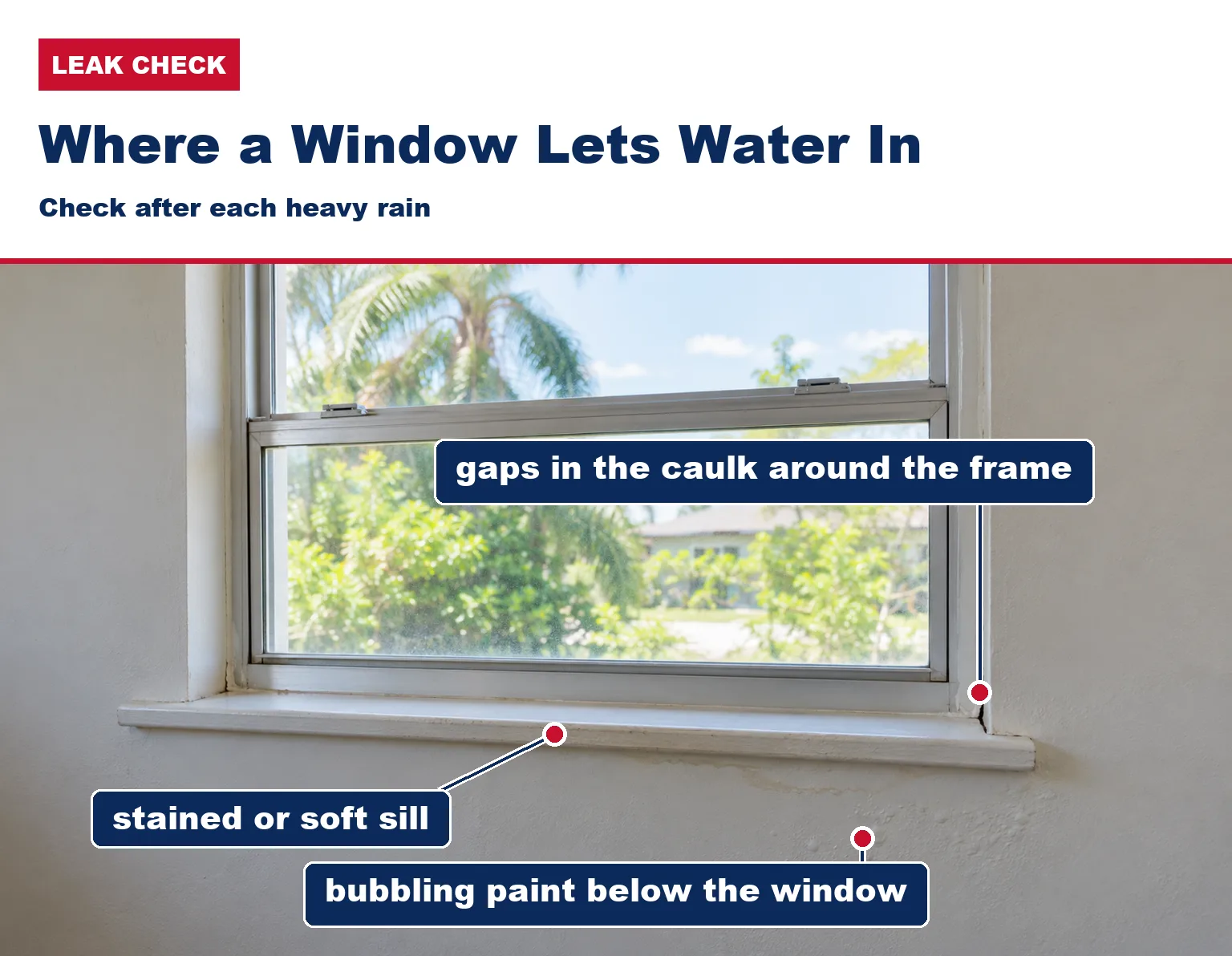
A small caulk gap may only need resealing. A frame that keeps leaking, rotted wood around the opening, or a sliding door that lets water in with every storm is a reason to look at replacement.
USA Home Improvement can replace leaking windows with ES impact windows and install impact sliding glass doors to replace worn units. Every project is permitted, and our installation team holds direct certification from the manufacturer.
Roof Leaks, Gutters and Plumbing
A roof leak often shows up first as a ceiling stain or a musty smell in a closet or the attic. Learn the signs that a roof needs replacing, and fix roof damage worth repairing before hurricane season early.
Outside, the EPA advises cleaning and repairing roof gutters regularly and making sure the ground slopes away from the foundation. For repairs or a new roof, see our roofing services for South Florida homes.
Plumbing leaks under sinks, behind the washer and around the water heater count too. A slow drip can wet a cabinet floor long before you notice it.

When water does get in, the EPA says to dry water-damaged areas and items within 24 to 48 hours to prevent mold growth. The Florida Department of Health warns that “when water stands for even 24 hours, common molds can take hold.”
Stop Condensation on Cold Surfaces and in the Attic
Condensation is water too. If you see moisture collecting on windows, walls or pipes, the EPA advises drying the surface quickly and reducing the moisture source.
The EPA’s mold guidance also suggests covering cold surfaces, such as cold water pipes, with insulation. Lowering indoor humidity, as covered above, cuts condensation at the same time.
If condensation or damp spots keep showing up in the attic or on the ceiling below it, have the attic checked. USA Home Improvement installs attic insulation for South Florida homes, and our guide covers other energy upgrades for Florida homes.
How to Clean a Small Mold Spot Safely
You can usually clean a small spot yourself. The EPA’s line is an area of less than about 10 square feet, roughly a 3 foot by 3 foot patch. Anything larger belongs in the next section.
The EPA advises scrubbing mold off hard surfaces with detergent and water, then drying the area completely. Porous materials such as ceiling tiles and carpet may have to be thrown away if they become moldy.
Protect yourself while you work. The EPA suggests an N-95 respirator, long gloves and goggles without vent holes. Never mix chlorine bleach with cleaners that contain ammonia.

If you use a disinfectant, the EPA says to ventilate the area and exhaust the air to the outdoors. Then fix whatever made the spot wet in the first place.
When to Call a Licensed Mold Professional
Call a licensed mold professional when the problem is bigger than a small spot. The EPA points to these cases:
- Mold covers more than about 10 square feet, or there has been a lot of water damage.
- The water came from sewage or other contaminated water.
- You know or suspect mold is inside the heating and cooling system.
If anyone in the home has health concerns, the EPA advises talking to a health professional before cleanup starts.
In Florida, the Department of Business and Professional Regulation (DBPR) licenses mold assessors and mold remediators, according to the Florida Department of Health. You can check a license with the Florida DBPR license search.
Testing is often not needed. The CDC does not recommend mold testing, and the EPA says sampling is unnecessary in most cases when mold is visible. Removing the mold and fixing the moisture matter more.
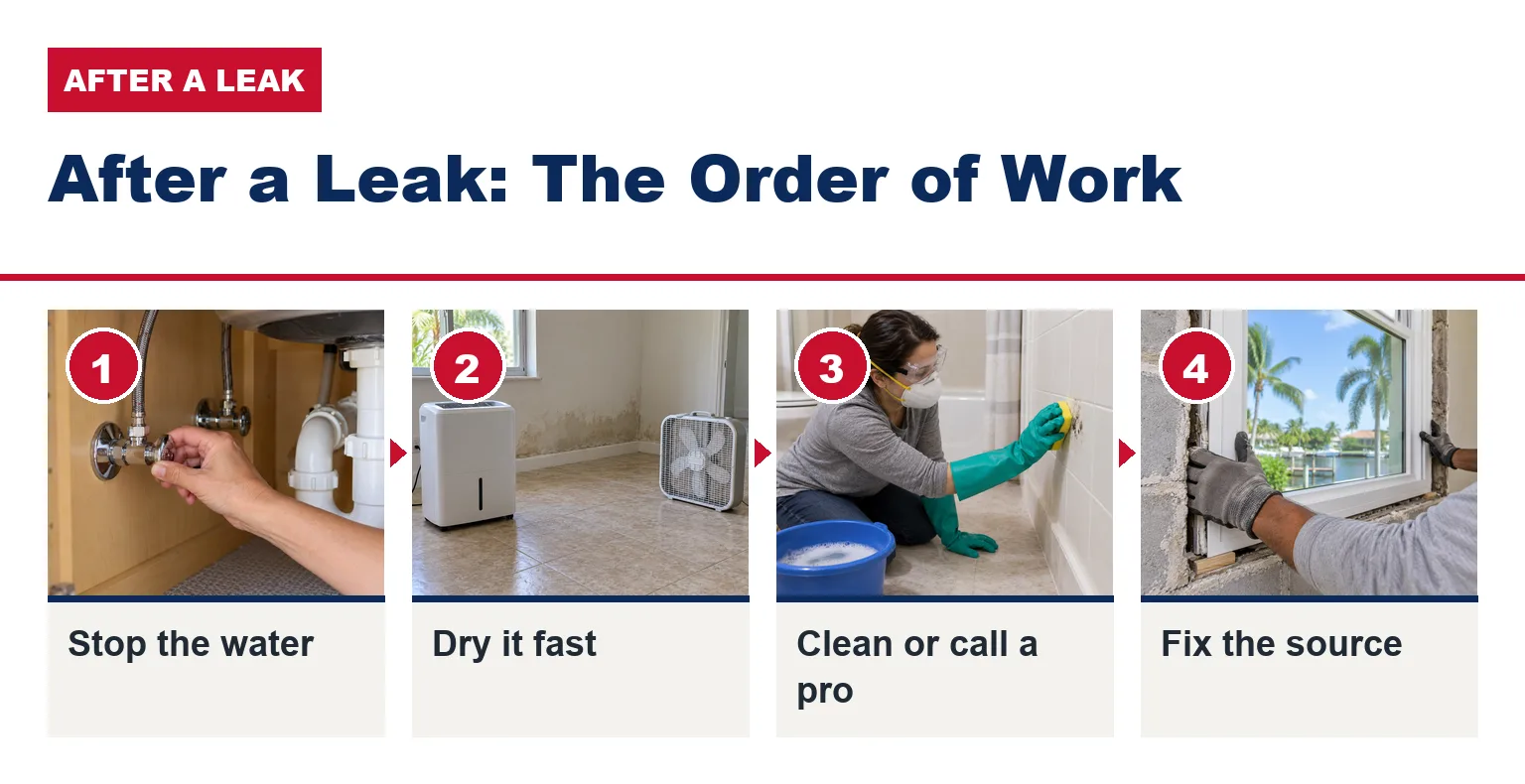
USA Home Improvement does not test for or remove mold. The order of work after a leak is to stop the water, dry it fast, clean or call a pro, then fix the source. That last step is where we help, by replacing the windows, doors or roof that let water in.
Mold Prevention FAQs
Will mold come back after I clean it?
It will if the moisture stays. The EPA warns that if you clean up mold but don’t fix the water problem, the mold will most likely come back. Find the leak, humidity or condensation behind the spot and fix it too.
How do I prevent mold while I’m away for the summer?
Keep humidity in check while the house is closed. The EPA names air conditioners and dehumidifiers for this, and someone should check the house after heavy rain or a storm. Our checklist for closing up a Florida home for the summer covers the rest.
Will new windows stop mold?
Not on their own. A leaking window frame is one water source, and replacing it removes that source, but humidity, ventilation and other leaks still matter. Our complete guide to impact windows in South Florida explains the options.
Start With the Water Source
If you find mold, stop the water, dry the area, then clean a small spot or call a licensed mold professional. If a window, door or roof keeps letting water in, replace or repair it, or the mold will return.
Financing may be available for qualified homeowners through independent third-party providers. Terms, eligibility and availability depend on the program and location. See current financing options for your project.
USA Home Improvement is licensed (CGC1526707) and insured and has served Florida homeowners for more than 15 years.
Request a free window, door or roof estimate or call (877) 554-6373.