Skip to content

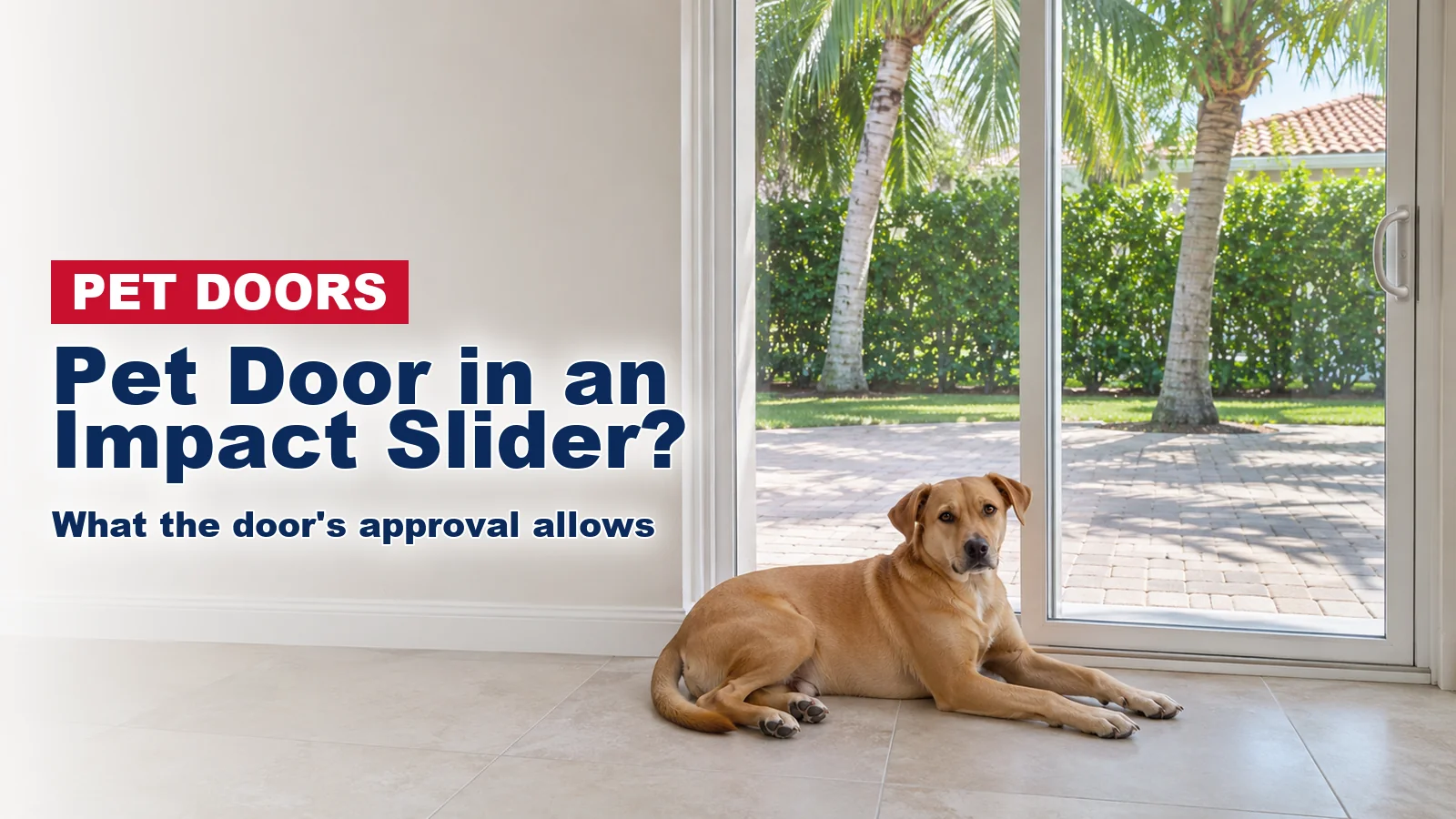
Do not cut a pet door into an impact sliding door or impact entry door you already own. The door’s product approval covers the door as it was tested, and a hole in its glass or panel is not part of that test.
There are safer routes: a removable panel insert for a slider, a door approved with a pet door built in, or a pet door through the wall. This guide shows what each one does to your storm protection and what to ask before you order.
Why a Pet Door Should Not Be Cut Into an Approved Impact Door
An impact door is approved as a complete unit: frame, glass, panels, locks and anchors, built to an approval drawing. Cutting an opening into the glass or a panel creates a door that nobody tested.
Look at a real approval. The Miami-Dade Notice of Acceptance for the ES Windows ES-EL400 aluminum sliding glass door rates it large and small missile impact resistant. It ties that rating to a signed and sealed drawing, with glass capacity charts by size.
The same NOA lists the tests behind it, including large missile impact (TAS 201), cyclic wind pressure (TAS 203) and a forced entry test (TAS 202). A pet door cut in after installation is not in any of those tests.
The NOA says the product “is approved as described herein.” A door with a pet door cut into it no longer matches that description.
It also says a copy must be available at the job site for the building official. That is the door an inspector expects to see. Our impact sliding glass doors page explains how ES-EL400 configurations and approvals are confirmed for each opening.
The same logic applies to swapping a lock or hinge, which our post on why impact doors get hard to lock covers. To see what your door carries now, check the approval label on your windows and doors.
Pet Door Options for an Impact Slider or Entry Door, Compared
A pet door for an impact home comes down to four routes. Only two of them leave your approved door untouched, and only a product whose approval says impact can count as storm protection without a cover.
| Route | What it changes | Impact rating | Before a storm |
|---|---|---|---|
| Panel insert in the slider track | Nothing cut; the slider closes against the insert | Not part of the door’s approval | Take it out and lock the slider |
| Pet door cut into the door or glass | The approved door itself | The tested door no longer exists | Not a route to take |
| Door approved with a pet door built in | Replaces the whole door | Only if its approval says impact | Check whether the approval needs a cover |
| Pet door through the wall | A new opening in the wall | Depends on the product and your county | Follow the product’s storm instructions |
Slider Panel Inserts: Easy to Fit, Not Part of the Storm Protection
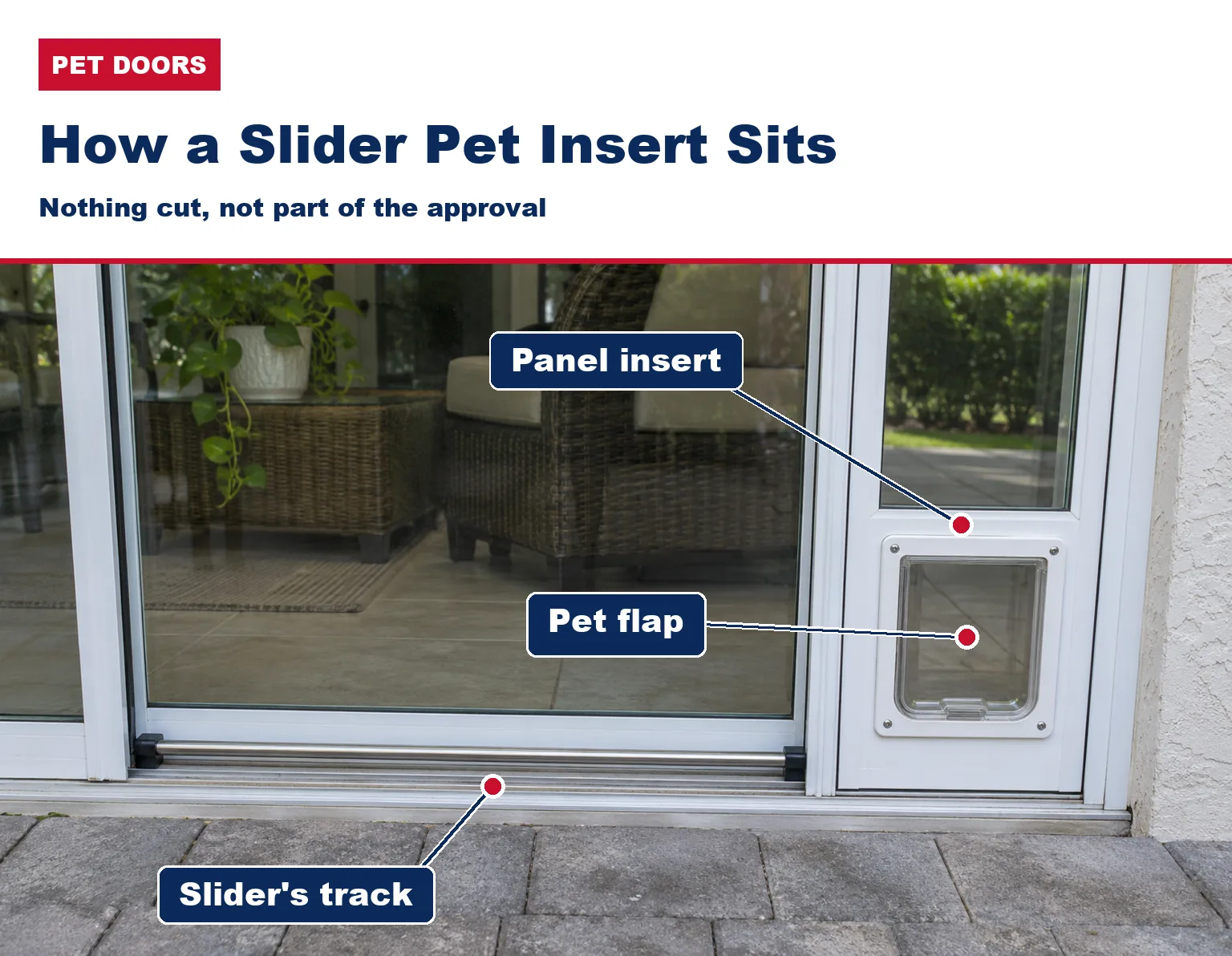
A panel insert is a tall frame with a pet flap that stands in the slider’s track, so nothing is cut. The moving glass panel closes against the insert instead of the door frame.
One major brand’s insert page, for example, says its insert fits into existing sliding glass door tracks, adjusts to door heights of about 76 to 81 inches, and installs with removable adhesive strips or screws. It includes a locking bar for the sliding door. The page mentions no impact rating.
That is the trade-off. While the insert is in, the slider cannot close fully against its own frame, so its tested lock is not doing its job.
The pet flap becomes the weak spot. Security layers for glass doors are covered in our guide to whether impact windows and doors stop burglars.
An insert also sits in the track where rain is meant to drain. If water shows up at the sill, read why impact sliding doors leak at the track before blaming the door.
Doors Approved With a Pet Door Built In
In principle, the cleanest route is a door that was tested and approved with the pet door already in it. Florida’s product approval site lists such a door, so this is not just a sales claim, but each approval has limits.
The Florida evaluation report FL-40116.2 covers an inswing or outswing fiberglass entry door assembly with an impact pet door panel. It meets missile level D and Wind Zone 4 as defined in ASTM E1996 and does not need an impact-resistant covering.
Wind Zone 4 is the highest wind zone in that standard, for design wind speeds above 170 mph, as Florida Building Code Section 1609.1.2.2 states.
That approval is for a swinging entry door, not a sliding door. For a slider, ask the door’s maker whether any approval for that door includes a pet panel.
One limit matters most in South Florida. The report evaluates the door under the 8th Edition (2023) Florida Building Code “excluding the High Velocity Hurricane Zone.”
The Florida Building Code defines that zone as Miami-Dade and Broward counties, so this approval cannot be used to meet the HVHZ rule in those two counties.
The same product family also has non-impact versions. The FL-40116.1 report says a non-impact version must be protected with an impact-resistant covering where wind-borne debris protection is required. “Pet door, Florida approved” can mean either, so read the approval, not the ad.
If your opening needs a new door anyway, start with the door and plan the pet’s route around it. See our impact sliding and French door options, and our guide to choosing impact doors.
Replacing a slider or entry door? Request a free impact door estimate or call (877) 554-6373, then choose a pet route that leaves the new door untouched.
Pet Doors Through the Wall in Miami-Dade and Broward
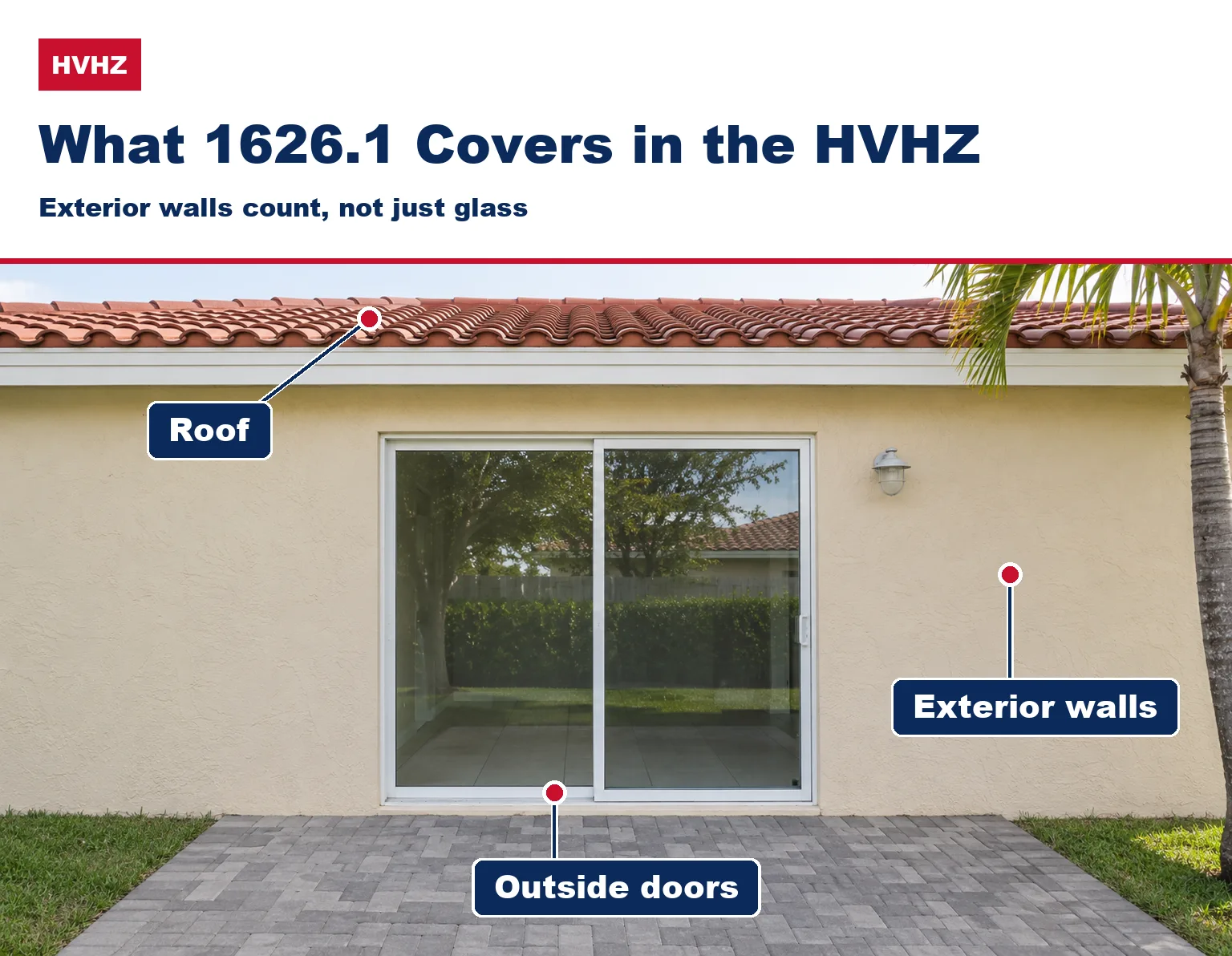
A pet door through the wall leaves the impact door alone, but in Miami-Dade and Broward the wall is part of what the code protects. Florida Building Code Section 1626.1 covers the High-Velocity Hurricane Zone.
Section 1626.1 says all parts of the building envelope, “such as, but not limited, to exterior walls, roof, outside doors, skylights, glazing and glass block,” must meet impact test criteria or be protected by a device that does.
Its list of exceptions names items such as soffit vents and wall-mounted air conditioning openings, not pet doors.
Outside the HVHZ, in places like Palm Beach County, Florida Building Code Section 1609.1.2 requires glazed openings in wind-borne debris regions to be impact resistant or protected. Whether a particular wall pet door counts is a question for your building department, not the box.
If your wall is concrete block, cutting a new opening is construction work, not a weekend project. Ask the building department whether it needs a permit before anyone cuts, and see when Florida requires a permit for window and door work.
A Hurricane Season Routine for Homes With a Pet Door
A pet door needs a storm plan before hurricane season, the same as every other opening. Decide it now, not when the forecast cone is over your house.
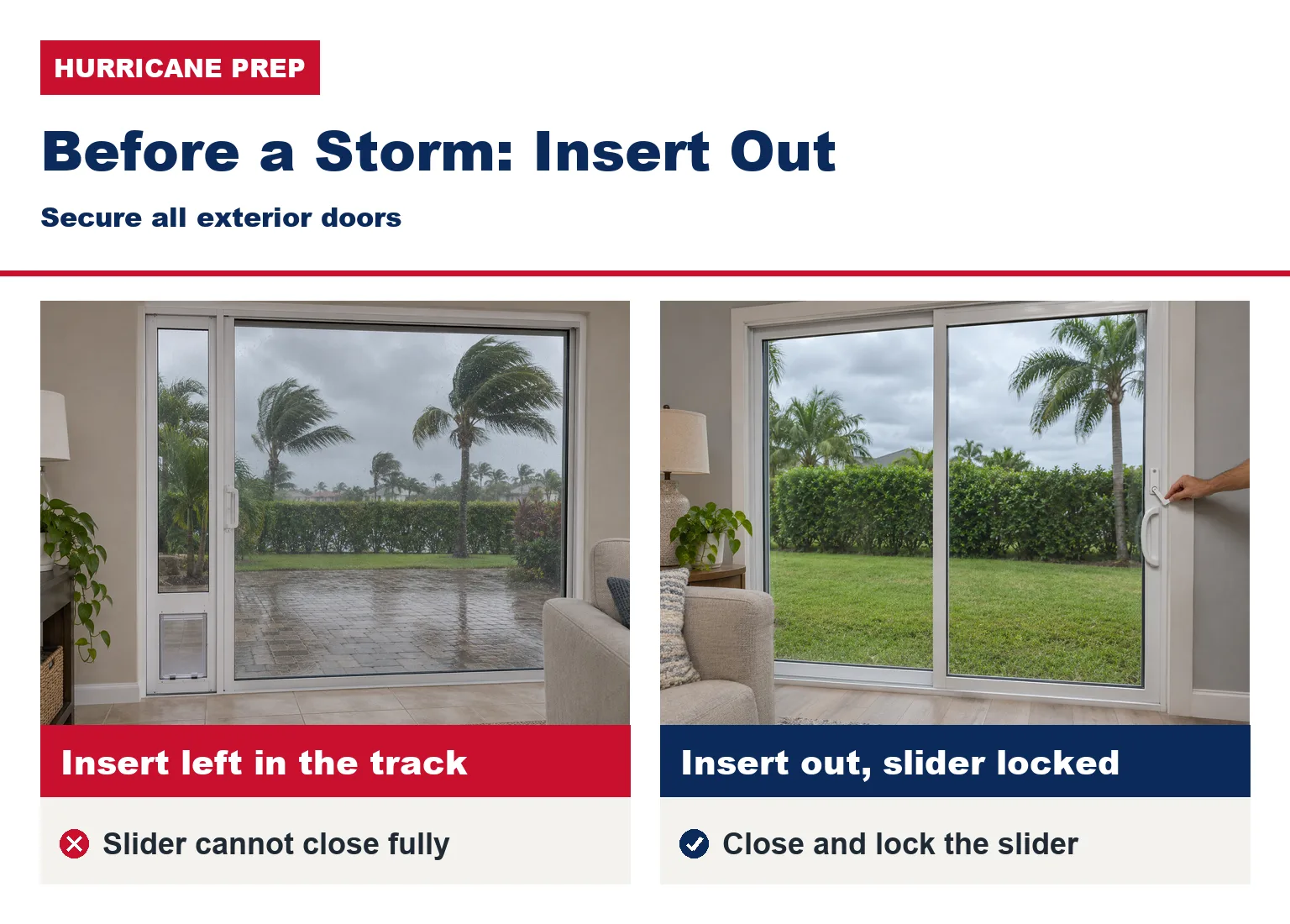
- Slider insert: take the insert out and close and lock the slider before a storm. FEMA’s home preparation fact sheet says sliding glass doors are more vulnerable to wind damage than most other doors.
- Every exterior door: NOAA’s storm preparation advice is to secure all exterior doors when a storm threatens. A slider standing open against an insert is not secured.
- Non-impact pet door: if its approval says it needs an impact-resistant covering, have that covering ready and know how it fastens.
- Pets indoors: close the flap or fit its closing panel so the pet stays inside before the wind arrives.
Use the hurricane watch as your trigger. Our guide to window prep for hurricane watches and warnings lists the rest of the work for each alert.
What to Ask Before You Order a Pet Door
Ask these questions before you buy a pet door for an impact home, and get the answers in writing:
- Does it touch my approved door? If the answer involves cutting glass or a door panel, stop.
- What is the approval number? Ask for the Florida Product Approval or Miami-Dade NOA, then read whether it says impact or non-impact.
- Does it cover the HVHZ? In Miami-Dade and Broward, an approval that excludes the High-Velocity Hurricane Zone does not meet the local rule.
- Does it need a cover in a storm? A non-impact pet door must be protected where wind-borne debris protection is required.
- Who pulls the permit? Ask the building department about a wall opening or a replacement door before work starts.
- What does it do to my door’s warranty? Read the door maker’s written warranty terms before anything is attached to or removed from the door.
Pet Door and Impact Door FAQs
Can a glass shop put a pet door in my impact slider’s glass?
Not without leaving the approved door behind. The glass is part of the tested assembly, and the approval’s glass charts list only the glass types and sizes shown on the approval drawing.
Some glass shops replace a slider pane with one fitted with a pet door, so ask the door maker first whether that is allowed under your approval.
Do pet door panel inserts fit impact sliding doors?
It depends on the track and the door height, which must fall within the insert’s range. Measure the track and the door height first. The insert is not part of the slider’s approval, so treat it as a fair-weather pet door and take it out before a storm.
Is there an impact-rated pet door for Miami-Dade or Broward?
Only if its approval includes the High-Velocity Hurricane Zone. The Florida-approved impact pet door assembly described above is approved excluding the HVHZ. Before buying for Miami-Dade or Broward, ask for a Miami-Dade NOA or a Florida approval that names the HVHZ.
Can I put a cat flap in an impact window instead?
The same rule applies. An impact window is approved as tested, so do not cut its glass or frame. Window pet inserts that sit in a sliding window’s track work like slider inserts: not part of the approval, and out before a storm.
Do I need a permit for a pet door?
Ask your building department before work starts, especially for a new opening in a block wall or a replacement door. Every USA Home Improvement door replacement is permitted.
Keep the Door Approved and Give Your Pet Its Own Route
If you have an impact slider and a pet, the safe order is simple. Use a removable insert and take it out for storms, or choose a door or wall pet door whose approval covers your county. Never cut the approved door.
If the slider or entry door is due for replacement, choose the new door first, then a pet route that leaves it untouched. Customers can receive the Florida Product Approval number for each window and door on request, and our installation team holds direct certification from the manufacturer.
See impact door cost factors in Florida, and compare financing for a new impact sliding door. Financing may be available for qualified homeowners through independent third-party providers. Terms, eligibility and availability depend on the program and location.
USA Home Improvement is licensed under CGC1526707, insured, and has served Florida homeowners for more than 15 years. We sell ES Windows exclusively.
Get a free estimate or call (877) 554-6373.