 Skip to content

Hurricane impact doors protect a South Florida home by keeping its doors closed and sealed when flying debris hits, with no shutters to put up. In a region that faces a hurricane season every year, that protection is always in place.
This guide covers South Florida hurricane patterns, your protection options, how impact doors are built and what they cannot do. For types, approvals and cost in one place, see our complete guide to impact doors in South Florida.
Understanding Hurricane Patterns in South Florida
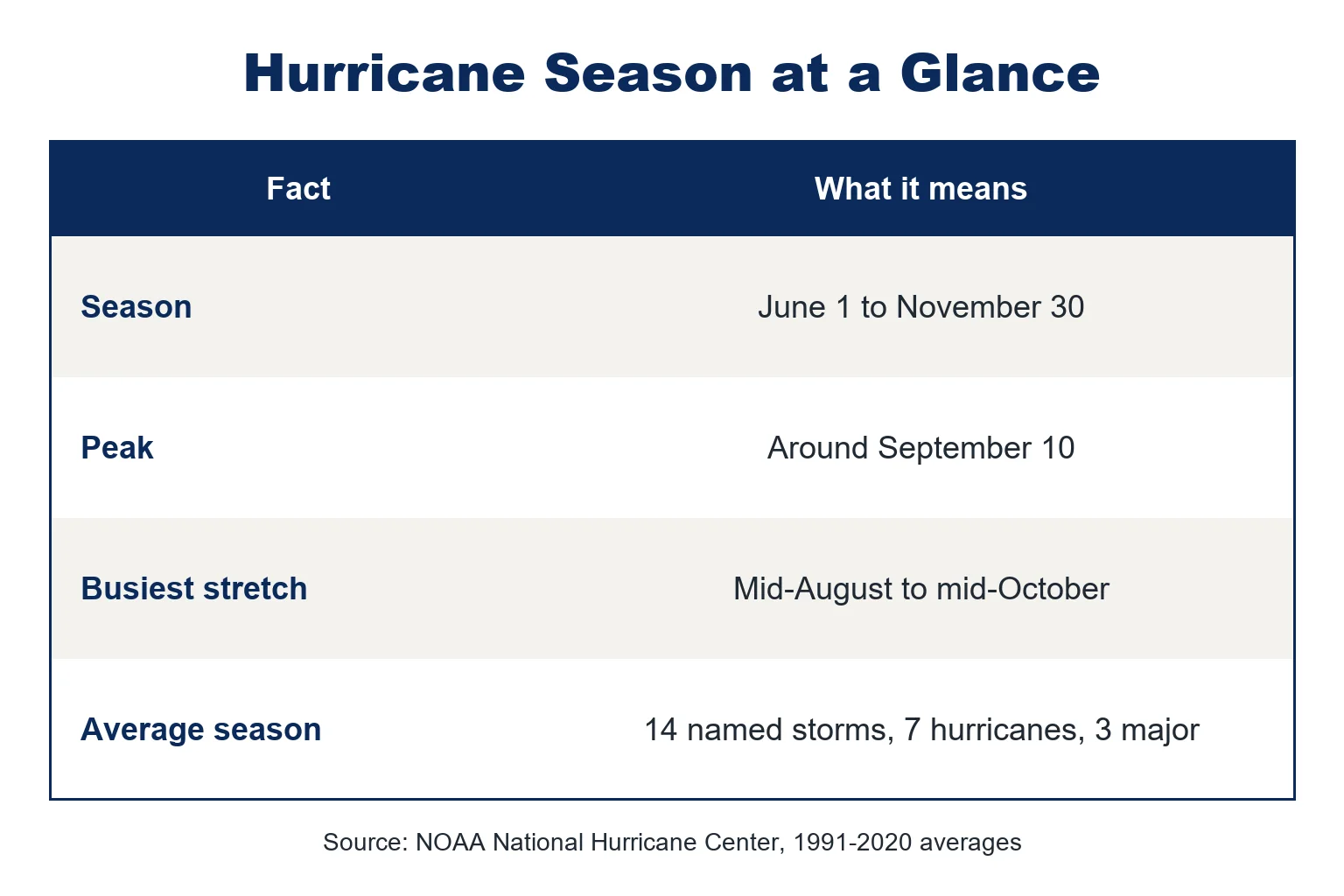
The Atlantic hurricane season runs from June 1 to November 30. According to the National Hurricane Center’s hurricane climatology, the peak is September 10, with most activity between mid-August and mid-October.
Frequency of Hurricanes
Based on the 1991 to 2020 record, an average Atlantic season brings 14 named storms, 7 hurricanes and 3 major hurricanes, according to the National Hurricane Center. A major hurricane is Category 3 or higher.
These are averages for the whole Atlantic basin, not a count of storms that hit Florida. Some seasons are quiet and some are far busier, so the safe plan is to be ready every year.
What Makes South Florida So Exposed
South Florida sits on a narrow peninsula between the Atlantic Ocean and the Gulf. NOAA’s record of U.S. hurricane landfalls treats the entire Florida peninsula as coastal.
The Florida Building Code reflects this risk. Much of South Florida falls in the wind-borne debris region, where glass openings must be protected by impact-rated products or approved shutters.
Miami-Dade and Broward also sit in the High-Velocity Hurricane Zone (HVHZ), which has the strictest wind rules in the state. Palm Beach County and Southwest Florida are outside the HVHZ but still fall under Florida Building Code wind rules and Florida Product Approval.
What Hurricane Irma Showed South Florida
Hurricane Irma shows what a storm can do here. The National Weather Service in Miami reported gusts of 80 to 95 mph in Miami-Dade and 80 to 100 mph in Broward, and storm surge of 3 to 5 feet along Biscayne Bay.
The same report says more than three-quarters of South Florida electric customers lost power, and heavy tree and fence damage was widespread. Broken branches and fence boards are the kind of flying debris that can shatter an unprotected glass door.
How Can You Protect Your Home From Hurricanes?
The best way to protect your home from a hurricane is to protect its openings: entry doors, patio doors, windows and the garage door. Glass doors and windows are the parts of a house that flying debris breaks most easily.
Once an opening breaks, wind and rain rush inside. Pressure then pushes on the roof and walls from inside while the wind outside pulls on them, which can turn a broken door into much wider damage.
Your options are approved shutters, storm panels or hurricane fabric that you close before each storm, plywood as an emergency backup, or impact doors and windows that stay in place all year. Our comparison of every way to protect windows during a hurricane weighs each one.
Hurricane Impact Doors: A Shield of Protection and Peace of Mind
Hurricane impact doors are exterior doors built and tested as a complete unit to resist flying debris and hurricane wind pressure. The glass may crack when it is hit, but the door is designed to stay closed and keep the wind out.
The big difference from shutters is that impact doors are always on. Nobody has to climb a ladder or carry panels before a storm, which matters if you travel, live alone or spend part of the year away.
Impact doors come in every style South Florida homes use. You can compare them on our page of hurricane impact doors for South Florida homes.
- Front entry doors: solid or glass panel doors, often with sidelites or a transom. Any glass in or beside them must be impact rated too.
- French doors: hinged pairs that open to patios and pool decks, like our impact French doors for patios and pools.
- Sliding glass doors: often the largest glass opening in the house, covered by our impact sliding glass doors for wide openings.
- Garage doors: the widest opening of all, which is why we offer impact garage doors built for hurricane season.
Not sure which style suits each opening? Our guide to choosing the right type of impact door walks through where each one fits.
Crafting Hurricane Impact Doors: Manufacturing for Resilience
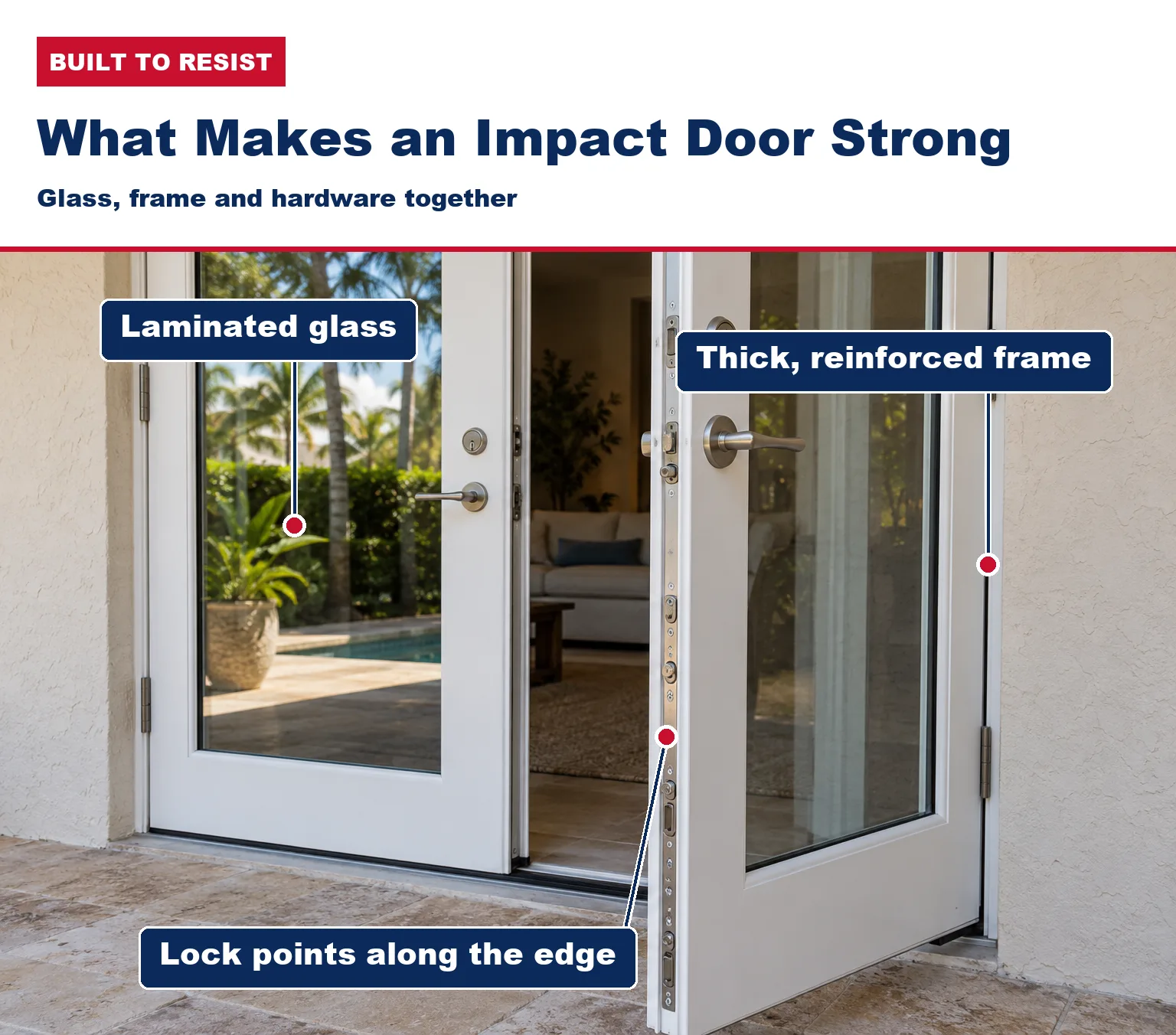
Impact doors resist hurricanes because every part is built to carry load: the glass, the frame and the hardware. If one of them is weak, the whole door can fail.
- Laminated glass: two or more glass layers bonded to a clear plastic interlayer, usually PVB, or a stiffer SGP layer for large panels. If the glass cracks, the interlayer holds the pieces together.
- Reinforced frames: heavy aluminum, fiberglass or steel frames and panels that keep their grip on the glass while the door flexes in the wind.
- Multi-point hardware: on many entry and French doors, the lock engages the frame at the top, middle and bottom, so wind cannot pry one corner open.
- Threshold and seals: shaped to hold the panel in place and drain water away from the inside of the house.
Before a door is approved for South Florida, the complete unit is tested. A 9-pound 2×4 is fired at it, then thousands of pressure cycles push and pull on the damaged door.
Our article on how hurricane impact doors are tested and rated explains each test and how to read a door label.
Doors in Miami-Dade and Broward need an approval valid in the HVHZ, such as a Miami-Dade Notice of Acceptance (NOA). Our breakdown of impact door permit and approval rules in Miami-Dade covers the local steps.
Demonstrating Effectiveness: Impact Doors in Action
When debris hits an impact door hard enough, the glass cracks into a web around the impact point but stays in one piece. The panel stays locked in the frame, so the opening stays closed.
That is the whole job: keeping wind and rain out so pressure cannot build inside the house. A door that has been hit has done its work, but cracked glass is weakened, so plan to replace the glass or panel before the next storm.
What Impact Doors Do Not Do
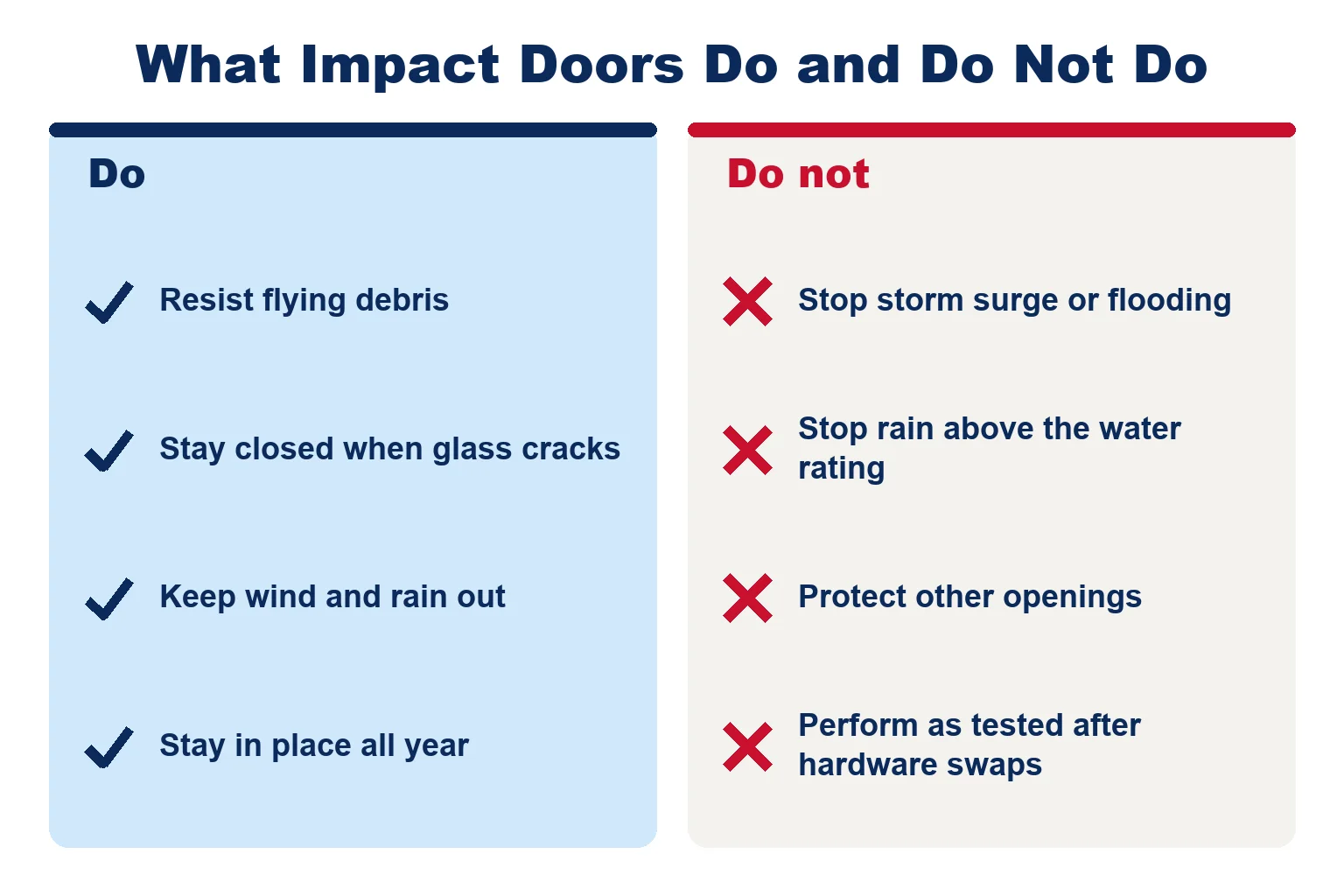
Impact doors are not flood protection. They are tested for debris, wind pressure and wind-driven rain, not for rising water.
- Storm surge and flooding: rising water pushes on a door with forces no impact test measures, and it also enters through floors, walls and drains. The National Hurricane Center’s storm surge overview explains the danger. Follow evacuation orders whatever doors you have.
- Rain above the water rating: long storms with strong wind can push water past a sill, especially on sliding doors.
- Unprotected openings elsewhere: one broken window or garage door can still let wind into the house.
- Doors that left their approval: swapped hardware or the wrong anchors can mean the door no longer performs as tested.
Impact doors can also count toward insurance savings. Section 627.0629 of the Florida Statutes requires home insurers to offer premium credits for opening protection, based on a wind mitigation inspection.
The amount depends on your insurer and on every opening in the house, including the garage door. Here is how home upgrades can lower your insurance rates in Florida.
Superior Hurricane Impact Door Services from USA Home Improvement
USA Home Improvement measures, supplies and installs hurricane impact doors across Miami-Dade, Broward, Palm Beach and Southwest Florida. Every door is set and anchored as its approval drawings show, and the work is permitted and inspected.
USA Home Improvement: Your Partner in Hurricane Preparedness
The best time to plan impact doors is the off-season, before a storm is in the forecast. Measuring, fabrication and permit review take time, so this is not a job for the week a storm is coming.
Price depends on the door type, size, glass and hardware. Our breakdown of what impact doors cost in Florida shows what changes the price.
Hassle-Free Financing Options for Upgrades
You do not have to pay for impact doors all at once. Financing, if available, comes through independent third-party providers that may offer qualified homeowners $0 down options, 0% interest plans and loans up to $100,000, with fast approval and a soft credit check.
PACE financing is also available for eligible projects, with rates and terms that vary by program and location. Compare our impact door financing options for homeowners.
Ready to stop worrying about your doors every hurricane season? Call USA Home Improvement at (877) 554-6373 or request a free estimate for your home.
USA Home Improvement is licensed (CGC1526707) and insured and has served Florida homeowners for more than 15 years.