Skip to content

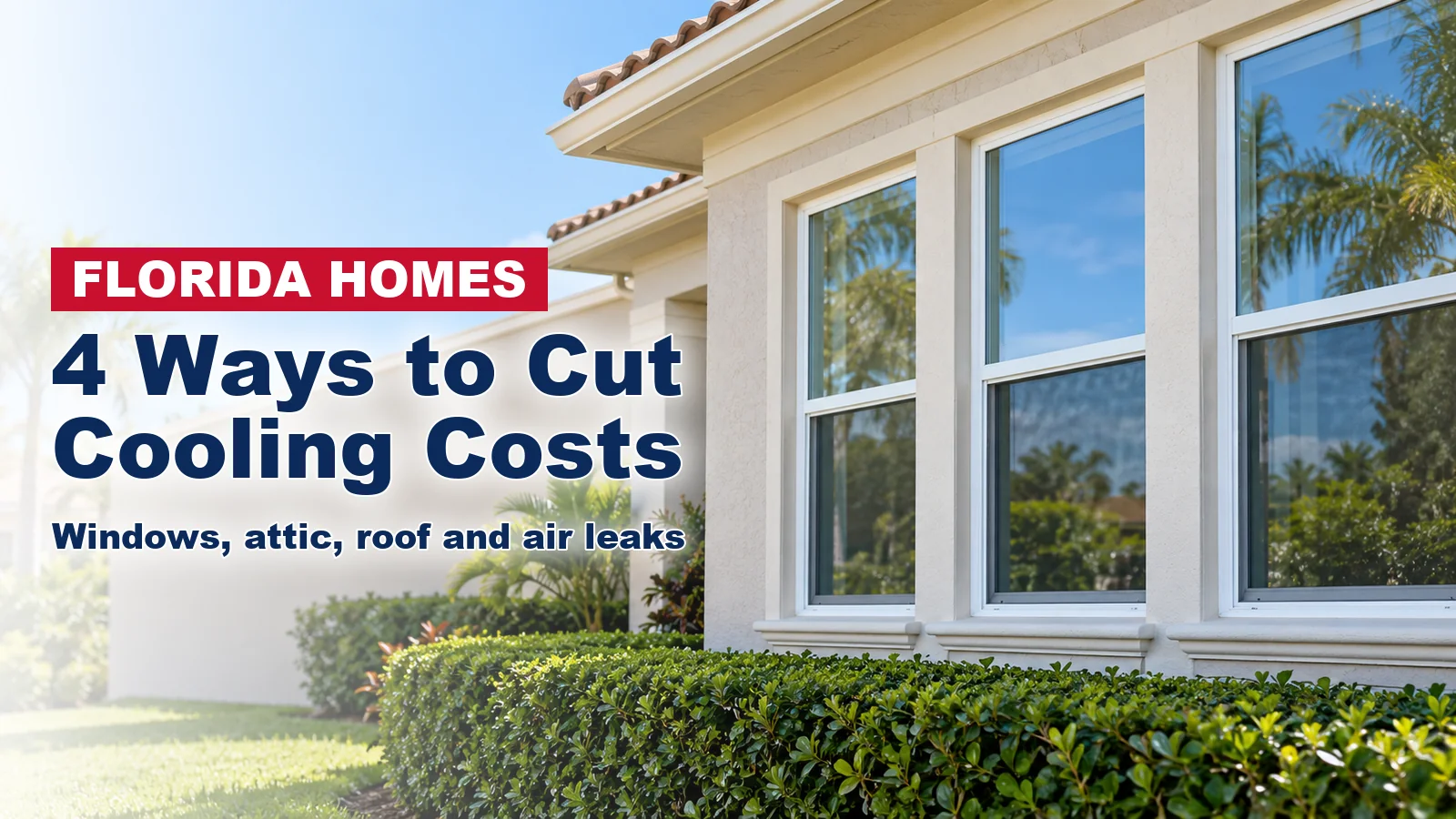
The four upgrades that save the most energy in a South Florida home are low solar heat gain windows, attic insulation, a lighter reflective roof, and sealed air leaks around windows, doors and the attic. Here the air conditioner does most of the work, so each upgrade keeps heat out.
This guide shows what the Florida energy code asks of each upgrade, what Florida test homes measured, and which upgrade to do first. It ends with no-cost habits you can start today.
1. Replace Leaky Windows With Low-E Impact Glass
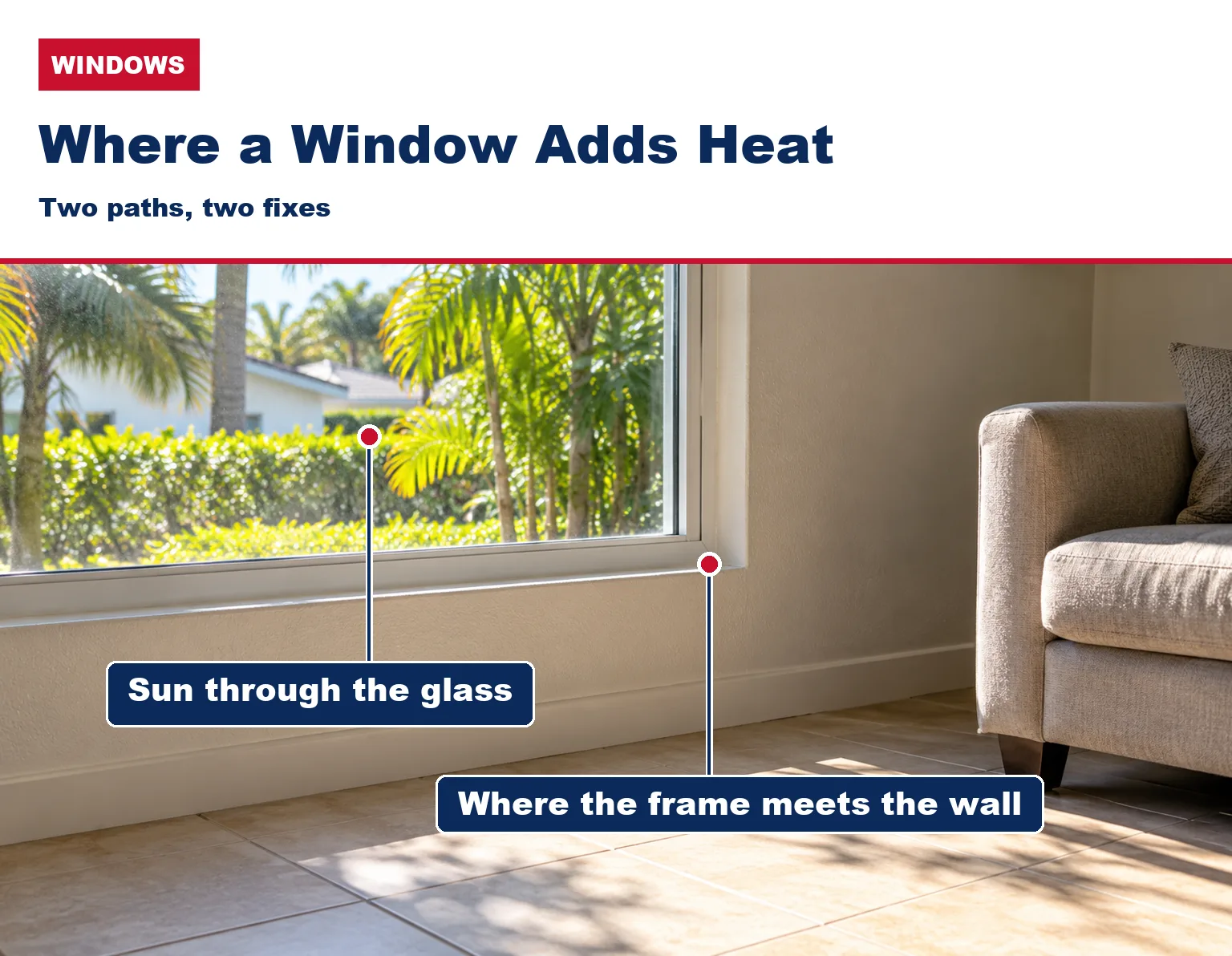
Windows with a low solar heat gain coefficient (SHGC) keep the most heat out of a Florida home. A window adds heat in two ways: sun through the glass and air through gaps where the frame meets the wall.
The Florida Building Code, Energy Conservation places Miami-Dade, Broward, Palm Beach, Monroe, Lee and Collier counties in climate zone 1. For that zone, Table R402.1.2 caps the SHGC of glazed windows and doors at 0.25 and sets no U-factor requirement.
In other words, the code’s focus in South Florida is blocking solar heat. Low-E glass helps by reflecting much of the sun’s heat while still letting daylight through.
Replacement windows count too. Section R501.7 of the same code says replacement windows installed under a permit must meet the code’s minimum efficiencies, and every USA Home Improvement project is permitted.
An impact rating and an energy rating are separate things. An impact window is tested against wind-borne debris, while its energy numbers come from the National Fenestration Rating Council (NFRC) rating, which gives the U-factor and SHGC for the whole unit. Compare both numbers on every quote.
USA Home Improvement installs ES impact windows with Low-E glass options in aluminum and vinyl frames. Because they also protect the openings in a storm, they belong on the list of upgrades that can lower your insurance rates, though your insurer decides any credit.
Before you buy, read our complete guide to South Florida impact windows for styles, frames and county rules.
2. Bring Your Attic Insulation Up to R-30
For a South Florida attic, R-30 is the number to know. Table R402.1.2 of the Florida energy code lists R-30 ceiling insulation for new homes in climate zone 1. Older homes may have less, or insulation that has settled or been moved during repairs.
Florida data shows why the level matters. In a Florida Power Corporation monitoring project reported by the Florida Solar Energy Center (FSEC), homes with R-30 attic insulation used 3.4 kWh per day less for cooling than homes with R-19.
Keep your expectations realistic. ENERGY STAR’s savings estimate for air sealing plus added insulation is 5% of the total utility bill for a typical home in climate zone 1, compared with an 11% national average. Homes with thin or patchy insulation have the most to gain.
Homes with unshaded shingle roofs can also ask about a radiant barrier, a foil layer under the roof deck. In the same FSEC project, radiant barriers added to eight monitored homes with unshaded shingle roofs cut cooling energy by about 9% on average.
A good attic check measures the current depth, looks for bare spots over the walls at the eaves, and keeps the soffit vents clear. Our attic insulation installation for South Florida homes starts with a professional attic inspection.
3. Choose a Light, Reflective Roof When You Re-Roof
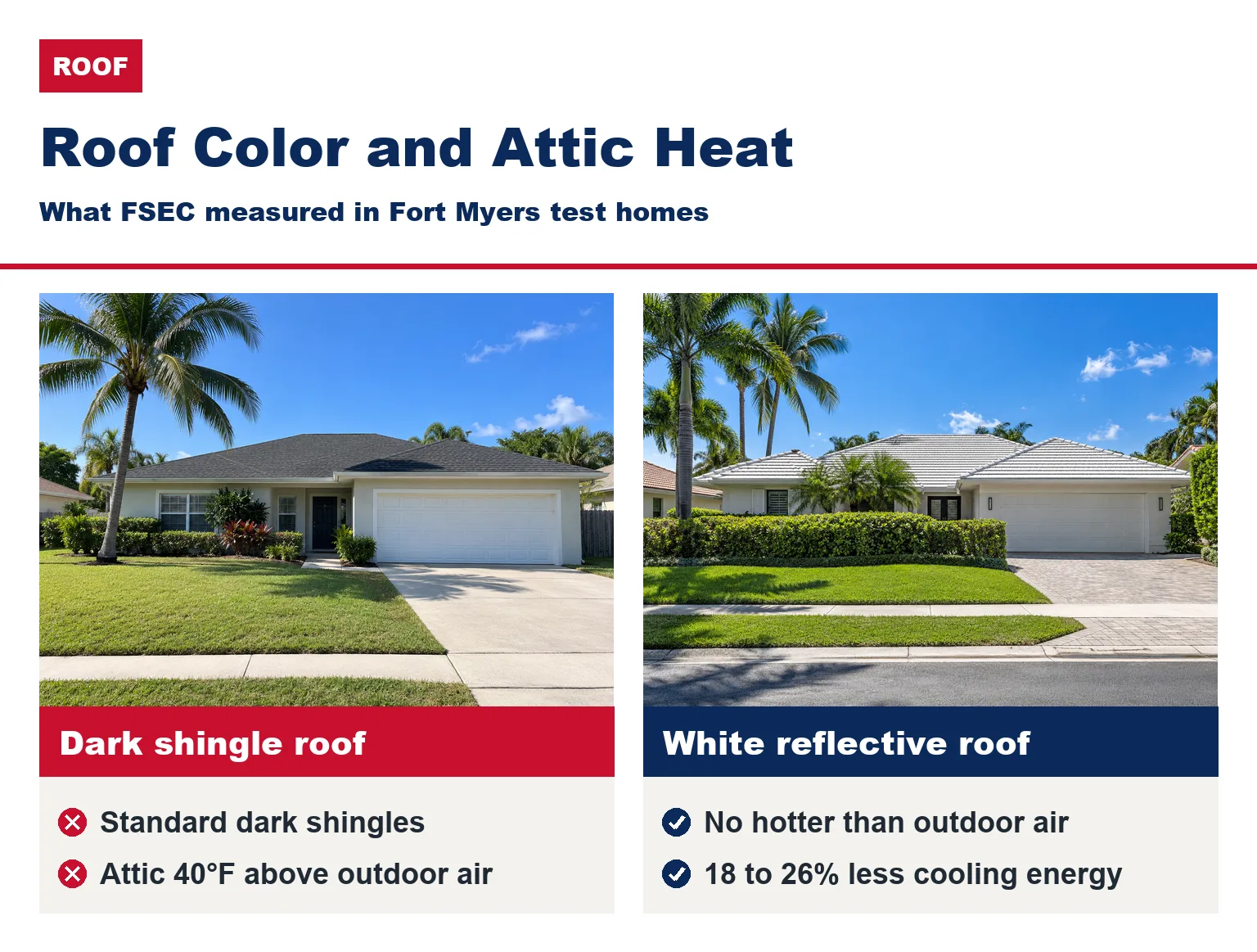
Roof color has a measured effect on cooling in Florida. In an FSEC study of six side-by-side test homes in Fort Myers, the three white reflective roofs (white barrel tile, flat white tile and white metal) used 18 to 26% less cooling energy than a home with standard dark shingles.
The attic shows why. At the peak summer hour, the dark-shingle home had its attic 40°F above outdoor air, while the white roofs kept the attic no hotter than outdoor air. Terra cotta tile saved 3 to 9%, and white shingles 3 to 5%.
The six test homes all had R-19 ceiling insulation. A hot attic pushes heat into the insulation below it and into any AC ducts that run through it. That is why the roof and the attic work as one system.
Change the roof color when the roof is due anyway. Look for the signs your roof is ready for replacement, then compare tile, metal and shingle roofs. If your home has an HOA, check its approved roof colors before you choose.
USA Home Improvement handles roof replacement for South Florida homes, and every project is permitted. A new roof is also a good time to check the attic insulation underneath it.
4. Seal Air Leaks Around Windows, Doors and the Attic
Sealing air leaks is the upgrade you can start yourself, and in Florida it also keeps humid outdoor air out. Air that slips in around frames brings heat and moisture that the air conditioner then has to remove.
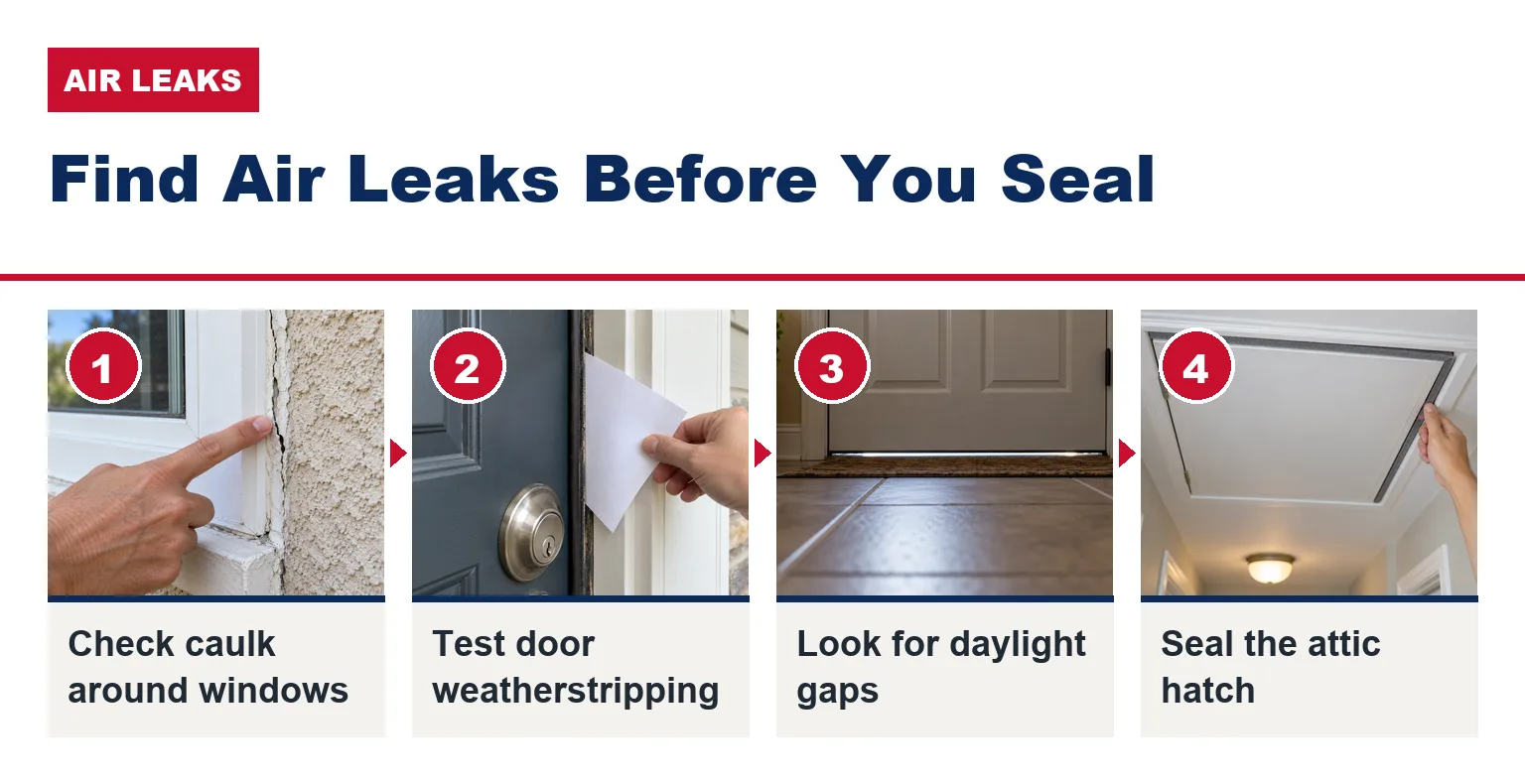
Start with a walk-around on a sunny day. Check caulk around windows for cracks, and for gaps where the frame meets the wall. Test door weatherstripping by closing the door on a sheet of paper: if the paper slides out easily, the seal is worn.
Look for daylight gaps around exterior doors and under thresholds. Then seal the attic hatch with weatherstripping, and ask about sealing gaps around recessed lights, pipes and wires that pass into the attic.
Old doors and windows can warp, and their weatherstripping or caulking can wear out. When a frame no longer closes tight, new caulk only patches it. Replacing it with a new window or with impact entry and sliding glass doors fixes the opening itself.
Leaks let in water as well as air. See how to stop moisture that leads to mold for the leak and condensation spots to watch.
No-Cost Habits That Lower Cooling Bills Today
Your thermostat is the fastest change. Florida Power & Light recommends setting it to 78 degrees when you are home and 82 degrees or more when you are away. A smart or programmable thermostat can make those changes on your schedule.
Keep the air conditioner’s filter clean, and have the system serviced by a licensed AC contractor. LED bulbs use less energy than incandescent bulbs and give off less heat, which matters when the AC runs most of the year.
A few more habits add up:
- Do laundry in cold water.
- Use a clothesline instead of the dryer.
- Hang light-filtering drapes or solar shades on sunny windows.
- Turn your water heater down a notch.
- Turn off lights and electronics when you are not using them.
Which Energy Upgrade Should You Do First?
Start with the part of the house that is failing or due for work. The table matches common situations with the upgrade that fits them best.
| If your home has | Start with | Why |
|---|---|---|
| A roof near the end of its life | A lighter roof plus an attic check | Roof color is set for the life of the new roof |
| Hot, sunny rooms and old single-pane windows | Low-E impact windows | Blocks sun through the glass and protects the openings |
| Thin, uneven or settled attic insulation | Attic insulation to R-30 | R-30 is the code level for new homes in climate zone 1 |
| Drafts, gaps or sticky humidity | Sealing air leaks | You can start it yourself |
Many homes need more than one of these. Pairing the roof with the attic, or new windows with sealing, saves a second round of work. To see how energy work compares with storm and insurance upgrades, read which home projects pay off most in Florida.
Energy Upgrade FAQs
Do impact windows lower my electric bill?
They can, when the new glass has a lower SHGC than your old windows and the frames seal tightly. The impact rating is about storm debris. Savings depend on the glass, the sun on each wall, shading and the rest of the house, so no single percentage fits every home.
Can I finance energy upgrades?
Financing may be available for qualified homeowners through independent third-party providers. Terms, eligibility and availability depend on the program and location. See how third-party financing for upgrades works and which projects qualify for Florida PACE funding.
How long does a window replacement take?
At USA Home Improvement, manufacturing takes about 6 to 8 weeks depending on project scope, and installation averages 1 to 2 days. The whole process takes about 3 months from start to finish, though it can vary, so plan ahead of the hottest months.
Start With the Upgrade That Fits Your Home
If your windows are old and the rooms facing the sun run hot, start with Low-E impact glass. If the roof is due, choose a lighter roof and check the attic at the same time. Either way, seal the leaks you can reach yourself this week.
USA Home Improvement is licensed (CGC1526707) and insured and has served Florida homeowners for more than 15 years.
Request a free estimate or call (877) 554-6373.