Skip to content

The three types of roof damage to fix before hurricane season are water damage from leaks, punctures and cracks in tiles or flashing, and loose, broken or curling shingles. The Atlantic season runs from June 1 to November 30, says the National Hurricane Center, so repair them in spring.
Water Damage: Find and Stop Roof Leaks First
Water damage is the roof problem to fix first, because a slow leak on a sunny day becomes a steady one in wind-driven rain. The usual signs are brown stains on the ceiling, peeling paint near the top of a wall, a musty closet and damp insulation in the attic.

Most roof leaks start where the roof covering is interrupted: flashing around vents, pipes and skylights, valleys where two slopes meet, and cracked or missing tiles or shingles. Clogged gutters can also push water back under the roof edge.
Fix a roof leak in order. Repair the source on the roof first, then the ceiling, because patching drywall under an active leak only hides the problem. The EPA advises drying water-damaged areas and items within 24 to 48 hours to prevent mold growth.
Check the attic around the leak as well. Wet insulation and stained roof decking should be dried or replaced once the leak is fixed, and USA Home Improvement handles attic insulation replacement after a roof leak. If you already see spots, read how to keep mold out after a leak.
Punctures and Cracks in Tiles and Flashing
Punctures and cracks are openings in the roof covering, and in a hurricane they let in water and give wind an edge to pull on. They come from falling branches, wind-borne debris, foot traffic on tile, old sealant and poor installation.

Tile roofs show where to look first. After Hurricane Wilma, Miami-Dade’s Building Code Compliance Office found that hip and ridge caps installed with mortar performed poorly, with clay tile the most affected. Hip and ridge tiles are the rows that cap the peaks and corners of the roof.
The same assessment found that mechanically attached tile roofs often lost the first row of tiles at the eave, sometimes spreading to the second and third rows. Once a tile lifts, the report notes, it becomes more likely to blow off and can turn into large flying debris.
After the storm, Miami-Dade’s building code office proposed code changes to drop mortar-only hip and ridge caps and add a clip to each first-row tile, so these spots matter most on older tile roofs. Ask your roofer how your hip, ridge and eave tiles are attached.
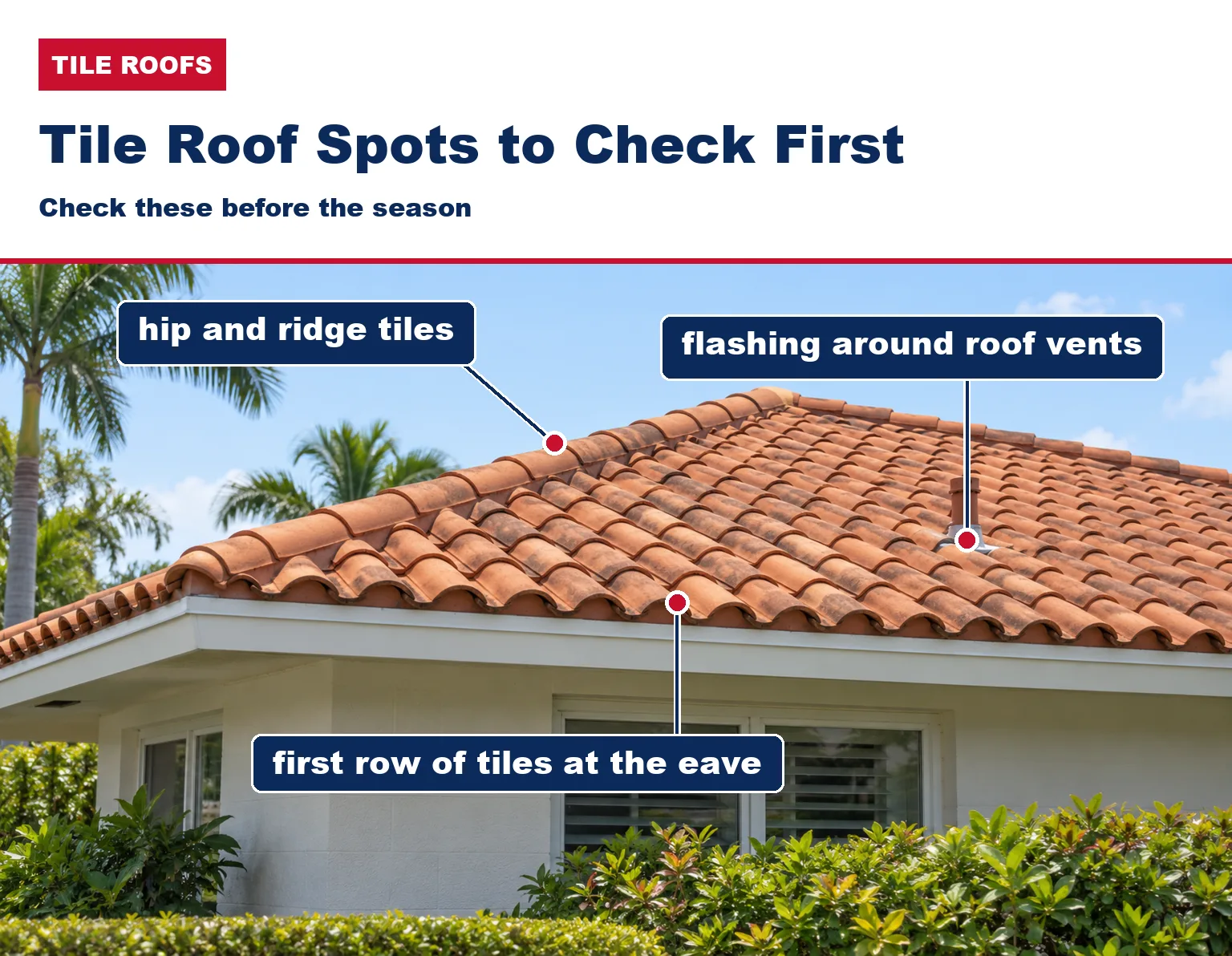
The fix is to replace cracked tiles, re-secure loose hip and ridge tiles and eave tiles, and reseal or replace damaged flashing around roof vents. If a large share of the roof is cracked, compare repair with replacement, and compare tile, metal and shingle roofs before you choose.
USA Home Improvement handles roof repair and replacement in South Florida, from broken tiles to a full new roof. Ask for a written scope that lists each repair, so you know what was fixed before the season.
Loose, Broken and Curling Shingles
Loose shingles are a weak spot on any shingle roof, because wind gets under a lifted tab and peels it back. Broken or missing shingles leave the underlayment exposed, and curled edges catch wind the same way.
Miami-Dade’s post-Wilma assessment found a clear link between shingle age and damage. Shingle roofs five years old or newer had little to no damage, while roofs dating from around Hurricane Andrew or earlier in some cases lost many shingle tabs.
Whole shingles rarely came off: the tab sealant failed, and the underlayment underneath stayed in place. Roofs that lost tabs in that storm and were left unrepaired, the report warned, “may begin to experience water intrusion problems” as the rainy season approaches.
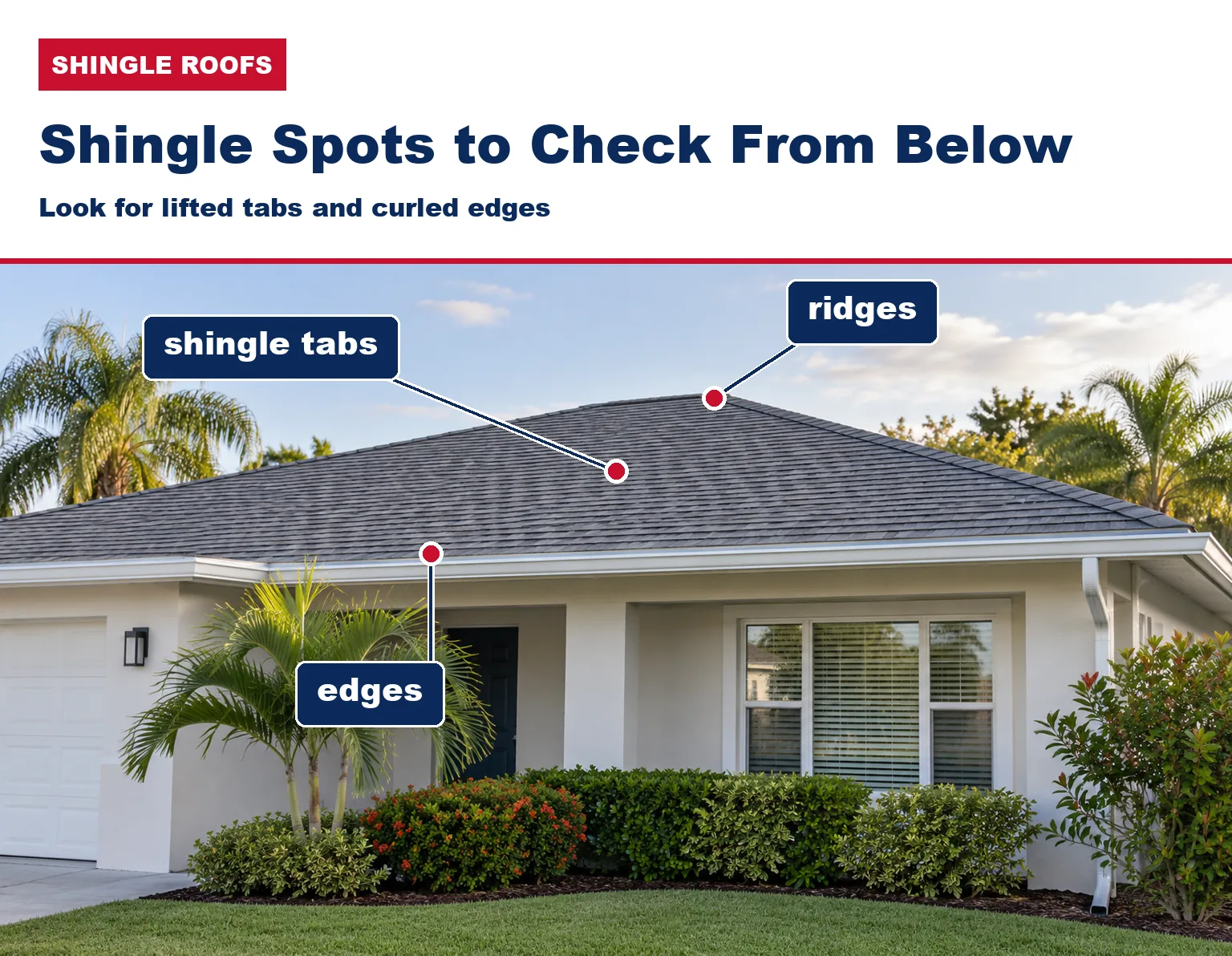
A loose tab you see this spring is the same kind of damage, so fix it before the rains. The fix is to reseal or refasten lifted tabs and replace broken or missing shingles with matching ones.
Where many tabs are loose across the roof, ask whether repair still makes sense. A roofer can tell you whether the roof is near the end of its life.
Cupping and Curling on Shingle Roofs
Cupping and curling are two shapes of the same aging damage. A cupped shingle has edges that turn up while the center sinks, forming a cup. A curled shingle has corners or edges that lift while the center stays flat.

Both shapes leave gaps that wind and rain can get into. A few curled shingles can be replaced, but widespread cupping or curling is one of the signs the roof may need replacing, so have a roofer look before the season.
Repair, Re-Roof or Tarp: Choosing the Right Fix
A repair fixes one area, a re-roof replaces the whole roof covering, and a tarp only covers damage until then. When damage is spread across the roof, Florida’s roof rules can turn a repair into a re-roof, which our guide to signs your roof needs full replacement explains.
A full roof replacement on a site-built single-family home must also include a secondary water barrier and stronger roof-deck attachment, under section 553.844, Florida Statutes. Every USA Home Improvement project is permitted, whether it is a repair or a full replacement.

Blue tarps are a common sight after a storm, but a tarp is a temporary cover, not a repair. Use one to slow water entry for a short time, then book the permanent fix before the next storm arrives.
Roof Insurance Rules to Know Before a Storm
Under section 627.70132, Florida Statutes, notice of a new or reopened property insurance claim must be given within 1 year after the date of loss, and a supplemental claim within 18 months. For a hurricane, the date of loss is the date it made landfall.
Take dated photos of every roof slope, the attic and your ceilings before the season. They show the roof’s condition before a storm, and they help you see new damage quickly afterward.
Florida law also limits what a roofer can offer you. Section 489.147, Florida Statutes, bars a contractor from offering a rebate, gift, cash, waiver of any insurance deductible or anything else of value in exchange for a roof inspection or for making a roof insurance claim.
The same law bars a contractor from interpreting your policy or adjusting your claim unless the contractor is also a licensed public adjuster. Questions about coverage go to your insurer, your agent or a licensed public adjuster.
A re-roof done to current code can also help at renewal. Section 627.0629, Florida Statutes, requires residential rate filings to include discounts for features that reduce windstorm loss, including roof strength, roof covering performance and roof-to-wall strength.
Each insurer sets its own credits, so ask your agent which roof features your policy rewards. See upgrades that can lower your insurance premium.
A Pre-Season Roof Checklist
A pre-season roof check takes an afternoon and shows you which of the three damage types your roof has. Do it in spring, well before June 1.
- Look at each roof slope from the ground with binoculars for cracked, missing or lifted tiles and shingles, especially at the ridges and edges.
- Check the attic with a flashlight on a sunny day for daylight through the deck, water stains and damp insulation.
- Look for ceiling stains and peeling paint in every room, including closets.
- Clear gutters and downspouts so heavy rain can drain off the roof.
- Have branches that hang over the roof trimmed back.
- Take dated photos of the roof, attic and ceilings, and keep them with your policy.
- Book a licensed roofer to repair what you found and check what you cannot see from the ground.
Stay off a tile roof yourself: walking on tile can crack it. A sound roof is one part of storm readiness, so also look at other upgrades that make a home hurricane resilient, such as impact windows for your home’s openings.
Roof Damage FAQs
When should I fix roof damage before hurricane season?
Fix roof damage as early in spring as you can. The season starts June 1, and the National Hurricane Center puts most activity between mid-August and mid-October, with the peak on September 10. Booking early leaves time for a permit, materials and the repair before storms start.
Can a tarp protect my roof through hurricane season?
No. A tarp is a short-term cover that slows water entry until the roof is repaired, and it can be pulled loose in strong wind. Use it only for the days or weeks until a roofer makes the permanent repair, and photograph the damage before the tarp goes on.
How long do I have to file a roof damage claim in Florida?
Under section 627.70132, Florida Statutes, notice of a new or reopened property insurance claim must be given within 1 year after the date of loss. A supplemental claim has 18 months. For a hurricane, the date of loss is the landfall date, so report damage soon after the storm.
Can a roofer pay my deductible or give me a gift for an inspection?
No. Section 489.147, Florida Statutes, bars contractors from offering a rebate, gift, cash, deductible waiver or anything else of value in exchange for a roof inspection or a roof insurance claim. An offer like that is a reason to choose a different roofer.
Get Roof Repairs Done Before the Season
If your pre-season check finds a leak, cracked tiles or loose shingles, book the repair now, before a storm is in the forecast. A roof that is near the end of its life is better replaced in spring than tarped in September.
Financing may be available for qualified homeowners through independent third-party providers. Terms, eligibility and availability depend on the program and location. See current financing options for your roof.
USA Home Improvement is licensed (CGC1526707) and insured and has served Florida homeowners for more than 15 years. Call (877) 554-6373 or request a free roof repair estimate.