Skip to content

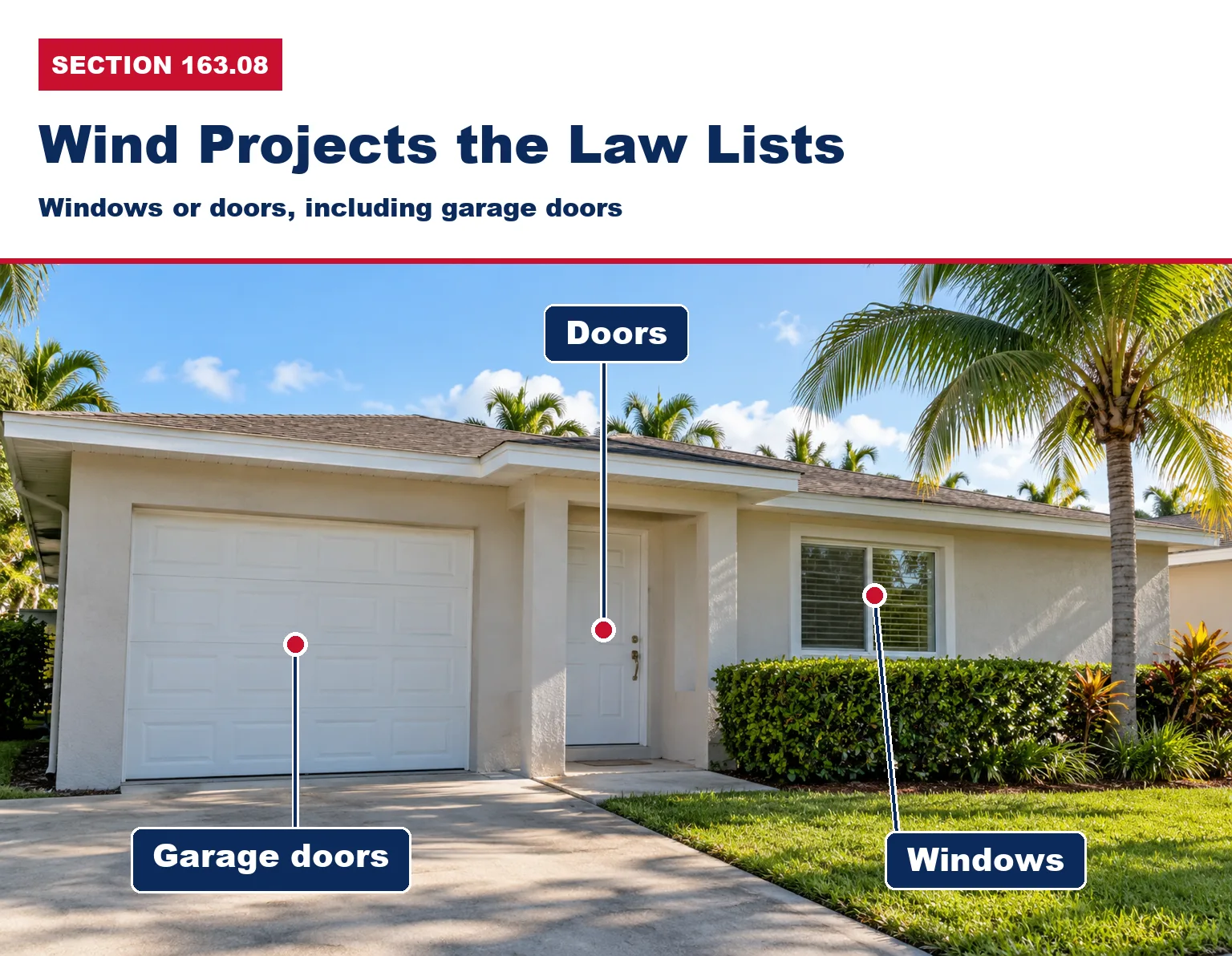
Florida PACE funding can pay only for the permanent home improvements listed in section 163.08 of the Florida Statutes: roof work, impact or energy-efficient windows and doors (garage doors included), storm shutters, flood protection, sewer work, efficient cooling, insulation, water heaters, permanent generators and renewable energy.
The home must also sit where a county or city has authorized a program, and that program applies its own rules on top of the law. This guide explains each group with examples, what falls outside the list, and what to check before you apply.
The Nine Home Improvements Florida PACE Law Lists
For homes, section 163.08(4)(a), Florida Statutes defines a “qualifying improvement” as a permanent improvement in one of nine groups. The law treats a home as residential property when it has four or fewer dwelling units.
| Group | What the law names | Everyday examples |
|---|---|---|
| Windows and doors | Energy-efficient, impact-resistant, wind-resistant or hurricane windows or doors, including garage doors; storm shutters | Impact windows, impact entry and sliding doors, impact garage door, accordion shutters |
| Roof | Repairing, replacing or improving a roof | New roof, stronger deck attachment, secondary water barrier |
| Flood and water damage | Flood and water damage mitigation and resiliency | Raising a home, seawall repair, drainage gate |
| Sewer | Central sewer work or septic-to-sewer conversion | Connecting a septic home to city sewer |
| Heating and cooling | Energy-efficient heating, cooling or ventilation systems | High-efficiency central air or heat pump |
| Insulation | Replacing or installing insulation | Attic insulation |
| Water heaters | Energy-efficient water heaters | Heat pump water heater |
| Generators | Installing and affixing a permanent generator | Standby generator on a pad |
| Renewable energy | Systems using solar, geothermal, bioenergy, wind or hydrogen | Rooftop solar panels, solar water heating |
Being on the list does not guarantee approval. The program also checks the property and your finances, as explained in our guide to how Florida PACE assessments and protections work.
Wind Resistance: Impact Windows, Doors, Garage Doors and Shutters
Florida law covers “replacing windows or doors, including garage doors, with energy-efficient, impact-resistant, wind-resistant, or hurricane windows or doors or installing storm shutters.”
The four kinds are joined by “or,” so the law’s wording names an impact-resistant replacement as its own kind. Your program may still set added product standards, covered further down.
Typical projects in this group include replacing older windows with aluminum or vinyl impact windows from ES Windows, or swapping a front door or patio slider for impact entry, French or sliding glass doors.
Garage doors are named in the law itself, so an impact garage door replacement for Florida homes fits this group. Storm shutters, such as accordion or roll-down panels, qualify as a separate item.
Roof Improvements That Qualify for Florida PACE
Repairing, replacing or improving a roof qualifies, and the law names five upgrades: strengthening the roof deck attachment, creating a secondary water barrier to prevent water intrusion, installing wind-resistant shingles, adding gable-end bracing, and reinforcing roof-to-wall connections.
A full replacement is often the best moment for these upgrades, because the old covering is already off and the deck is exposed. Ask for a roof replacement that adds a secondary water barrier, and have each upgrade listed in the written estimate.
Many homeowners pair a roof with opening protection. Our list of other upgrades that harden a Florida home explains how the roof, windows and doors work together in a storm.
Energy Efficiency Improvements: Cooling, Insulation and Water Heaters
Three energy groups qualify for homes: energy-efficient heating, cooling or ventilation systems; replacing or installing insulation; and energy-efficient water heaters.
Insulation is the simplest of the three. Adding attic insulation for hot Florida attics slows the heat that moves from the roof into your living space. An energy-efficient window or door replacement can also fit the windows and doors group described above.
For more ways to cut cooling loads, see our list of energy upgrades that suit Florida homes.
Renewable Energy Systems and Permanent Generators
A renewable energy improvement qualifies when it is a system that produces electrical, mechanical or thermal energy from solar, geothermal, bioenergy, wind or hydrogen. For most Florida homes, that means rooftop solar panels or a solar water heating system.
The law also lists “installing and affixing a permanent generator.” A standby generator wired to the home and set on a fixed pad fits that wording. A portable generator is not affixed, so it does not match it.
Solar panels sit on the roof, so check the roof first. If the roof is near the end of its life, replacing it before the panels go up saves removing and resetting them later.
Flood, Water Damage and Sewer Improvements
For homes, Florida’s PACE law covers flood and water damage protection and sewer work. Water-saving fixtures are listed only for commercial property. The flood group gives priority to work that can qualify for lower flood insurance premiums.
Examples the law names include raising a home above the base flood elevation, building a flood diversion apparatus or drainage gate, repairing or replacing a seawall, buying flood-damage-resistant building materials, and making electrical, mechanical or plumbing changes that reduce flood damage.
The sewer group covers connecting a septic home to a central sewer system, or upgrading the septic system to an advanced technology where no sewer is available.
For a septic-to-sewer conversion, section 163.081, Florida Statutes adds a test: you must have used all available local government funding for the conversion and be unable to get better terms through a local government program.
What Does Not Qualify for Residential PACE in Florida
Any project outside the nine groups does not qualify for residential PACE, however useful it is. A kitchen remodel, a pool, new flooring, interior painting, or furniture and appliances that are not part of a listed system are not on the list.
Several items show up in PACE marketing but sit only in the commercial part of the law, which covers buildings with five or more units and commercial property. The residential list does not name:
- Water conservation fixtures, such as low-flow toilets, faucets and showerheads
- Electric vehicle charging equipment
- Efficient lighting equipment, such as LED fixtures
- Energy controls, daylighting changes and air sealing as standalone items
Some eligible projects are still blocked by the rules in section 163.081:
- The total cost, including program fees and interest, is under $2,500
- The home is new construction without a certificate of occupancy
- The home has open code-enforcement fines, unless the improvement fixes the violation
- The applicant is a renter or occupant, not the owner of record
- No program is authorized in your county or city
Availability changes as local governments vote, so ask your county or city whether a program covers your address.
Program Rules on Products, Contractors and Permits
Each local program can set stricter rules than the statute. Section 163.081 says an authorized program “must, at a minimum, meet the requirements of this section,” so your program’s own product and contractor rules decide the final answer.
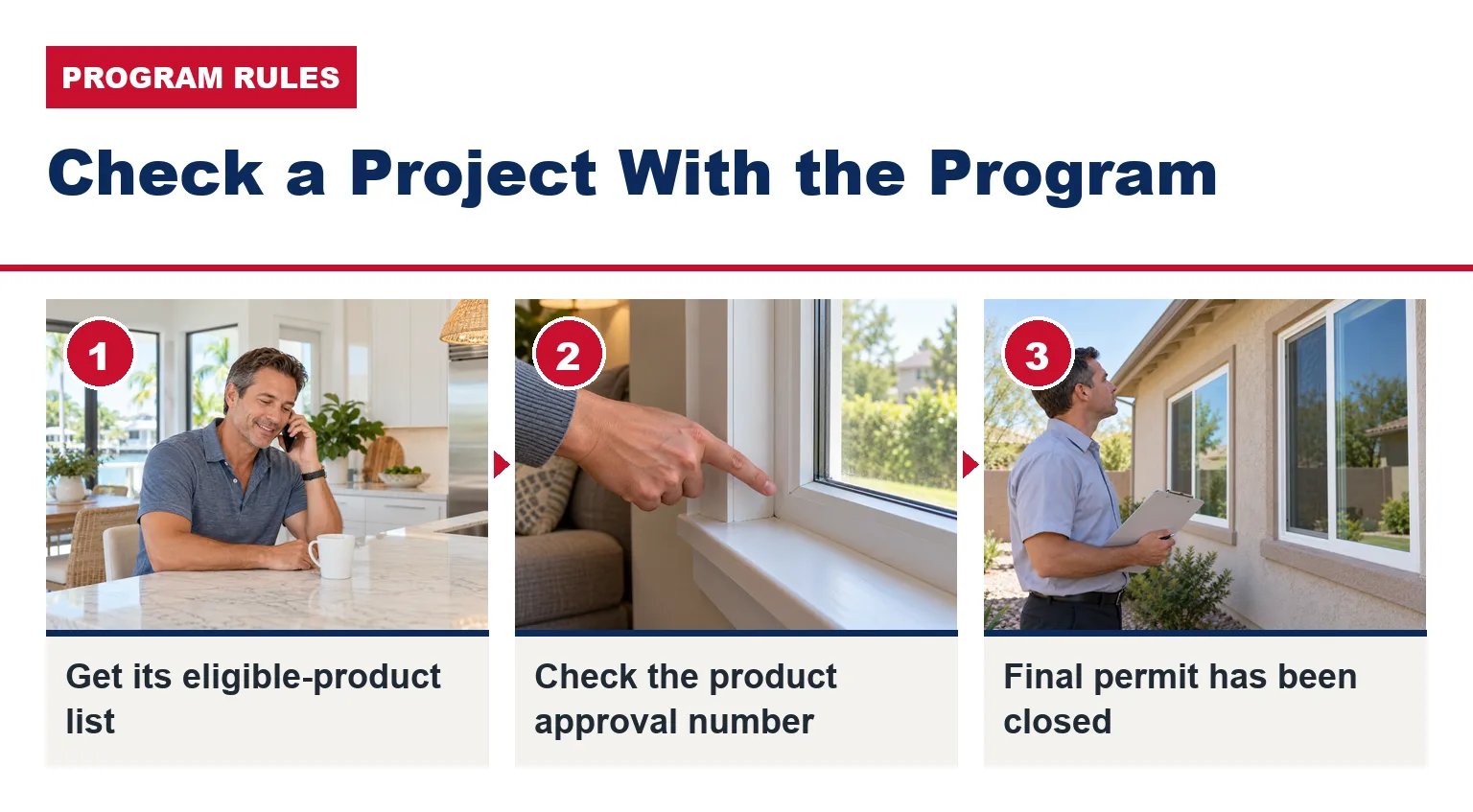
Ask the program which products it accepts, or get its eligible-product list, before you sign a contract. The program also sets the useful life of each improvement using established standards, such as certification criteria from government agencies or recognized testing organizations.
The repayment term cannot be longer than the weighted average useful life of the main improvement financed, and never more than 20 years.
Windows, exterior doors, roofing and shutters must carry a state or local product approval before they are used in Florida construction, under section 553.842, Florida Statutes. A product may not be sold as hurricane or impact protection without that approval.
Check the product approval number for every window and door on your estimate. Our guide on how to tell if windows are hurricane rated shows where that number appears.
The contractor must be registered with the program and hold every license the work needs, under section 163.083, Florida Statutes. Before final payment, the program confirms the work is done or the final permit has been closed, so a permitted job keeps the paperwork in order.
PACE is only one way to pay. See PACE compared with a home equity loan, and our overview of every way to pay for a home improvement.
Impact Windows, Doors and Roofs From USA Home Improvement
USA Home Improvement installs ES Windows aluminum and vinyl impact windows and impact doors, plus impact garage doors, roofing and attic insulation.
Every project we do is permitted, and you can receive the Florida Product Approval number for each window and door on request. Keep the permit and the approval numbers with your project records.
Financing may be available for qualified homeowners through independent third-party providers. Terms, eligibility and availability depend on the program and location. Ask at your estimate or read how third-party financing options work.
Florida PACE Qualifying Projects: Quick Answers
Do impact windows have to be energy-efficient to qualify?
Not under the statute’s wording. Section 163.08 lists energy-efficient, impact-resistant, wind-resistant or hurricane windows or doors as alternatives. A program can still add its own product standards, so ask the program whether it accepts the exact window or door you plan to buy.
Does Florida PACE pay for hurricane shutters?
Yes. “Installing storm shutters” is named in the same item as windows and doors. The shutters must still carry a product approval under Florida law, and your program may limit which shutter types it accepts.
Can PACE pay for a roof repair, or only a full replacement?
Both. The law covers “repairing, replacing, or improving a roof,” including upgrades to the deck attachment and roof-to-wall connections. The whole project, with fees and interest, must total at least $2,500.
Can PACE pay for a pool, kitchen or new appliances?
No. Residential PACE pays only for the nine groups in section 163.08. A pool, kitchen remodel or standalone appliance is not one of them. Water heaters and cooling systems qualify only when they are energy-efficient.
Next Step: Get the Project Priced in Writing
Whichever way you pay, get the project priced in writing, with each upgrade listed and the product approval number for each window and door.
USA Home Improvement is licensed (CGC1526707) and insured and has served Florida homeowners for more than 15 years.
Book a free, no-obligation estimate or call (877) 554-6373.