Skip to content

The best home repair financing option in Florida depends on two things: whether insurance covers the damage, and how fast the repair must happen. For storm damage, start the insurance claim, then plan how to pay the deductible and any cost the insurer has not paid yet.
For planned repairs, you have time to compare loans and programs. This guide covers the repair side: emergency vs planned work, Florida’s claim deadlines, hurricane deductibles and help after a storm. For every type of financing in one place, see our complete guide to home improvement financing.
Emergency Repairs vs Planned Repairs: Why the Financing Differs
An emergency repair has to happen now, so speed of funding matters more than the lowest cost. A planned repair, such as replacing an aging roof before hurricane season, gives you weeks to compare offers and choose a product.
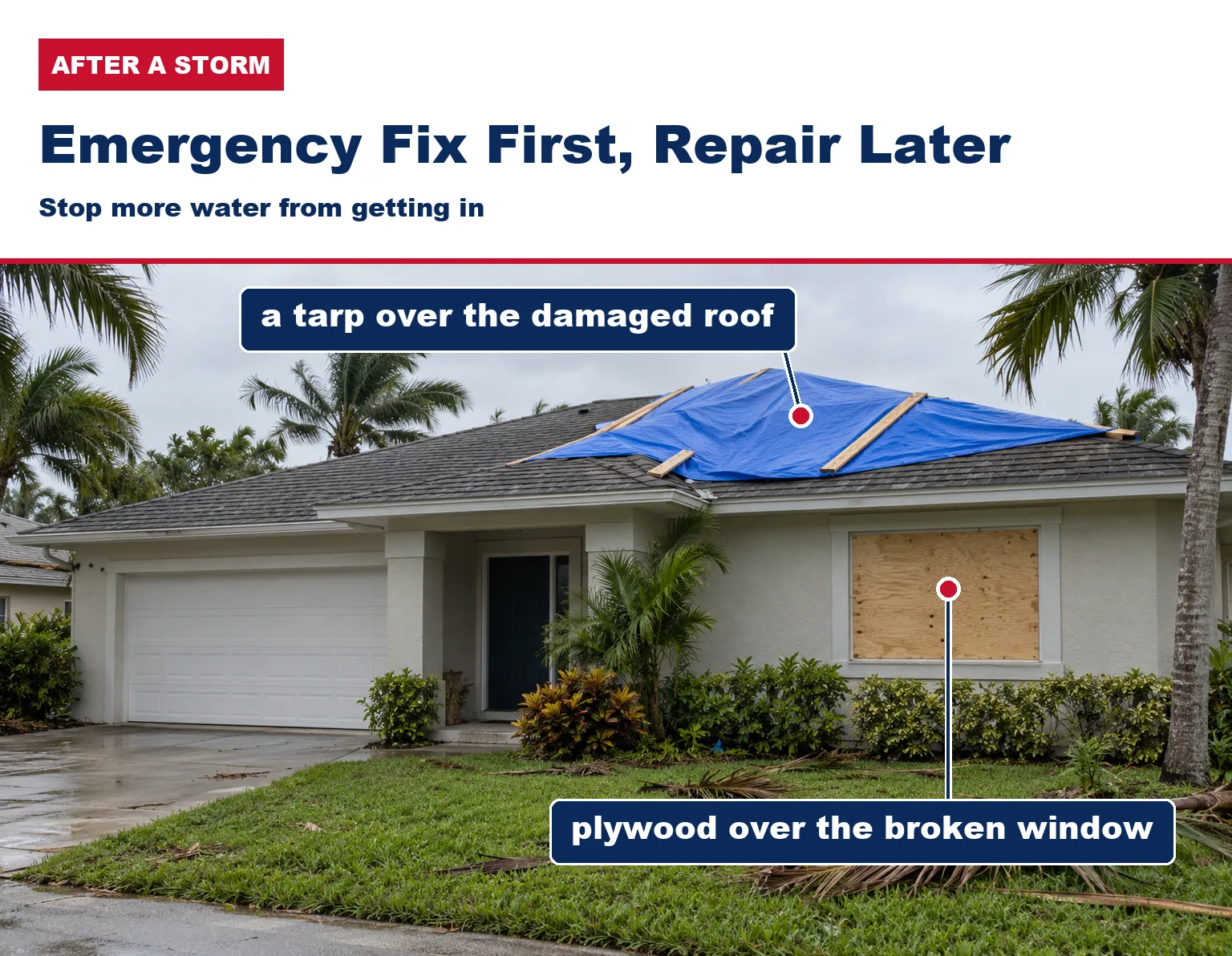
After a storm, the first job is usually an emergency fix: a tarp over the damaged roof or plywood over the broken window to stop more water from getting in. USA Home Improvement lists emergency tarp service with our roof repair and replacement services. Keep the photos and receipts for that work, since your insurer may ask for them.
| Your situation | Settle this first | Financing to compare |
|---|---|---|
| Storm damage with an insurance claim | Your deductible in dollars and when the insurer will pay | Savings or a credit card for the deductible and the emergency fix; a personal loan for a larger gap |
| Urgent repair insurance does not cover | A written estimate and how fast you need the money | Savings, a personal loan, or a HELOC you already have open |
| Planned repair or storm upgrade | Scope, product approvals and a full quote | Home equity loan or HELOC, cash-out refinance, third-party financing, or PACE where a local program covers the property |
Some permanent repairs cannot be rushed. For an impact window order, manufacturing takes about 6 to 8 weeks depending on project scope, installation averages 1 to 2 days, and the whole process takes about 3 months start to finish, though it can vary.
Plan the temporary protection and the financing for that whole stretch, so the opening stays covered and the payments line up with the work.
For a roof, window or door project, see our financing options for qualified homeowners. Financing may be available for qualified homeowners through independent third-party providers. Terms, eligibility and availability depend on the program and location.
Costly Florida Home Repairs That Often Require Financing
The Florida repairs most likely to need financing are the ones that protect the house from weather: the roof, the windows and the doors. A leaking roof or a broken window lets in water that causes a second, larger repair if it waits.
Roof work is often the biggest single bill. If your roof has storm damage or is close to the end of its life, compare repair with replacement, and check the roof damage to fix before hurricane season.
Broken or failing windows and doors are the other common storm repair. When you replace them, you can choose impact-rated products that protect the opening without shutters. USA Home Improvement installs ES Windows impact windows in aluminum and vinyl, along with impact doors.
Water damage, plumbing leaks, foundation cracks and AC replacement can also run high. Those jobs belong to other licensed trades, but the same financing questions in this guide apply to them.
How an Insurance Claim Changes Your Repair Financing
When insurance covers the damage, financing only has to cover the deductible and the time until the insurer pays. Florida law sets that timeline in Section 627.70131, Florida Statutes, so you can estimate how long you will carry the cost yourself.
- The insurer must review and acknowledge your communications about a claim within 7 calendar days.
- It must begin its investigation within 7 days after it receives your proof-of-loss statements.
- Any physical inspection must take place within 30 days after it receives the proof-of-loss statements.
- It must send you a copy of any detailed estimate within 7 days after its adjuster generates it.
- It must generally pay or deny the claim within 60 days after it receives notice of the claim.
The first check may not cover the full repair. Under Section 627.7011, a replacement cost policy must first pay at least the actual cash value of the loss, less the deductible. The insurer pays the rest as work is performed and expenses are incurred, which is why many homeowners need short-term money even with a good claim.
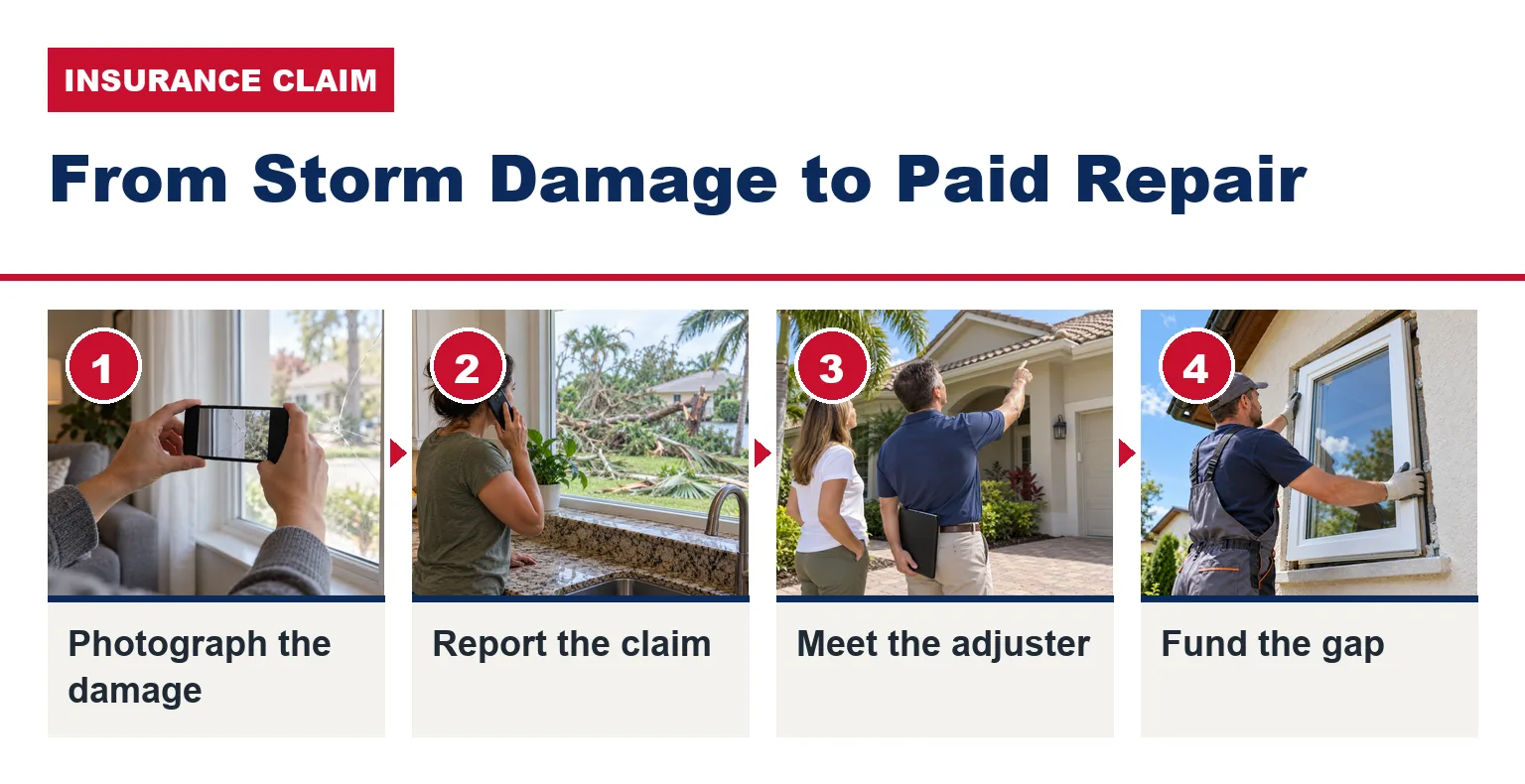
In practice the order is: photograph the damage, report the claim, meet the adjuster, then fund the gap between the first payment and the contractor’s schedule. A total loss of the dwelling is the exception: the insurer must pay replacement cost without holding back depreciation.
Hurricane Deductibles: The Share You Pay Before Insurance Does
Your hurricane deductible is often the largest amount you pay yourself after a storm. Section 627.701 requires insurers to offer hurricane deductibles of 2 percent, 5 percent and 10 percent of the policy dwelling limits before issuing a personal lines residential policy. A $500 option must also be offered for homes insured for less than $250,000.
You do not have to do the math. The insurer must show the actual dollar value of the hurricane deductible prominently on the declarations page at issuance, and on the renewal declarations page or renewal notice. That number is the amount to plan financing around.
The hurricane deductible only applies to hurricane losses. Under Section 627.4025, the hurricane period begins when the National Hurricane Center issues a hurricane warning for any part of Florida. It ends 72 hours after the last hurricane watch or warning for any part of Florida ends.
Some policies also have a separate roof deductible for roof losses from other perils. Under Section 627.701, it does not apply to a roof loss from a hurricane, a tree fall or other hazard that punctures the roof deck, a total loss, or a repair of less than half the roof.
When a roof deductible does apply, the insurer may limit the roof payment to actual cash value until it receives reasonable proof that you paid it. Under Section 627.7011, that proof can be a canceled check, a credit card statement, or an executed installment plan or other financing arrangement that requires full payment of the deductible over time.
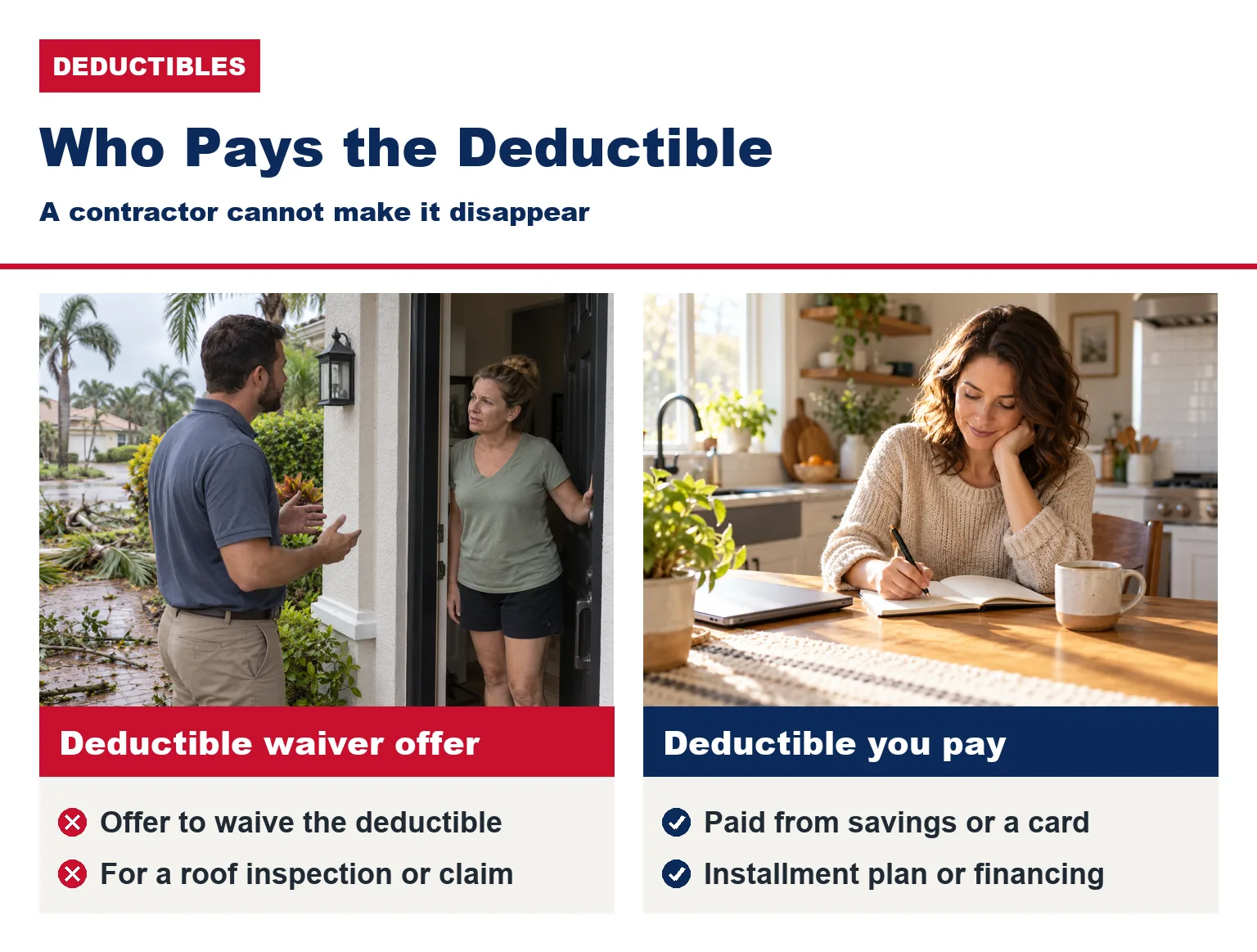
Section 489.147 bars a contractor from offering to waive the deductible, or offering a rebate, gift or cash, in exchange for a roof inspection or claim. A contractor can be fined up to $10,000 for each violation.
So treat an offer to waive the deductible as a warning sign. Pay it yourself instead, paid from savings or a card, or through an installment plan or financing you can document for the insurer.
Top Home Repair Financing Options in Florida
The main ways to pay for a Florida home repair are savings, a personal loan, your home’s equity and third-party financing arranged for the project. Each fits a different mix of urgency, cost and credit. Rates and terms change often, so compare the APR, fees and total cost of every offer.
Savings and Emergency Funds
Savings are the cheapest way to cover a deductible or an emergency fix because there is no interest and no application. If savings cover the deductible, any loan you add only has to bridge the time until the insurer pays.
Personal Loans
A personal loan is usually unsecured, so your home is not the collateral, and lenders can fund it faster than a home equity product. It suits a repair that cannot wait. The rate depends heavily on your credit, so compare a few offers before you sign.
Home Equity Loans and HELOCs
A home equity loan gives a lump sum, and a home equity line of credit (HELOC) lets you draw money as you need it. Both use your home as collateral and usually take longer to approve.
That makes them a better fit for a planned roof or window project than for a leak tonight. A HELOC you already have open is the exception, because it can pay for an urgent repair right away.
Cash-Out Refinancing
A cash-out refinance replaces your mortgage with a larger one and pays you the difference. It makes sense only when the new mortgage terms work for you, and it takes the longest of these options, so it is rarely the answer for emergency storm work.
PACE and Other Third-Party Project Financing
Third-party financing is arranged for the project and repaid to an independent provider, not to the contractor. PACE is one type, repaid through a non-ad valorem assessment on your property tax bill, and it applies only to qualifying improvements where a local program covers the property.
See how PACE financing works in Florida for eligibility and consumer protections, and how a PACE loan compares with home equity before you choose between them.
Other Home Repair Financing Options After a Storm
After a declared disaster, federal and local programs can help with repairs that insurance does not fully cover. A credit card can also carry a small emergency fix for a short time.
Credit Cards for the Emergency Fix
A credit card is the fastest way to pay for a tarp, plywood or a small repair. Card interest is usually higher than loan interest, so use it for costs you can repay quickly, such as the emergency fix while you wait for the insurer.
SBA Disaster Loans for Homeowners
When a home is damaged in a declared disaster area, the U.S. Small Business Administration disaster loans can help homeowners repair or replace a damaged primary residence. Second homes and vacation properties are not eligible.
The SBA says these loans “cover disaster losses not fully covered by insurance or other sources,” and the funding can also go toward mitigating future damage.
Local SHIP Repair Help
Florida’s State Housing Initiatives Partnership (SHIP) sends state housing funds to counties and eligible cities for very-low-, low- and moderate-income households. Under Section 420.9075, local plans can fund emergency repairs and award grants for repair as part of disaster recovery.
Each county or city sets its own rules and funding, so ask your local SHIP office what is open now. Florida Housing lists local housing program contacts by county.
How Florida Homeowners Can Choose the Right Repair Financing
Choose repair financing by answering a few questions in order. The answers point you to the cheapest option that still pays the contractor on time.
- Is the damage covered by insurance? If yes, report the claim first and size the financing to the deductible and the gap.
- What is your deductible in dollars? Read it on your declarations page.
- How long until the insurer pays? Plan for the claim timeline, then for payments released as the work is done.
- Is this an emergency fix or the permanent repair? Pay for the emergency fix quickly, and give the permanent repair time to compare quotes.
- Will the repair improve the home’s storm protection? Ask about upgrades that can lower your insurance rates before you choose a like-for-like replacement.
- Is the contractor licensed? Check the license on the Florida DBPR license search before you sign or pay.
Home Repair Financing FAQs
How long do I have to report storm damage to my insurer in Florida?
Under Section 627.70132, notice of a new or reopened property claim must be given within 1 year after the date of loss, and a supplemental claim within 18 months. For a hurricane, the date of loss is the date the storm made landfall. Report early so the insurer’s timeline starts sooner.
What happens if two hurricanes damage my home in the same year?
The hurricane deductible applies on an annual basis to all covered hurricane losses in the calendar year. For a later hurricane, the insurer may apply the greater of the remaining hurricane deductible or the deductible for other perils, so keep records of every hurricane loss.
Can I use PACE to pay for storm repairs?
PACE pays only for qualifying improvements, such as wind resistance upgrades, where a local program covers the property, and approval takes time. It fits a planned upgrade better than an emergency fix. Our guide to Florida PACE explains the qualifying rules and steps.
Does USA Home Improvement provide the financing?
No. USA Home Improvement does not directly provide financing. Financing may be available for qualified homeowners through independent third-party providers, and terms, eligibility and availability depend on the program and location. Ask about current options at your free estimate.
Choose a Home Repair Financing Method That Works for You
If a storm caused the damage, report the claim, find the deductible on your declarations page, and finance only the gap. If the repair is planned, get a full quote first, then compare home equity, third-party financing or PACE where a local program covers the property.
Either way, make the permanent repair a stronger one where you can, with impact-rated windows and doors and a permitted roof. Every USA Home Improvement project is permitted.
USA Home Improvement is licensed (CGC1526707) and insured and has served Florida homeowners for more than 15 years.
Get a free, no-obligation estimate for your roof, window or door repair, or call (877) 554-6373.