 Saltar al contenido

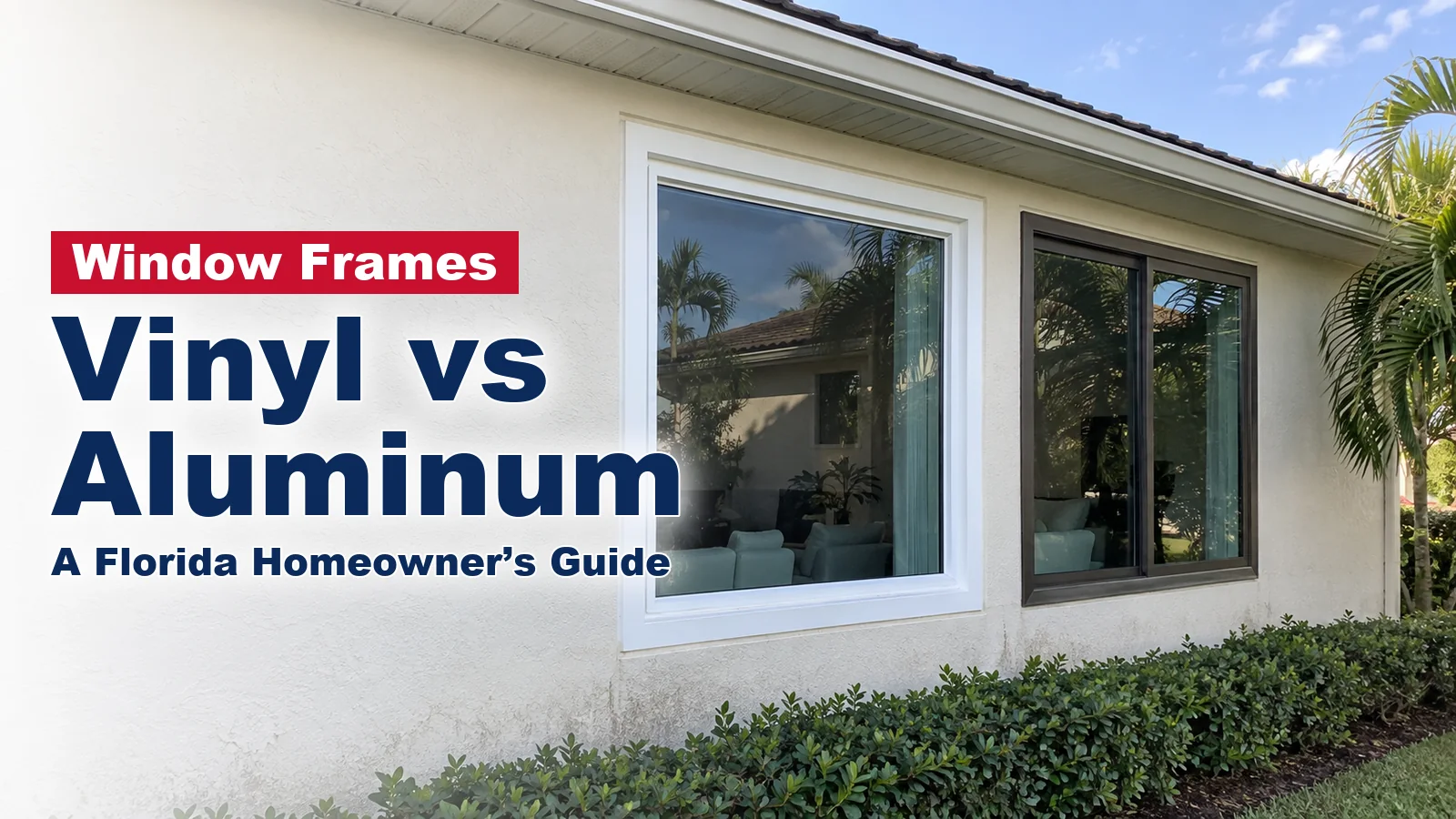
Vinyl or aluminum? It is one of the first questions homeowners ask when they price new windows.
Both frames can be impact rated. Both can look good. The right pick depends on your home, your budget and how close you live to the water.
This guide compares the two side by side, so you can ask better questions before you buy.
Here’s the short version:
| What you compare | Vinilo | Aluminio |
|---|---|---|
| Upkeep | No painting. Resists moisture. | Strong and light. Low upkeep, but the finish matters. |
| Heat transfer | Insulates well. Hollow frames can be filled. | Conducts heat fast. A thermal break helps. |
| Aire salado | Does not corrode. | Needs a good finish near the coast. |
| Strength | Check the design pressure for big openings. | Suits wide and tall openings. |
| Look | Thicker frames. | Slimmer frames, more glass. |
| Price | Usually lower. | Usually higher. |
Now let us look at each row in more detail.

The Frame Is Only Part of the Window
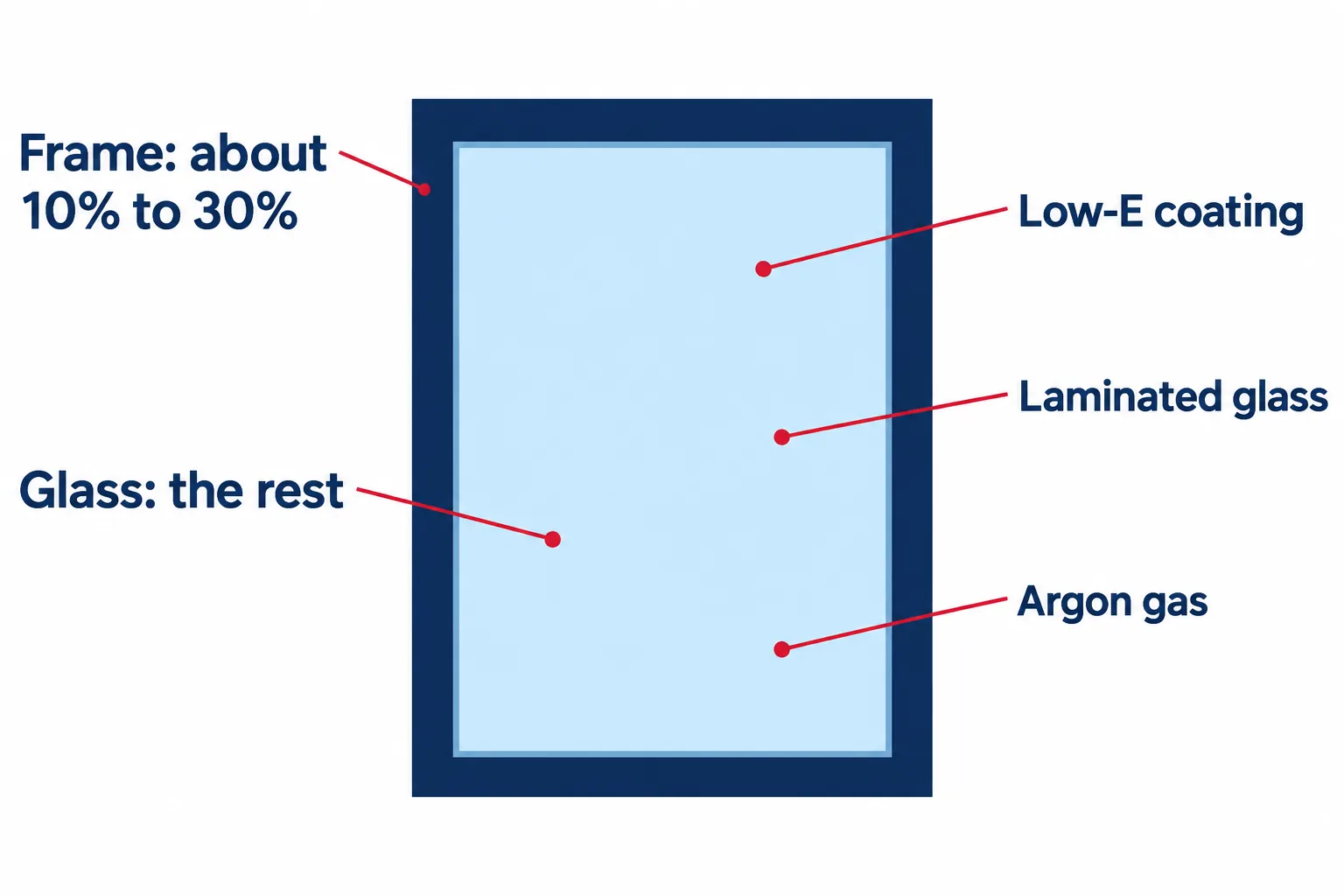
The frame takes up about 10% to 30% of a window. The glass covers the rest.
That is why one window industry worker told homeowners that the glass coating and the number of panes matter more than the frame. The Low-E coating on the glass has a big say in how much heat gets in.
So compare the full window, not just the frame:
- Low-E coating on the glass
- Glass type, such as laminated impact glass
- Gas fill between the panes, such as argon
- Impact rating and product approval
Frame choice is important but it works together with the setup. For more answers, see our FAQ on impact window ratings and care.
What the Florida Energy Code Asks For
New and replacement windows in Florida follow the Florida Building Code, Energy Conservation, 8th Edition (2023).
The code sets limits on two numbers. U-factor measures how much heat passes through the window. SHGC measures how much heat from the sun gets in.
Here is what the 8th Edition asks for windows:
| Window limit | Zone 1 (South Florida) | Zone 2 (North Florida) |
|---|---|---|
| U-factor, maximum | No requirement | 0.40 |
| SHGC, maximum | 0.25 | 0.25 |
| U-factor, impact rated | No requirement | 0.65 |
The 9th Edition of the Florida Building Code takes effect on December 31, 2026. Ask your installer which edition applies to your project.
Vinyl Windows
Vinyl frames are made of PVC. Homeowners pick them for low upkeep and a lower price.
Where vinyl works well:
- No painting needed
- Resists moisture
- Does not corrode in salt air
- Hollow frames can be filled with insulation
- Usually costs less than aluminum
Upkeep is the point homeowners bring up again and again. One Florida homeowner said they had vinyl windows for 21 years and they still work great.
Where to be careful:
- Quality changes a lot from brand to brand
- Frames are thicker, so there is less glass
- Large openings need a design pressure check
- Vinyl can expand and contract more than aluminum in strong heat
Build quality is the big one. Another homeowner had to replace two cheaper vinyl windows after the seals failed and the glass fogged up. Their view: buy quality once instead of cheap twice.
One installer shared this checklist for good vinyl:
- Fully welded frames
- Foam filled frames
- Foam spacers between the glass panes
- Low-E coated glass
- Warranty that covers glass and seals
Aluminum Windows
Aluminum frames are strong, light and low upkeep. They can be made into slim shapes, so a window can hold more glass. Our horizontal roller impact windows come in both aluminum and vinyl.
Where aluminum works well:
- Strength for wide and tall openings
- Slim frames and more glass
- Many product lines carry higher design pressure ratings
- Finishes such as anodized or painted coatings protect the metal
Looks are personal. One Miami homeowner replaced every window with aluminum and said vinyl looks bad to them. Slim frames suit some homes better.
Where to be careful:
- Salt air can pit or oxidize aluminum over time
- A good finish matters, especially near the coast
- Aluminum conducts heat fast
- Usually costs more than vinyl
Both Frames Can Be Impact Rated
This is where many homeowners get stuck. They think one frame is rated for hurricanes and the other is not.
What to check on the product approval:
- Design pressure rating
- Large missile or small missile rating
- Approved sizes
- The NOA or Florida product approval number
Not sure what your current windows carry? Our guide on Cómo saber si sus ventanas y puertas son resistentes a huracanes. shows where to look.
What About Cost?
Aluminum often costs more, especially with a thermal break or a custom finish.
Price also moves with window size, glass, design pressure and installation. So it helps to compare quotes line by line.
Quotes can also change. One homeowner was quoted $12,500 for three windows, then $10,000 if they signed that same day.
A clear quote should list:
- Material del marco
- Tipo de vidrio
- Design pressure rating
- Install and permit costs
- Warranty terms
Which Frame Fits Which Home?
Use this as a starting point and not a rule.
| If this matters to you | Look at first |
|---|---|
| Lower price | Vinilo |
| No painting or refinishing | Vinilo |
| Wide or tall openings | Aluminio |
| Slim frames and more glass | Aluminio |
| A home near the water | Either one. Ask about the finish on aluminum. |
| Lower cooling bills | Either one with Low-E glass. Ask about the thermal break on aluminum. |
The Practical Way to Choose
Start with the opening, not the frame. Size, floor level and distance from the water tell you the design pressure and finish you need.
Then compare the whole window: glass, rating, finish and warranty. Both vinyl and aluminum can meet Florida energy and wind rules when the product is chosen well.
We offer both vinyl and aluminum ES Windows frames in casement impact windows, ventanas de impacto de guillotina simple and horizontal rollers, so you can compare them side by side.